
Pruning
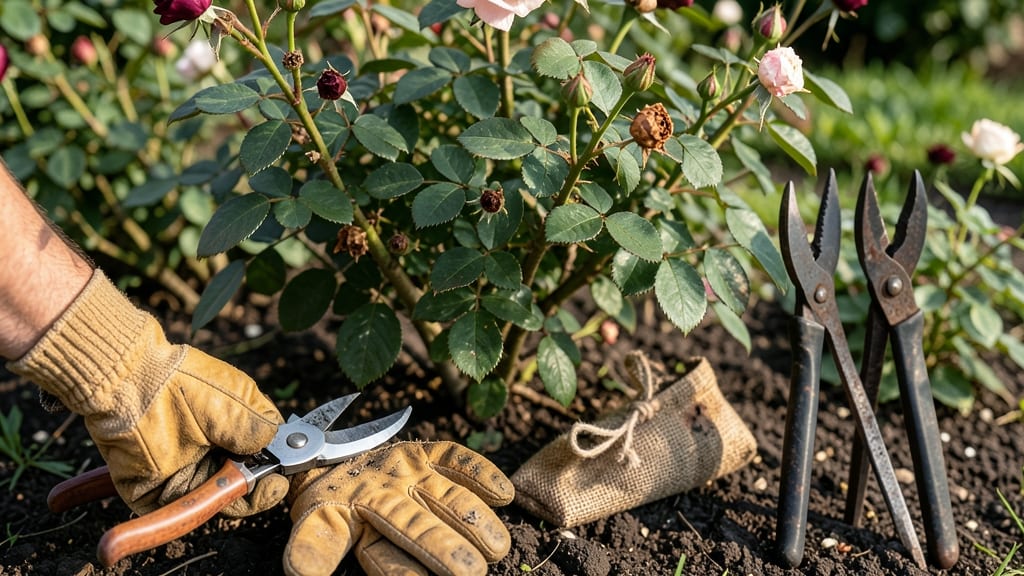
You should cut back rose bushes in late fall—after the first hard frost but before winter dormancy—to encourage vigorous spring growth and reduce disease risks. Trim dead or damaged stems back to 12-18 inches, being careful not to over-prune and drain the plant's energy reserves.
Timing matters because late fall's frost signals the plant to enter dormancy, but pruning too early can trigger new growth that won't survive winter. 🌿 The ideal window is after the first 25-30°F nights but before the ground freezes solid.
This approach helps remove diseased wood while allowing the rose to harden off naturally. I always use sterilized pruners to prevent spreading fungal spores, and I avoid cutting into old wood—it won't regrow properly in spring.
For hybrid teas and climbers, you'll want to make more aggressive cuts, while shrub roses benefit from lighter trimming. The key is to shape the bush while maintaining an open center for airflow—this dramatically reduces black spot and powdery mildew risks.
Remember to clean up all pruned material from the garden bed to prevent overwintering pests.
💡 In This Article
- Why Late Fall Is the Best Time to Prune Roses
- Step-by-Step Late Fall Rose Pruning Guide
Why late fall is the best time to prune roses
The ideal late fall timing for rose pruning—typically between November and early December—aligns perfectly with nature's winter preparation cycle. When temperatures consistently drop to 25-30°F at night, your rose bushes receive a crucial signal: it's time to enter dormancy.
This frost triggers the plant's natural defense mechanisms, including the closure of stomata (leaf pores) to conserve moisture and the production of protective sugars that act like antifreeze in the plant's cells.
Pruning at this stage removes weakened stems that might harbor fungal spores, while leaving the plant with enough foliage to photosynthesize until the ground freezes.
What happens if you prune too early? The plant might interpret the cuts as damage and attempt to regrow new shoots—only for those tender new stems to be killed by the first hard frost. This wasted energy could have been stored as carbohydrates in the roots, fueling next year's blooms.
The late fall window also prevents fungal spores from spreading during wet spring conditions, as you're removing infected wood before pathogens can overwinter in the garden. Think of it like giving your roses a clean slate before winter's rest period.
There's a biological reason why roses respond so well to late fall pruning: their growth hormones shift dramatically with temperature changes. As days shorten and nights grow colder, the plant's apical dominance weakens, allowing side buds to remain dormant until spring.
By pruning in this window, you're essentially guiding the plant's energy toward root development rather than above-ground growth. This is why professionally maintained rose gardens often show such vigorous spring regrowth—they've been pruned at the optimal biological moment.
One common misconception is that you should prune roses "when they look dead," but that's actually too late. By the time the foliage has completely browned and fallen, some of the plant's stored energy has already been depleted.
The sweet spot is when about 50-70% of the leaves have naturally dropped but before the ground freezes solid. This timing gives the rose just enough time to "seal" its wounds before winter sets in.
Consider this comparison: Pruning in early fall (September-October) might stimulate new growth that gets frostbitten, while waiting until late winter (February-March) risks spreading fungal diseases during the wet spring months.
Late fall strikes the perfect balance—it's after the plant's natural growth cycle has slowed but before winter's protective blanket of snow and cold fully settles. This approach is particularly effective for hybrid teas and grandifloras, which benefit from more aggressive pruning to maintain their compact shapes.
The scientific term for this optimal pruning window is "dormant season pruning," and it's widely recommended by horticulturists because it minimizes stress on the plant. When you time your cuts correctly, you'll notice fewer black spot lesions in spring and more robust canes ready to support next year's blooms.
The key visual cue to watch for is when the rose hips (if present) have turned brown and shriveled—this indicates the plant is fully transitioning to dormancy.