
Advice
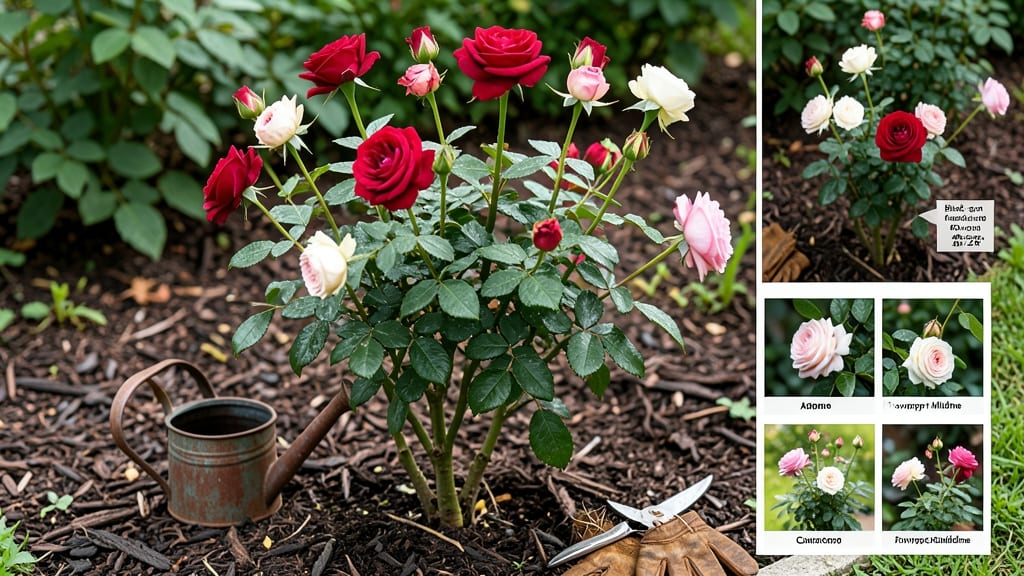
Are rose bushes hard to grow? Actually, they reward patience more than they demand effort—once you establish the right foundation, they become one of the most satisfying plants to grow. 🌸
Roses actually reward patience more than they demand effort—once you establish the right foundation, they become one of the most satisfying plants to grow. 🌸 The key lies in mimicking their natural habitat: full sun exposure (at least 6-8 hours daily), soil that drains well but retains moisture, and pruning at the right times to encourage new growth.
Many gardeners struggle with overwatering or neglecting deadheading, which leads to those frustrating issues like black spot or weak stems. But with just a little routine maintenance—like checking soil moisture before watering or removing spent blooms—you'll see dramatic improvements in just a few weeks.
What surprises most beginners is how quickly roses respond to proper care. I've seen Knock Out roses in particular thrive with minimal fuss—they're disease-resistant and bloom continuously, making them perfect for first-time growers. The secret isn't complexity; it's consistency.
Even the fanciest hybrid teas will reward you with stunning flowers if you stick to these fundamentals. The real challenge comes when gardeners try to cut corners, like planting in heavy clay soil or skipping winter protection—those are the mistakes that make roses seem "hard" to grow.
💡 In This Article
- Key Factors That Make Rose Bushes Thrive
- Beginner-Friendly Rose Varieties for Low-Maintenance Gardens
Key factors that make rose bushes thrive
Roses evolved in temperate climates where they receive full sun exposure—typically 6-8 hours of direct sunlight daily. This sunlight isn't just for aesthetics; it's essential for photosynthesis, which fuels the plant's energy production.
Without enough light, roses become leggy, produce fewer blooms, and develop weak stems that struggle to support heavy flowers. 🌞 The ideal spot mimics their natural habitat: a location that gets morning sun (to dry dew quickly) and afternoon shade in hotter climates.
I've noticed that roses planted in partial shade often grow more foliage than flowers, redirecting their energy toward survival rather than reproduction.
The soil's pH level plays a crucial role too—roses prefer slightly acidic to neutral soil, with a target range of 6.0-6.5. At this pH, essential nutrients like phosphorus (for root development) and iron (for chlorophyll production) become more available.
Too alkaline (7.0+) can lock out these nutrients, causing yellowing leaves even when the plant has enough water. 🌱 To test your soil, use a simple pH kit or send a sample to your local extension service.
Amending with sulfur or peat moss can lower pH, while lime raises it—both should be done gradually to avoid shocking the plant's root system.
Watering creates another common stumbling block. Roses need 1-2 inches of water per week, but the method matters just as much as the amount. Deep, infrequent watering (about 1 inch every 7-10 days) encourages roots to grow deeper in search of moisture, making the plant more drought-resistant.
Shallow watering leads to weak, surface roots that dry out quickly. 💧 The best time to water is early morning, allowing foliage to dry before evening—this prevents fungal diseases like black spot, which thrives in damp conditions.
Mulching with organic matter (like compost or shredded bark) helps retain moisture while regulating soil temperature.
Disease resistance varies dramatically between varieties, which explains why some roses seem "hard" to grow while others flourish with minimal care.
For example, hybrid teas often require more vigilance against powdery mildew due to their dense foliage, while Knock Out roses have been bred to resist common fungal diseases. 🌿 The secret weapon against pests and diseases is proper air circulation—prune to open the center of the bush and remove any crossing branches.
This simple step reduces humidity within the plant, making it less hospitable to fungal spores. Even the hardiest roses will struggle if crowded, so proper spacing (2-4 feet apart, depending on variety) is non-negotiable.
Seasonal care creates another layer of complexity that often trips up beginners. Spring is all about pruning—removing dead wood and shaping the bush to encourage outward growth.
Summer requires consistent deadheading (removing spent blooms) to redirect energy toward new flowers rather than seed production. 🌸 Fall is when you prepare for winter by cutting back foliage and adding protective mulch.
Winter care varies by climate: in colder zones, mound soil around the base for insulation, while in milder areas, a simple layer of mulch suffices. The key is consistency—skipping any of these seasonal tasks creates stress points that make roses seem more difficult than they are.