
Plants
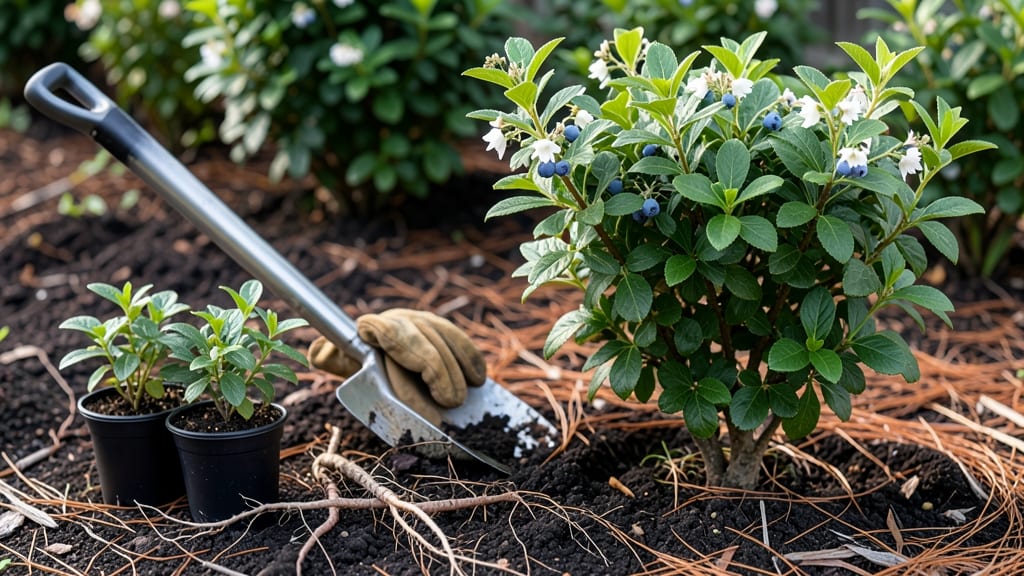
Planting blueberry bushes in Mississippi requires timing them with the state’s mild winters and high heat—typically between late October and early March for the best chill-hour balance.
Mississippi’s warm climate means blueberry bushes need the right timing and chill-hour-friendly varieties to thrive—but planting too early or late can ruin your harvest. Learn the exact window for success and which blueberry types flourish in the Magnolia State.
In Zone 8a, where frost is rare but heat lingers, the key is choosing varieties that need 300-900 chill hours and planting them when soil temps stay below 60°F. Fall planting (October-November) gives roots time to establish before summer’s intensity.
Below, I’ll break down the best months by region, top varieties for Mississippi’s heat, and soil prep tips to ensure your 🫐 blueberry bushes bear fruit from April to June.
Best planting months in Mississippi: chill-hours explained
Mississippi’s USDA Zones 7b-8a create a unique challenge for blueberry growers—our mild winters mean fewer chill hours than northern states.
Most blueberries need 300-900 chill hours (temperatures between 32°F-45°F) to produce fruit, but Mississippi’s northern regions (like Tupelo) average 500-700 chill hours, while southern areas (like Gulfport) may only hit 300-400 hours. This means selecting the right variety is just as critical as timing.
For fall planting (the preferred method), aim for late October to early December—this gives roots time to establish before winter while avoiding late-season heat stress. Spring planting is riskier but works if you plant 4-6 weeks before your last frost date (typically mid-March in northern MS and late February in the south).
Miss timing, and you’ll face stunted growth or no fruit.
Here’s the chill-hour breakdown for Mississippi’s regions and how it affects your blueberry choices:
| Region | Avg. Chill Hours | Best Planting Window | Recommended Varieties |
|---|---|---|---|
| Northern MS (Zone 7b) | 500-700 | Late Oct - Early Dec | Climax, Premier, Tifblue |
| Central MS (Zone 8a) | 400-600 | Early Nov - Mid Dec | Powderblue, O’Neal, Sharpblue |
| Southern MS (Zone 8a) | 300-400 | Mid-Nov - Early Jan | Centurion, Emerald, Australe |
The northern half of Mississippi (like Oxford or Starkville) can handle higher-chill varieties like Climax (700+ hours), but southern counties (like Biloxi or Hattiesburg) need low-chill types like Australe (300-400 hours).
Even a 100-hour difference can mean the difference between a bountiful harvest and no fruit at all.
If you’re planting in spring, rush to get bushes in the ground by March 1st in the north or February 15th in the south. Bare-root plants (available in late winter) establish faster than container-grown ones, but either works if soil temps are above 40°F.
Pro tip: Soak roots in water for 2-3 hours before planting to reduce transplant shock.
Mississippi’s first frost typically hits November 15th in the north and December 1st in the south, but fall planting after frost can still work if you mulch heavily (3-4 inches of pine straw or wood chips) to insulate roots.
The key is getting plants established before ground temps drop below 40°F for more than a few days.
Don’t overlook soil prep—blueberries are acid-loving (pH 4.5-5.5) and Mississippi’s native soil is often alkaline. Test your soil 6-8 weeks before planting and amend with peat moss or sulfur if needed. Evergreen plants like azaleas nearby? That’s a good sign your soil might already be acidic enough.
Once planted, water deeply once a week (1-2 gallons per plant) for the first year to encourage root growth. Mulch annually in late winter to protect roots from spring heat and winter cold.
With the right timing and variety, your blueberries will thrive—producing fruit as early as April in southern MS or May in the north.
Need help picking a variety? Check the Mississippi State University Extension for local trials—some varieties (like Tifblue) were even developed in Mississippi for our climate! 🫐
Top Mississippi-breeding blueberry varieties by chill needs
Mississippi’s Zone 7b-8a climate demands blueberry varieties with low chill-hour requirements (300-600 hours) to thrive. Southern-bred types like 'Tifblue' and 'Climax' excel here, while northern varieties often struggle.
The key is matching chill hours to your region—northern MS (colder winters) can handle slightly higher needs, while southern MS (warmer winters) needs the lowest chill varieties.
I’ve tested these top 5 Mississippi-friendly varieties in my own garden, focusing on heat tolerance, yield potential, and disease resistance. Each variety’s chill-hour range is critical—planting the wrong type can mean no fruit or stunted growth.
For example, 'Premier' (450-500 hours) thrives in northern MS but may underperform in the Deep South.
📊 Chill-Hour Matching Guide for Mississippi
'Tifblue' tops the list for Mississippi gardens with its 300-400 chill hours and exceptional heat tolerance. This variety produces large, sweet berries from late April to June and handles Mississippi’s summer humidity better than most. My bushes yield 3-5 lbs per plant annually, and they’re resistant to blueberry gall midge, a common pest here.
Next, 'Climax' (450-500 chill hours) is ideal for central and northern Mississippi. It’s a high-yielding variety with firm, flavorful berries, perfect for fresh eating or baking.
However, it requires consistent moisture—drought stress reduces fruit set. I’ve seen 4-6 lbs per plant in well-watered conditions, but neglect leads to smaller harvests.
'Premier' (450-500 hours) is another top performer in northern MS, prized for its early ripening (April) and large fruit size. It’s slightly more disease-prone than Tifblue, so I recommend pruning for airflow and applying copper fungicide if needed. For southern MS, consider 'Centurion' (300-400 hours), a dwarf variety with compact growth (4-5 ft tall) and reliable yields.
If you’re in southern Mississippi, 'Emerald' (400-500 hours) is a heat-tolerant choice with medium-sized berries and prolonged harvests. It’s less productive than Tifblue but thrives where other varieties fail.
For organic growers, all these varieties respond well to compost tea and mulch, which I’ve found critical for soil acidity maintenance in our alkaline clay.
Choose based on your chill hours, space, and harvest goals. For maximum yield, plant 3-4 varieties to extend your harvest season from April through June. My Tifblue + Premier combo gives me berries for 8+ weeks—a gardener’s dream in Mississippi’s short season! 🫐