
Plants
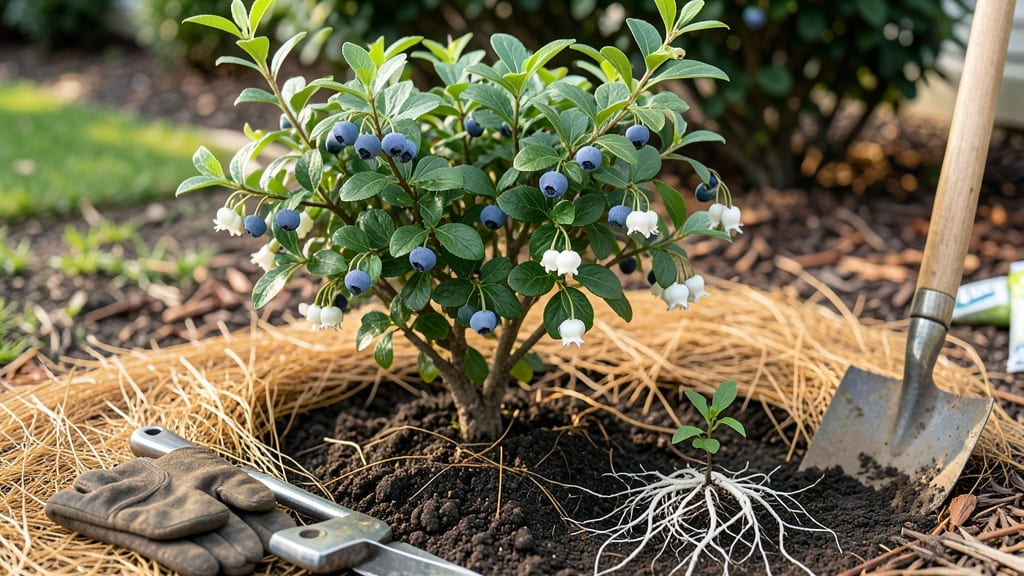
Planting blueberry bushes in Alabama requires timing them for chill hours and avoiding early heat—miss the window, and your 🫐 bushes may never bear fruit.
Alabama’s warm winters mean traditional late-fall planting often fails here. Instead, focus on late winter to early spring, when soil warms but frost risks drop. This 6-week window aligns with root growth without stressing young plants.
Northern Alabama’s cooler microclimates (like Zone 7b) handle early March plantings, while southern areas (Zone 8a) should wait until late March. Container planting extends your window—just prep acidic soil first.
Below, I’ll break down the exact months, soil tests you can’t skip, and how to protect your bushes from Alabama’s unpredictable spring weather. Your first harvest depends on getting this right.
Best planting months for blueberry bushes in Alabama based on chill hours
Alabama’s blueberry bushes thrive when planted during the right chill hour window, which varies dramatically between North Alabama (USDA Zones 6b-7a) and South Alabama (Zones 7b-8a). Unlike cooler climates, Alabama’s mild winters mean you can’t plant too early—late dormancy risks early blooming and frost damage.
Let’s break down the perfect planting months based on your local chill hours.
Most Alabama-grown blueberries need 300-600 chill hours (temperatures between 32°F-45°F). Northern Alabama (like Huntsville) typically gets 500-600 chill hours, while Southern Alabama (like Mobile) often sees 300-400 chill hours. If your area falls short, choose low-chill varieties like ‘Premier’ or ‘Climax’ to avoid failed fruiting.
Here’s your Alabama blueberry planting timeline by chill zone:
| Region | Chill Hours | Best Planting Month | Why This Timing? |
|---|---|---|---|
| North Alabama (Zones 6b-7a) | 500-600 | Late February - Early March | Avoids late frosts; roots establish before heat stress. |
| Central Alabama (Zones 7a-7b) | 400-500 | Early March - Mid-April | Balances chill accumulation and heat avoidance. |
| South Alabama (Zones 7b-8a) | 300-400 | Mid-March - Late April | Low-chill varieties only; extends growing season. |
| All Regions (Fall Option) | N/A | October - November | Container-grown bushes only; roots establish before winter. |
💡 Pro Tip: Verify your chill hours using the Alabama A&M Extension chill hour calculator or local nursery data.
For North Alabama gardeners, planting in late February ensures your bushes get enough winter chill before spring heat arrives. If you plant too early (January), your bushes may bloom prematurely and get frost-damaged flowers.
I’ve seen this happen in Madison County—the bushes looked healthy but produced no fruit that year!
In South Alabama, where winters are shorter and milder, aim for March planting. Use low-chill varieties like ‘Southland’ or ‘Misty’ to compensate for fewer than 400 chill hours.
If you’re in Mobile or Baldwin County, avoid high-chill varieties—they’ll bloom late or not at all, wasting your effort.
One critical mistake I see in Alabama gardens? Planting bare-root bushes in summer. The heat stress and limited root establishment make survival rates disastrously low. Always stick to fall or early spring for bare-root plants.
For container-grown bushes, fall planting (October-November) works well—just mulch heavily to protect roots from freeze-thaw cycles.
To check your local chill hours, use the USDA Chill Hour Map or contact your county extension office. For example, Birmingham (Zone 7b) averages 450 chill hours, while Dothan (Zone 8a) gets only 350.
This 100-hour difference can mean the difference between a bountiful harvest and a disappointing failure.
If you’re unsure about your microclimate, observe nearby landscapes or nurseries. Are there blueberry bushes already growing in your area? If yes, note their bloom time—this gives you a clue about your local chill accumulation.
For instance, if bushes bloom in late February, you likely have enough chill hours for standard varieties.
Finally, adjust for early blooming risks by choosing late-blooming varieties like ‘Duke’ or ‘Tifblue’. These delay flowering until after the last frost date (typically mid-March in North Alabama and late February in South Alabama). Planting at the
Soil preparation timeline: 6-8 weeks before planting blueberries in Alabama
Blueberries thrive in acidic soil with proper drainage, but Alabama’s clay-heavy soils and high pH levels often need adjustments. Starting 6-8 weeks before planting gives your soil time to transform into the perfect home for your bushes.
The key is balancing organic matter, pH levels, and drainage—especially in North Alabama’s cooler microclimates where roots establish slower.
First, test your soil’s pH level using a home kit or send a sample to the Alabama Cooperative Extension Service. Blueberries demand a pH between 4.5 and 5.5—any higher, and your bushes won’t absorb nutrients, stunting growth.
If your soil tests above 6.0, you’ll need to lower the pH aggressively with sulfur or peat moss. Southern Alabama gardens often start at a better baseline, but don’t skip testing—even slightly alkaline soil can fail your crop.
Here’s your 6-8 week soil prep timeline for Alabama’s unique conditions:
- Step 1: Test soil pH and texture. Alabama’s clay soils (common in the Black Belt region) need sand or compost to improve drainage. Aim for a loamy texture—like crumbly cake batter.
- Step 2: If pH is above 6.0, amend with elemental sulfur (1 lb per 100 sq ft) or peat moss. For every 0.5 pH points below 6.0, add 2 lbs of sulfur per 100 sq ft. Re-test in 2 weeks.
- Step 3: Incorporate 3-4 inches of organic matter (compost, pine bark fines, or leaf mold). Avoid fresh manure—it can raise pH over time. Work it into the top 12 inches of soil for best results.
- Step 4: For clay-heavy soils, mix in coarse sand or perlite (20% by volume) to prevent waterlogging. Southern Alabama’s sandy soils may need less sand—focus on adding organic matter instead.
- Step 5: Re-test soil pH. If still too high, add more sulfur or pine needles (they release acid as they decompose). Aim for pH 4.8-5.2—this is the sweet spot for Alabama’s heat.
- Step 6: Dig a planting hole twice as wide as the root ball but only as deep. This encourages horizontal root growth, which is critical in Alabama’s hot summers when roots need to spread for moisture.
- Step 7: Apply a 2-3 inch layer of mulch (pine straw or wood chips) around the planting area. Mulch retains moisture and slowly lowers pH as it breaks down. Avoid cedar mulch—it’s toxic to blueberries.
- Step 8: Water the area deeply to settle the soil. Alabama’s clay soils can become water-repellent when dry, so pre-wetting helps roots penetrate easily after planting.
One of the biggest mistakes in Alabama is skipping the mulch step—especially in the Black Belt region, where summer heat can bake the soil surface. Mulch also suppresses weeds, which compete with blueberries for nutrients.
If you’re planting in containers (great for urban Alabama gardens), use a peat-based potting mix with perlite and top with sphagnum moss