
Shrubs
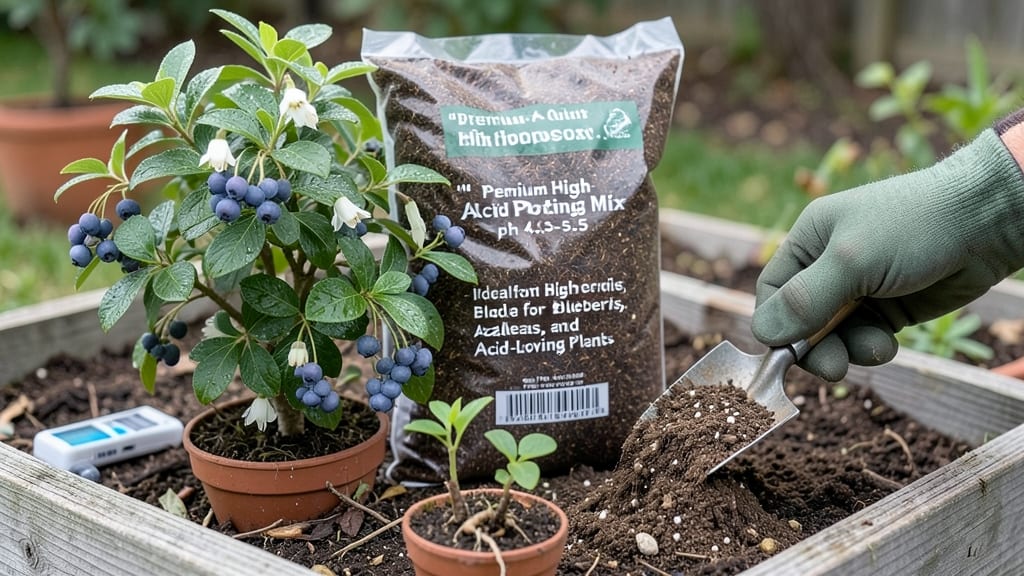
Creating potting soil for blueberry bushes means using an acidic blend with pH 4.5–5.5, typically mixing peat moss, pine bark fines, and perlite to balance moisture and nutrients. Basic soils block nutrient uptake, leading to yellow leaves and poor fruit.
Blueberries thrive in acidic conditions because their roots need low pH to absorb essential nutrients like iron and manganese—critical for vibrant foliage and sweet berries. 🍇 Most garden centers sell pre-mixed acidic soils, but DIY blends give you control over texture and drainage.
I’ve found that adding sphagnum peat moss (up to 50% of the mix) helps maintain acidity while preventing compaction, while perlite keeps roots oxygenated. Test your soil’s pH before planting: if it’s above 6.0, amend with elemental sulfur or aluminum sulfate gradually over months.
For container-grown bushes, refresh the soil every 2–3 years—organic matter breaks down, raising pH over time. Pro tip: Avoid composted manure or wood ash, which can neutralize acidity. Instead, use pine needles or oak leaves as mulch to naturally acidify the soil.
💡 In This Article
- Why Blueberry Bushes Demand Acidic Soil
- DIY Acidic Potting Mix Recipes for Blueberries
Why blueberry bushes demand acidic soil
Blueberries are famously finicky about their growing conditions, and the most critical factor is soil acidity. Their roots can only absorb iron and manganese—key nutrients for chlorophyll production and berry sweetness—when the soil pH sits between 4.5 and 5.5.
At this acidic range, these micronutrients exist in soluble forms that roots can uptake efficiently.
When soil becomes alkaline (pH above 6.0), these nutrients bind to soil particles and become locked away, starving the plant even if they're present in the soil. 🌱 This is why blueberries in neutral or alkaline soils often develop yellow leaves (a condition called chlorosis) despite appearing to have plenty of nutrients.
The science gets even more interesting when you consider microbial activity. Acidic soils foster beneficial fungi and bacteria that form symbiotic relationships with blueberry roots, enhancing nutrient exchange. These microbes thrive in the 4.5–5.5 pH range because their metabolic processes are optimized for acidic environments.
For example, mycorrhizal fungi—common in blueberry rhizospheres—help break down organic matter into forms the plant can use, but their activity drops dramatically in alkaline conditions. This microbial partnership is why even well-fertilized blueberries in non-acidic soil may still underperform.
Organic matter plays a dual role in maintaining acidity.
Materials like sphagnum peat moss and pine bark fines not only provide structure but slowly release organic acids as they decompose, helping sustain the ideal pH. The texture of these components also matters: peat moss holds moisture while allowing oxygen to reach roots, while pine bark fines improve aeration.
Together, they create an environment where roots can efficiently explore the soil for nutrients rather than struggling in compacted, alkaline conditions. 🌿
What most gardeners overlook is how quickly soil pH can shift. Even in containers, organic matter breaks down over time, raising pH naturally. This is why professional growers recommend refreshing potting mixes every 2–3 years—the decomposition process alone can push pH toward neutral within a season.
The good news is that you can counteract this with targeted amendments like elemental sulfur (which lowers pH) or aluminum sulfate, though these should be applied gradually to avoid shocking the plant's root system.
Consider this real-world example: A blueberry bush planted in a pH 6.5 soil might produce tiny, tart berries with sparse foliage, while an identical bush in pH 5.0 soil will bear large, sweet berries with deep purple leaves. The difference isn't just aesthetic—it's biological.
At the right pH, the plant's metabolic processes run optimally, from photosynthesis to fruit development. This is why professional blueberry growers treat soil acidity with the same precision as they would manage irrigation or fertilization schedules.
The visual clues don't lie either. Healthy blueberry leaves have a rich, deep green color with no yellowing between veins—a telltale sign of iron deficiency in alkaline soils. The berries themselves will be smaller and less flavorful when grown in suboptimal conditions.
By maintaining that 4.5–5.5 pH window, you're not just creating ideal growing conditions; you're unlocking the full genetic potential of the plant to produce the sweet, vibrant berries we all love. 🍇