
Pruning
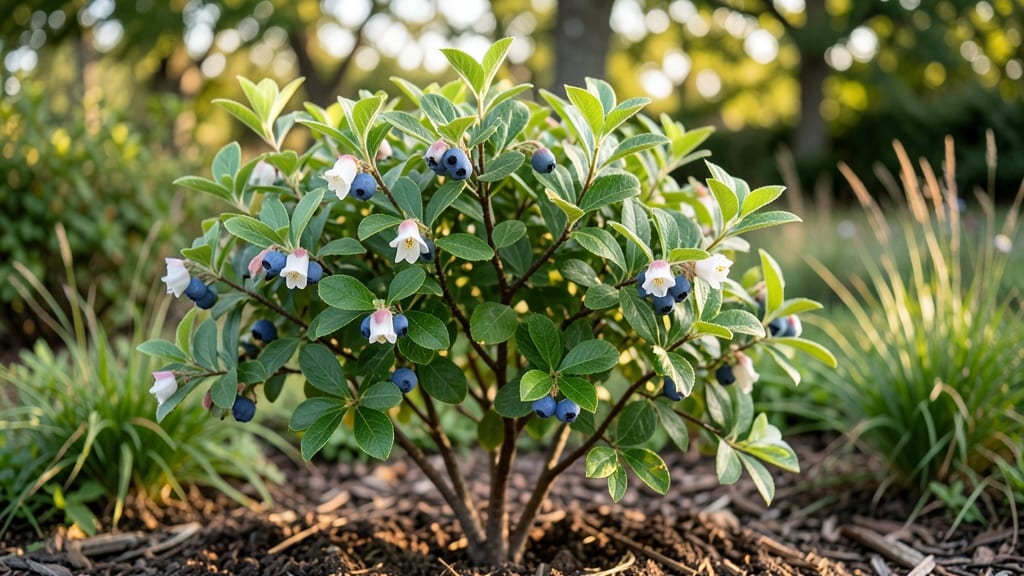
Identifying a blueberry bush starts with its leaves and flowers—those are your first clues. 🌿 I’ve learned that the oval, slightly serrated leaves and delicate clusters of white or pink bell-shaped blooms in early spring are dead giveaways.
These bushes also grow upright with a slightly rounded shape, often reaching 6 to 12 feet tall, depending on the variety. The bark is another tell: it’s reddish-brown and peels in thin strips as the plant matures.
If you see small, blue-purple berries forming in summer, that’s another confirmation—though they’re often hidden under the glossy leaves. Huckleberries, by contrast, have more jagged leaves and grow on vines, not shrubs. You’ll also notice blueberry bushes thrive in acidic soil and prefer full sun to partial shade.
If your plant matches these traits, you’re likely looking at a blueberry—just double-check the berries (or lack thereof) to be sure. This visual guide keeps you from mistaking it for a holly or other shrub with similar foliage.
Once you’ve confirmed it’s a blueberry, you’re ready to prune, fertilize, and enjoy the harvest. The key is paying attention to those early-season flowers and leaf patterns—they’re your best friends in identification.
Common Causes Of Misidentification
Blueberry bushes can sometimes be mistaken for other plants, leading to confusion in your garden. Understanding the root causes of these mix-ups helps you spot the differences accurately. Here’s why misidentification happens—and how to avoid it:
Blueberry bushes share traits with other shrubs, especially in early growth stages.
For example: - Azaleas and Rhododendrons 🌸: Both belong to the Ericaceae family (like blueberries) and have glossy leaves, but their flowers are showy and bell-shaped, while blueberry flowers are tiny and clustered. - Huckleberry Bushes 🫐: These have similar leaves and berries, but their flowers are in dangling clusters, not upright like blueberries. - Elderberries 🌳: Their leaves are compound (multiple leaflets per stem), unlike blueberry’s single, oval-shaped leaves.
Pro Tip: 🔍 Check the flowers first—blueberry blooms are small, bell-shaped, and grow in tight clusters along the stems, while other shrubs often have larger, more spaced-out flowers.
Blueberry bushes don’t look the same year-round, which can throw off identification: - Winter Dormancy ❄️: Without leaves or berries, they resemble bare branches.
Compare their bark (smooth, reddish-brown) and bud shape (oval, not pointed) to rule out other winter-dormant shrubs like lilacs. - Fruiting Stage 🫐: Overripe or damaged berries may look different from healthy ones, making them harder to recognize.
A close look at the flower clusters (upright, not drooping) confirms the identity. - New Growth vs. Old Growth 🌱: Young blueberry shoots have fine, hair-like textures, while mature stems are woody. Other shrubs may have rougher or spiny stems.
Pro Tip: 🌡️ Examine the plant at different times of year—spring flowers and summer berries are the most reliable clues.
Some blueberry cultivars (like rabbiteye or southern highbush) have unique traits that can differ from classic northern highbush types:
- Leaf Shape Variations 🍃: Rabbit-eye blueberries have broader, more rounded leaves, while highbush varieties tend to be narrower and elliptical.
- Berry Size & Color 🫐: Some hybrids produce larger berries or deeper purples, mimicking blackberries or huckleberries.
- Growth Habit 🌿: Dwarf varieties stay compact, while standard bushes spread wider—confusing them with other low-growing shrubs like currants.
Pro Tip: ✨ Research your region’s native blueberry types—local nurseries can help match your plant to the correct species.
Damage from insects or pathogens can alter a blueberry bush’s appearance, making it harder to identify:
- Spider Mites or Aphids 🕷️: Yellowing, curled leaves may resemble nutrient deficiency, not the plant’s natural state.
- Fungal Leaf Spot 🍄: Dark spots on leaves can obscure the smooth, oval shape that defines blueberries.
- Bird or Rodent Damage 🐦: Partially eaten berries may look like a different fruit entirely.
Pro Tip: 💡 Inspect the underside of leaves for pests or signs of disease—healthy blueberry leaves are glossy and free of blemishes.
Over-pruning or neglect can drastically change a blueberry bush’s structure, leading to misidentification:
- Over-Thinning ⚠️: Removing too many branches can make the bush look like a different, less dense shrub (e.g., a juniper).
- Deadheading Without Care 🌸: If old flower clusters aren’t pruned properly, new growth may sprout in unusual patterns.
- Root Competition 🌱: If nearby plants (like raspberries) encroach, the blueberry’s natural shape is obscured.
Pro Tip: 🔪 Prune in late winter—focus on removing last year’s fruit-bearing wood (older stems) to maintain the bush’s signature upright form.
Quick Fixes for Common Blueberry Issues
Once you’ve correctly identified your blueberry bush, the next step is addressing any problems—whether it’s stunted growth, pests, or poor fruit production. Below are practical, step-by-step solutions tailored to common issues, along with prevention tips to keep your bush thriving.
Cause: Poor soil, overcrowding, or nutrient deficiencies (especially nitrogen or phosphorus). Solution:
- Test your soil (💡 Pro tip: Use a DIY kit or send a sample to your local extension office for a full analysis).
- Amend the soil with aged compost or well-rotted manure (2–3 inches mixed into the top 6 inches of soil).
- Apply a balanced fertilizer (10-10-10 or 6-6-6) in early spring before new growth starts.
- Ensure proper spacing—blueberry bushes need 4–6 feet between plants to avoid competition.
Prevention: ✔ Mulch annually with pine needles or wood chips (blueberries love acidic soil, pH 4.5–5.5). ✔ Water deeply but infrequently—aim for 1–1.5 inches per week, avoiding soggy roots.
Cause: Spider mites, aphids, or fungal issues (like powdery mildew) from high humidity or stress. Solution:
| Problem | Quick Fix | Prevention |
|---|---|---|
| Spider Mites | Spray with neem oil or water blast (🔥 Do this in early morning to avoid damaging leaves). | Prune for airflow—remove dense, inner branches. |
| Aphids | Soap spray (1 tbsp mild dish soap + 1 quart water) or ladybugs (release beneficial insects). | Encourage natural predators like lacewings. |
| Powdery Mildew | Baking soda spray (1 tsp baking soda + 1 quart water + a drop of soap) every 7–10 days. | Space plants for better airflow; avoid overhead watering. |
Pro Tip: 🌡️ Monitor humidity—blueberries thrive in 60–70% humidity; use a dehumidifier in greenhouses if needed.
Cause: Lack of pollination, improper pruning, or over-fertilizing with nitrogen (which favors leaves over fruit). Solution:
- Hand-pollinate if bees are scarce—gently brush flowers with a soft brush or vibrate stems with a small tool.
- Prune in late winter/early spring (⏰ Timing matters!):
- Remove dead, diseased, or crossing branches.
- Cut back last year’s fruit-bearing stems by ⅓ to encourage new growth.
- Switch to a low-nitrogen, high-phosphorus fertilizer (like 5-10-10) after flowering to support fruit development.
Prevention: ✔ Plant companion flowers (like lavender or marigolds) to attract pollinators. ✔ Avoid heavy pruning in fall—it stimulates new growth that won’t harden off before winter.
Cause: Root rot (from overwatering), frost damage, or blueberry gall midge (a larval pest). Solution:
- Check roots—if they’re mushy or black, your bush has root rot. Trim affected roots, repot (if in a container), or improve drainage.
- For frost damage: Prune brown, mushy stems to healthy wood and mulch heavily to protect roots.
- Gall midge control: Apply spinosad spray (organic) or kaolin clay as a barrier before flowers appear.
Prevention: 🔥 Never let soil stay soggy—blueberries hate "wet feet." Use raised beds if drainage is poor. 🎯 Inspect bushes weekly in spring for tiny white larvae (gall midge signs).
To keep your blueberry bush healthy and productive, follow this simple seasonal guide:
| Season | Task | When |
|---|---|---|
| Spring | Fertilize (low-nitrogen), prune, check for pests | March–April |
| Summer | Mulch, water deeply, watch for mildew | June–August |
| Fall | Light pruning (remove dead wood), harvest | September–October |
| Winter | Protect from frost, plan next year’s care | November–February |
Final Thought: 💡 Most blueberry problems are preventable with consistent care—soil, spacing, and timing are your best tools! If issues persist, consult a local expert (extension offices often offer free advice). Happy growing! 🌿
Frequently asked questions
How can I tell if my bush is a blueberry vs. a huckleberry?
Look at the flowers first—they’re your best clue! Blueberry bushes have tiny, upright clusters of white or pink bell-shaped blooms, while huckleberries feature dangling flower clusters that look more like grapevine flowers. Also check the leaves: blueberry leaves are smooth-edged and oval, while huckleberry leaves often have more jagged edges.
What does a young blueberry bush look like before it flowers?
Young blueberry bushes have smooth, reddish-brown bark that peels in thin strips as they mature. The leaves are oval with fine serrations along the edges and grow in alternating patterns. Look for new shoots with fine, hair-like textures—these are classic signs of juvenile growth. Without flowers or berries, focus on the leaf shape and bark texture.
Can I identify a blueberry bush in winter when it has no leaves?
Yes! Examine the buds and bark—blueberry buds are oval-shaped and plump, not pointed like lilac buds. The bark is smooth with reddish-brown peeling, while other winter shrubs often have rougher or more textured bark. Also check the branch structure: blueberries grow in an upright, rounded shape, not sprawling like raspberries.
Why do my blueberry leaves look different from what I see in pictures?
Leaf appearance can vary by cultivar—some varieties like rabbiteye have broader, more rounded leaves, while northern highbush types are narrower. Pests or diseases (like spider mites) can also cause yellowing or curling. Always compare with healthy reference leaves from your specific variety, and check the undersides for signs of pests.
How do I confirm it's a blueberry bush if there are no berries?
Focus on the flower clusters and leaf arrangement. Blueberries have small, bell-shaped flowers in tight clusters along the stems, while similar shrubs often have larger, more spaced-out blooms. If flowers are absent, look for the upright growth habit and alternating leaves—these are reliable even without fruit. A soil pH test (blueberries need 4.5-5.5) can also help confirm it's the right plant.