
Shrubs
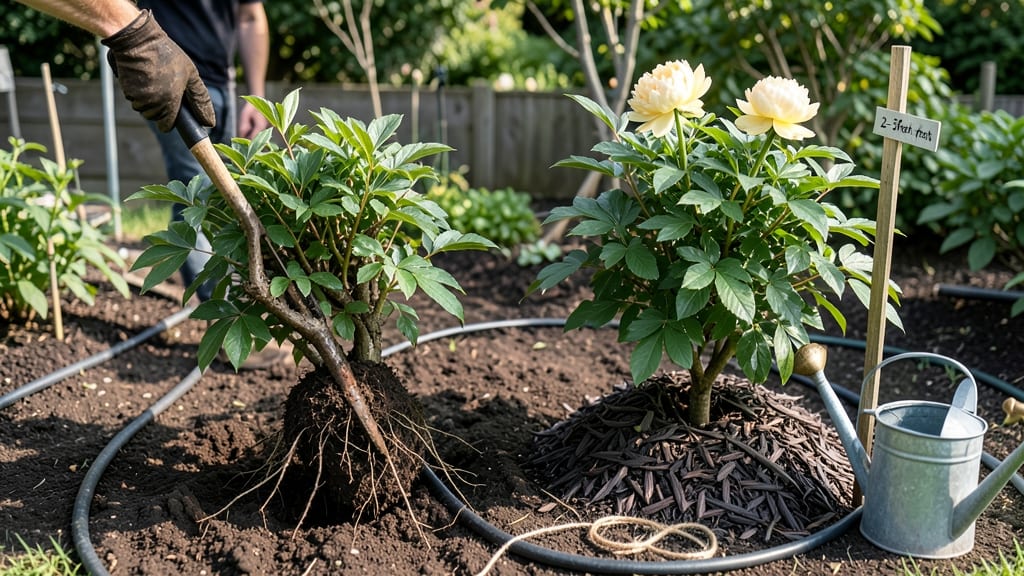
To move peony bushes, choose either early fall (September–October) or early spring (March–April) when the plant isn't actively growing. This timing lets roots establish before dormancy or heat stress, giving your peonies the best chance to thrive in their new spot.
Peonies are finicky about relocation because their roots take time to adapt. 🌱 Moving them during their natural dormancy period (fall) or just as they wake up (spring) minimizes stress.
The key is avoiding extreme temperatures—summer heat or winter cold can shock the plant, while the mild conditions of early fall or spring create ideal healing conditions. I’ve seen peonies recover beautifully when transplanted in these windows, especially if you water deeply afterward and protect them from harsh winds.
Another critical factor is soil preparation. Peonies need well-draining soil rich in organic matter, so amending the new location with compost before transplanting gives roots a nutrient boost.
The first few weeks after moving are crucial—keep the soil consistently moist but not soggy, and avoid heavy pruning until the plant shows new growth. This approach helps them focus energy on root development rather than leaf production.
💡 In This Article
- Why Fall and Spring Are Ideal for Peony Transplanting
- Step-by-Step Peony Transplanting Guide for Success
Why fall and spring are ideal for peony transplanting
Peonies thrive when transplanted during their natural dormancy phases, which occur in early fall (September–October) or early spring (March–April). The key biological reason is their root system's sensitivity to temperature shifts. During dormancy, peony roots enter a state of reduced metabolic activity, making them less vulnerable to transplant shock.
In fall, roots can establish before winter's chill sets in, while spring transplanting aligns with their emerging growth cycle when soil temperatures rise above 50°F. This timing allows roots to focus on spreading rather than supporting active foliage.
The temperature sensitivity of peonies explains why summer and winter moves fail. Summer heat causes rapid water loss through transpiration, while winter's cold can freeze newly disturbed roots. The ideal transplant window maintains soil temperatures between 55-65°F, creating optimal conditions for root regeneration.
This range prevents both heat stress and cold-induced dormancy disruption. 🌱 What's fascinating is how peonies' deep taproots (extending 2-3 feet down) benefit from this timing—they can tap into deeper moisture reserves during establishment.
Moisture availability plays a crucial role in post-transplant recovery. Fall transplanting gives roots 6-8 weeks of warm soil before winter, while spring moves provide 8-10 weeks of growing season to adapt. Both periods offer consistent rainfall patterns in most climates, reducing irrigation demands.
The soil's organic matter content becomes especially important—well-amended soil with 2-3 inches of compost provides the nutrients peonies need during their most vulnerable phase after moving.
Light conditions also interact with transplant timing. Peonies require 6-8 hours of full sun daily, but newly transplanted bushes need partial shade during their first summer to prevent leaf scorch. Fall transplants get this natural protection as days shorten, while spring moves need temporary shade cloth until roots establish.
This light management is why many gardeners prefer fall—it creates a built-in recovery period without additional shade structures.
What most gardeners overlook is how peonies' flowering cycle ties to transplant timing. Moving in fall allows roots to focus on establishing before the plant's energy shifts to bud formation in spring. Conversely, spring moves give roots time to grow before the plant's energy demands peak during bloom season.
This biological synergy explains why peonies transplanted at these times often flower within 1-2 years of relocation, while off-season moves may delay blooming by 3+ years.
Consider these key factors when choosing your transplant window:
- Climate zone: Northern regions favor spring moves (March–April), while southern zones benefit from fall (September–October)
- Soil temperature: Wait until soil reaches 50°F consistently for spring moves
- Moisture levels: Avoid transplanting during drought periods or when soil is waterlogged
- Root condition: Choose days with mild temperatures (60-70°F) to minimize stress
The science behind successful peony transplanting reveals how nature's cycles work in our favor when we align our gardening practices with these biological rhythms. By understanding these mechanisms, you're not just moving a plant—you're helping it thrive through its most critical growth phases. 💫