
Planting
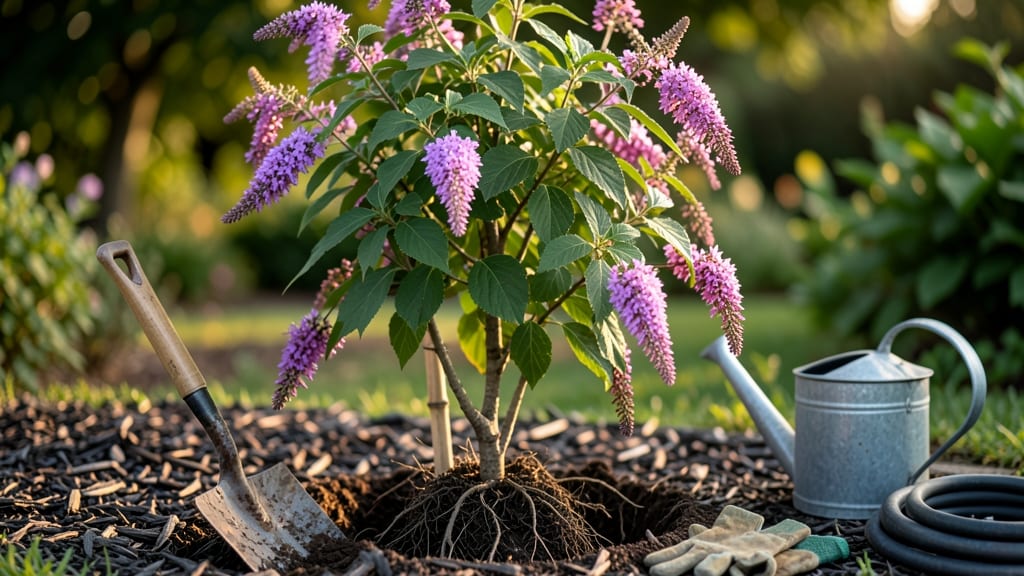
Transplant shock turns your butterfly bush into a crispy mess—unless you know these revival tricks. 🌿 I’ve nursed back more than a dozen struggling bushes by focusing on roots and gradual adjustments, not just water. The key is understanding why leaves scorch and what to do before it’s too late.
Root disturbance and sudden environmental changes cause most shock. When you move a butterfly bush, its roots get stressed, and if you then water too much or too little, the leaves burn from the edges inward.
Even the hardiest varieties need time to adjust—think of it like moving to a new house where everything feels unfamiliar at first.
You can revive a shocked bush by pruning back damaged leaves, watering deeply but consistently, and keeping it in partial shade for a week. Within 2-3 weeks, new growth will signal the roots have settled in. The secret? Don’t rush it—patience beats panic every time.
For future transplants, prep the soil with compost, water deeply the day before moving, and choose a cloudy day to minimize stress. Timing matters too: spring or early fall gives roots time to establish before extreme weather hits. With these steps, your butterfly bush won’t just survive—it’ll thrive.
Root Stress Triggers Transplant Trauma
When your butterfly bush (Buddleia spp.) suddenly wilts, yellows, or drops leaves after relocation, it’s often due to transplant shock—a physiological stress response triggered by disruptions to its root system and overall equilibrium.
Unlike wilting from thirst or pests, this shock stems from mechanical and biological stressors that overwhelm the plant’s ability to recover quickly. Understanding these root causes is the first step to preventing permanent damage. Let’s break down why it happens—so you can fix it fast.
Butterfly bushes thrive when their roots establish a symbiotic relationship with the surrounding soil. During transplanting, even careful handling can sever or crush delicate feeder roots, which are responsible for 90% of water and nutrient absorption. Here’s how it plays out:
- Root pruning or breakage: Feeder roots (fine, hair-like roots <1mm in diameter) are easily damaged when dug up. These roots regenerate slowly—if at all—if the plant is already stressed. Actionable fix: Use a sharp spade to minimize root loss and avoid compacting soil around the root ball.
- Soil compaction: Tightly packed soil restricts oxygen flow to roots, causing anaerobic conditions (low oxygen) that trigger ethylene production—a stress hormone linked to leaf drop. Actionable fix: Loosen the soil 12+ inches deep before and after transplanting.
- Root desiccation: Exposed roots dry out within 30–60 minutes in wind or sun, leading to osmotic shock (cells lose water faster than they can absorb it). Actionable fix: Keep the root ball moist with a damp burlap wrap or transplant on a cloudy day.
Pro Tip: 💡 If you must transplant in hot weather, submerge the root ball in a bucket of water for 10–15 minutes before planting to revive dormant roots.
Butterfly bushes are adaptable, but sudden changes in their microclimate can trigger shock. The most critical mismatches involve:
| Factor | Old Location | New Location | Resulting Stress |
|---|---|---|---|
| Sun Exposure | Partial shade (e.g., dappled light) | Full sun (6+ hours) | Leaf scorch from photooxidative damage (excess light breaks down chlorophyll). |
| Wind Exposure | Sheltered (e.g., near a fence) | Open/windy | Transpirational stress—water loss outpaces absorption, causing wilting. |
| Soil pH | Slightly acidic (pH 6.0–6.5) | Alkaline (pH 7.5+) | Nutrient lockout—iron, manganese, and zinc become unavailable, stunting growth. |
| Moisture Retention | Well-draining clay | Sandy soil | Root dehydration—sandy soil drains too quickly, overwhelming the plant’s recovery. |
Pro Tip: 🌡️ Test soil moisture daily for 2 weeks post-transplant. Stick your finger 2 inches deep—if it’s dry, water deeply (not just a light sprinkle).
Transplanting weakens a butterfly bush’s defenses against pathogens and pests, making it vulnerable to secondary infections that mimic shock symptoms. Here’s the science:
- Wound-induced pathogens: Damaged roots create entry points for Phytophthora (a water mold) or Fusarium fungi, which thrive in moist, compacted soil. Symptoms: Blackened roots, sudden wilting despite watering.
- Pest infestations: Stressed plants attract aphids or spider mites, which sap sap and spread viruses. Signs: Sticky honeydew, yellow stippling on leaves.
- Root rot: Overwatering post-transplant (a common mistake) suffocates roots by displacing oxygen. Red flag: Mushy, foul-smelling roots.
Pro Tip: ✨ Before transplanting, treat the soil with a mycorrhizal fungus (like Glomus intraradices) to boost root resilience. These beneficial fungi form a protective network around roots.
By addressing these three core triggers—physical root damage, environmental whiplash, and immune compromise—you can drastically reduce transplant shock. The key is prevention through preparation, not just reactive fixes. Stay tuned for our next section on recovery strategies to nurse your butterfly bush back to health!
Revive Your Butterfly Bush Now
Transplant shock doesn’t have to mean the end of your butterfly bush—with the right care, you can nurse it back to health and even prevent future stress. Below, we’ve mapped common causes to practical fixes, so you can act fast and keep your plant thriving. 🌿💚
Signs: Yellowing leaves, wilting, or soggy soil that stays damp for days.
How to Fix It:
- Stop Watering Immediately 🚰 – Overwatering is the #1 killer of recovering plants. Let the soil dry out completely before watering again.
- Check Drainage 🏗️ – If your pot or garden bed has poor drainage, add perlite or sand to improve airflow.
- Water Deeply but Less Often 💧 – Once the soil is dry 2–3 inches down, water thoroughly until it drains from the bottom.
Prevention Tip: 💡 Use your finger to test moisture—if the topsoil feels damp, wait another day.
Signs: Brown, crispy edges on leaves, drooping, or sunburn-like spots.
How to Fix It:
- Move to Partial Shade 🌳 – Gradually acclimate your bush to morning sun or dappled shade for 1–2 weeks.
- Provide Afternoon Relief 🌅 – If outdoor planting, use shade cloth (30–50%) during peak sun hours (11 AM–3 PM).
- Mulch for Moisture Retention 🌿 – A 2–3 inch layer of mulch keeps roots cool and hydrated.
Prevention Tip: ✨ Hardened butterfly bushes tolerate full sun—just ease them into it over 7–10 days post-transplant.
Signs: Purple-tinged leaves, stunted growth, or sudden wilting in extreme temps.
How to Fix It:
- Protect from Wind & Drafts 💨 – Use burlap windbreaks or move potted bushes to a sheltered spot.
- Adjust Watering for Heat 🔥 – Water early in the morning to reduce evaporation stress.
- Cover for Cold Snaps ❄️ – Lightweight frost cloth can shield new transplants from sudden chills.
Prevention Tip: 🎯 Monitor your local forecast—avoid transplanting during heatwaves or frost warnings.
Signs: Slow recovery, stunted growth, or roots circling in a pot.
How to Fix It:
- Gently Loosen Roots 🌿 – If repotting, tease out tangled roots and trim any mushy or blackened sections with clean shears.
- Use Well-Draining Soil 🏗️ – Mix native soil with compost and perlite (ratio: 2:1:1) for better aeration.
- Avoid Fertilizing Yet 🚫 – Wait 4–6 weeks post-transplant to let roots establish before adding nutrients.
Prevention Tip: ⏰ Transplant on a cloudy day or in late afternoon to reduce root exposure to sun.
Signs: Chewed leaves, sticky residue, or fungal spots (like powdery mildew).
How to Fix It:
- Isolate the Plant 🛑 – Move it away from other bushes to prevent spread.
- Spray with Neem Oil 🌿 – Mix 1 tbsp neem oil + 1 tsp mild soap in 1 quart water; spray leaves thoroughly.
- Prune Damaged Foliage ✂️ – Cut off affected leaves with sterilized shears to redirect energy.
Prevention Tip: 💡 Inspect new plants before bringing them home—quarantine for 2 weeks if possible.
| Week | Focus | Action |
|---|---|---|
| 1 | Hydration & Stress Relief | Water lightly, shade, monitor daily. |
| 2–3 | Root Establishment | Gradually reintroduce sun, check soil. |
| 4+ | Growth & Fertilization | Add balanced fertilizer (10-10-10). |
Final Pro Tip: 🌟 Patience is key—some bushes take 6–8 weeks to fully bounce back. Celebrate small wins like new buds or vibrant leaves!
Frequently asked questions
How long does butterfly bush transplant shock typically last?
Most butterfly bushes show signs of recovery within 2-3 weeks with proper care. Mild shock may resolve in 10-14 days if you provide consistent moisture, partial shade, and avoid fertilizing. Severe cases can take up to 6-8 weeks—look for new growth at the stems as a positive sign.
Can I prune my butterfly bush while it's recovering from transplant shock?
Yes, but focus on damaged leaves only—never cut more than 25% of foliage at once. Use clean shears to remove crispy edges or yellowed leaves to redirect energy to root recovery. Avoid heavy pruning until you see 2-3 inches of new growth.
What's the best time of day to transplant butterfly bushes?
Transplant on a cloudy day or late afternoon (after 4 PM) to minimize sun stress. Early morning works too, but avoid midday heat when roots are most vulnerable to drying. If transplanting in summer, water the root ball thoroughly 24 hours before moving.
Will my butterfly bush survive if it loses all its leaves during transplant?
It can recover, but act fast! If leaves drop completely, focus on root care: water deeply every 3-4 days, keep in partial shade, and avoid fertilizing for 6 weeks. New leaves should emerge within 4-6 weeks if roots stay healthy—don't give up until you see fresh growth.
How do I know if my butterfly bush is suffering from shock vs. disease?
Shock causes uniform wilting or browning (often starting at leaf edges), while disease shows spots, mold, or uneven damage. Check roots—healthy roots are firm and white; diseased roots are mushy or black. If you see sticky residue or fungal growth, isolate the plant and treat with neem oil.