
Watering
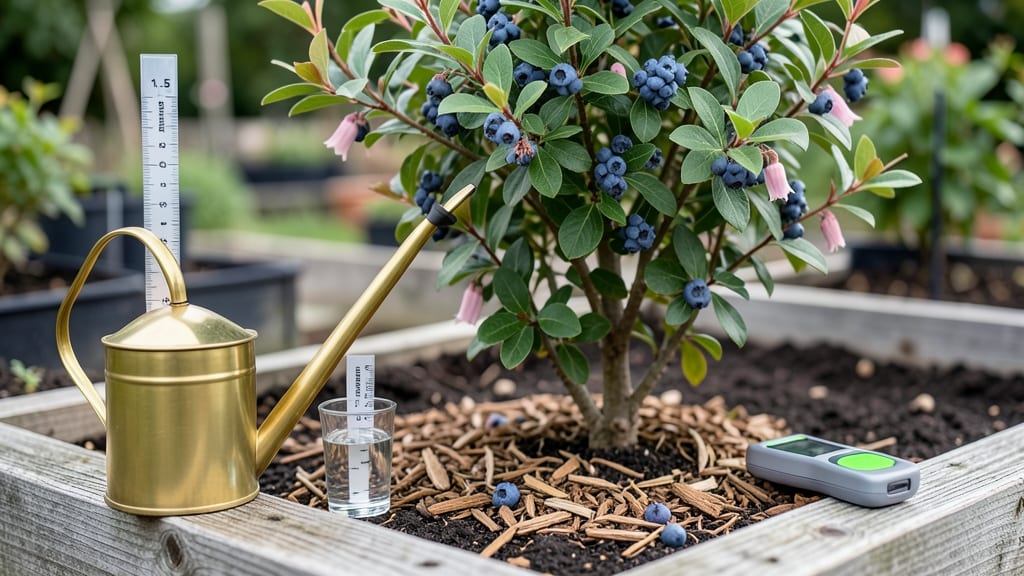
A blueberry bush needs 1-2 gallons of water per week during its growing season to thrive, but getting that right makes all the difference between a bountiful harvest and struggling plants.
Picture this: You’ve just planted your 🫐 blueberry bush in spring, full of hope for juicy berries by summer. But a month later, the leaves are wilting, and the soil feels like sand. That’s the classic sign of inconsistent watering—something even experienced gardeners get wrong.
Blueberries are fussy about moisture, needing deep soaks rather than light sprinkles. Too little water, and the roots dry out; too much, and you risk rot. The secret lies in seasonal adjustments, soil type, and knowing when to step back as the plant matures.
In this guide, I’ll break down exactly how much water your 🫐 blueberry bush needs each month, how to spot over- or under-watering, and the best techniques to keep your plants happy year-round—whether you’re growing in containers or in the ground.
Blueberry bush watering requirements by season: a month-by-month guide
Blueberry bushes thrive when their watering needs align with their growth cycle. Unlike many plants, they demand consistent moisture during fruiting but can suffer from overwatering in dormancy. The key is understanding how seasonal changes affect their root zone hydration and adjusting accordingly.
Whether you're growing in containers or in-ground, these monthly guidelines will help you maintain the perfect balance for optimal berry production.
First, let's address the biggest watering mistake most gardeners make: shallow watering. Blueberries need deep soaking to encourage strong root development. Aim for 1-2 gallons per plant during active growth, delivered slowly to penetrate the 12-inch root zone.
In containers, check soil moisture daily—potted plants dry out much faster than in-ground bushes. Always water in the early morning to minimize evaporation and fungal risks.
🌱 SUMMARY-TABLE: BLUEBERRY BUSH WATERING GUIDE BY SEASON
| Season/Month | Watering Frequency | Water Amount | Soil Moisture Goal | Key Notes |
|---|---|---|---|---|
| January-February (Dormancy) | Bi-weekly | ½ gallon | Dry top 2 inches | Minimize water; prevent soggy soil |
| March (Early Growth) | Weekly | 1 gallon | Moist 6 inches down | Increase as new leaves appear |
| April-May (Flowering) | Every 3-4 days | 1.5 gallons | Consistently moist | Critical for fruit set; avoid drought stress |
| June-July (Fruiting) | Daily (young), Every 2 days (mature) | 2 gallons | Never dry out | Peak watering needs; mulch heavily |
| August (Post-Harvest) | Every 4-5 days | 1 gallon | Moist but drying slightly | Reduce gradually to prepare for dormancy |
| September-October (Late Growth) | Weekly | ½-1 gallon | Top 4 inches dry | Encourage root hardening before frost |
| November-December (Dormancy) | Bi-weekly | ¼ gallon | Minimal moisture | Only water if soil is completely dry |
Let's break down each season to help you adjust your watering routine. In winter months (January-February), blueberries enter dormancy and require minimal watering. Only water if the soil is completely dry to a depth of 4 inches.
Overwatering now can lead to root rot and weaken the plant before spring growth. A simple test: stick your finger 2 inches into the soil—if it feels dry, it's time to water lightly.
As temperatures rise in March and April, your blueberry bushes will begin their active growth phase. This is when you'll see new leaves and buds forming. Increase watering to weekly deep soakings, providing 1 gallon per plant.
Pay special attention during flowering (April-May), as consistent moisture is critical for fruit set. Stress during this period can cause flowers to drop, reducing your harvest potential. Use a moisture meter to ensure the root zone stays consistently moist but not soggy.
June and July are the most critical months for watering, as your blueberries are actively fruiting. During these peak growth months, aim to water every 2-3 days, delivering 2 gallons per plant each time. Young bushes may need daily watering in extreme heat.
The goal is to keep the soil evenly moist without waterlogging. Apply water slowly at the base of the plant, avoiding the foliage to prevent fungal diseases like botrytis.
After harvest in August, gradually reduce watering frequency to every 4-5 days while maintaining 1 gallon per plant. This tapering helps prepare the plant for dormancy. Monitor soil moisture closely—blueberries are sensitive to sudden drought stress after a wet season.
In September and October, switch to weekly watering with ½ gallon per plant, allowing the top 4 inches of soil to dry slightly between waterings. This encourages root hardening before winter.
For gardeners in drought-prone areas, consider installing a drip irrigation system to deliver water directly to the root zone. Mulching with 3-4 inches of organic mulch (like pine straw or wood chips) helps retain moisture
Signs your blueberry bush is overwatered or underwatered (and how to fix it)
Blueberry bushes send clear signals when their water needs aren't met. Yellowing leaves or drooping branches often mean your plant is struggling—whether from too much or too little moisture. The key is learning to read these visual cues before they become irreversible damage.
I've seen firsthand how quickly overwatering can lead to root rot, while underwatering stunts berry production.
Start by checking the soil moisture 2-3 inches below the surface. Stick your finger in—if it feels damp but not soggy, you're likely in the safe zone. Mature bushes need about 1-2 gallons of water per week, while younger plants require more frequent deep watering.
The goal is consistent moisture without waterlogging.
⚠️ callout-warning ⚠️
Blueberries thrive with 1-2 inches of water weekly during growing season (spring-fall). Deep watering 2-3 times per week is better than shallow daily doses. Morning watering prevents fungal issues, while mulch retains moisture without suffocating roots. Adjust in hot/dry climates—increase frequency but avoid soggy soil.
One of the first underwatering signs is crispy leaf edges or leaves curling inward. The plant may also drop buds or flowers before fruiting. In extreme cases, branches become brittle.
To fix this, water deeply until moisture reaches 6-8 inches down—use a moisture meter if unsure. Container-grown bushes dry out faster, so check soil daily in hot weather.
Overwatered blueberries show dark, mushy leaves or stems that feel squishy when pressed. Root rot spreads quickly in waterlogged soil, causing the plant to wilt despite excess moisture. If you spot yellowing leaves with brown edges or a foul smell at the base, act fast.
Reduce watering immediately and improve drainage by adding organic compost or perlite to the soil.
For root health assessments, gently dig around the base (1-2 inches deep) and check for firm, white roots. Healthy roots should feel springy, while rotten roots appear dark and slimy.
If roots are compromised, repot the bush in fresh, well-draining soil and hold off on watering for 3-5 days to let the roots recover.
Prevent future issues by testing soil moisture regularly and adjusting your watering schedule. Mulching with pine needles (to lower pH) or wood chips helps retain moisture while improving soil structure.
And always water at the base of the plant—avoid wetting leaves to reduce disease risk. With these adjustments, your blueberry bush will bounce back in no time!