
Pruning
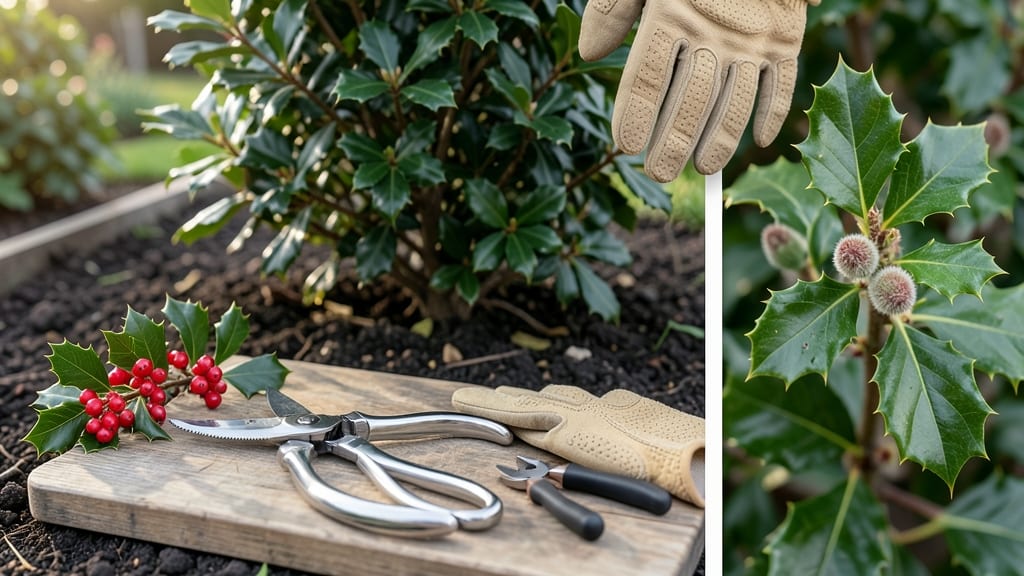
You can trim holly bushes when they can be trimmed in late winter—between February and early March—when they’re still dormant but just before new growth begins.
Pruning holly bushes at the wrong time can stunt growth, reduce berry production, or even harm the plant—so timing is everything for a thriving shrub. 🌿
This window ensures you don’t accidentally cut off next year’s flowers or damage the berries that add color and interest to your landscape. In warmer climates, like Zone 6a, you might delay until late winter to avoid early budding.
Below, I’ll walk you through the exact steps to prune your holly bush safely, how to shape it for healthy growth, and what to watch for if you’re unsure whether it’s time to trim.
Best time to trim holly bushes for maximum growth and berries
Timing your holly bush pruning correctly ensures healthy growth and abundant berries next season. Late winter—specifically February to March—is the golden window for trimming, aligning perfectly with the plant’s dormant phase. This timing avoids disturbing flowering buds or berry-producing branches, which develop later in spring.
Holly bushes produce berries only on old wood, meaning new growth from this year won’t bear fruit. Pruning too late risks cutting off next year’s berry-producing stems, while trimming too early can expose tender spring growth to frost damage.
Late winter strikes the balance by letting the plant recover before active growth begins.
Regional climates play a role: In warmer zones (USDA 8-10), you can trim as late as early April without risking frost. In colder zones (USDA 3-7), wait until after the last frost (typically mid-March) to avoid damaging new shoots.
| Trim Timing | Best For | Avoid | Notes |
|---|---|---|---|
| Late Winter (Feb-Mar) | Max berries, growth | Frost damage | Dormant phase; no buds active |
| Early Spring (Apr) | Mild climates only | Flower buds | Risk cutting berry stems |
| Summer (Jun-Aug) | Light shaping | Berry production | Minimal pruning; focus on dead wood |
| Fall (Sep-Oct) | Avoid entirely | New growth | Stimulates tender shoots before winter |
If your holly bush has overgrown branches or dead wood, late winter is the perfect time to remove them. Cut back to the main stem or healthy lateral branch to encourage vigorous regrowth.
Avoid heavy pruning—never remove more than 25% of the foliage in one session to prevent stress.
For male holly bushes, which don’t produce berries, you can prune more aggressively in late winter to shape the plant. However, female bushes (the ones with berries) require gentler trimming to preserve fruit-bearing branches. Focus on removing crossing branches or sparse areas to maintain an open, airy structure.
In mild winter climates (like Southern California or Florida), holly bushes may stay semi-dormant year-round. Here, prune in early spring (March) to avoid disturbing early flowering. Always check for flower buds—if they’re swollen, wait until after blooming to trim.
After pruning, apply a layer of mulch around the base to retain moisture and protect roots. Water deeply to help the plant recover, especially if you’ve trimmed during a dry spell. Fertilize lightly in early spring (March-April) to support new growth without overstimulating the plant before it’s ready.
Never trim holly bushes in fall—this stimulates tender new growth that won’t survive winter frosts. Similarly, avoid pruning during berry production season (late summer to fall) to ensure next year’s crop.
By following this late-winter schedule, your holly bush will thrive with lush foliage and plentiful berries for years to come. ✂️🌿
Step-by-step guide to pruning holly bushes without harming them
Pruning your holly bushes correctly ensures healthy growth and vibrant berries while preventing damage. The key is using the right tools and techniques—especially when trimming during late winter or early spring.
Start by gathering clean, sharp bypass pruners or loppers for larger branches. Always disinfect your tools with rubbing alcohol to avoid spreading disease between cuts.
Before you begin, map out your cuts to maintain the natural shape of your holly. Remove dead or diseased branches first—they’re easy to spot as they’re brown, brittle, or lack leaves. Next, focus on thinning out crowded areas to improve airflow, which reduces pest and fungal risks.
Never remove more than one-third of the bush in a single session, or you’ll stress the plant.
- 1 Choose the right time: Trim holly bushes in late winter (February-March) before new growth begins. Avoid pruning during fall or summer, as this can harm flowering buds or berry production.
- 2 Use sharp tools: Always use clean, sharp pruners or loppers to make precise cuts. Dull tools crush stems, leaving wounds that invite disease. Disinfect blades with rubbing alcohol between cuts.
- 3 Remove deadwood first: Cut out dead, diseased, or crossing branches at the branch collar (the swollen area where the branch meets the stem). This prevents spread of infection and improves air circulation.
- 4 Thin out crowded areas: Focus on selective pruning to open the center of the bush. Remove up to 20% of the foliage to encourage new growth and berry production without overstressing the plant.
- 5 Shape gradually: Avoid heavy pruning in one season. Instead, shape holly bushes over 2-3 years to maintain a natural, balanced form. Use hand pruners for small branches and loppers for thicker stems.
- 6 Clean up after pruning: Remove all clippings and disinfect tools again. Apply a layer of mulch around the base to retain moisture and suppress weeds, which helps the holly recover faster.
When shaping your holly bush, prioritize vertical growth over horizontal branches to create a tapered, natural look. For standard holly varieties, aim to remove branches that grow inward or downward, as these can block sunlight and reduce berry production.
If your holly is overgrown, focus on rejuvenation pruning—cutting back older branches to encourage new, vigorous growth.
After pruning, monitor your holly bush for new growth within 4-6 weeks. Healthy holly should sprout fresh leaves and buds by late spring. If you notice yellowing leaves or stunted growth, you may have pruned too aggressively.
In this case, reduce watering slightly and avoid fertilizing until the plant recovers. With the right timing and technique, your holly will thrive for years to come.
For regional adjustments, holly bushes in mild climates (like USDA Zone 8+) can tolerate light pruning in early fall, but avoid heavy cuts. In colder zones (like Zone 6 or below), wait until after the last frost (typically April) to prune.
Always check for dormant buds before cutting—these indicate where new growth will emerge.