
Plants
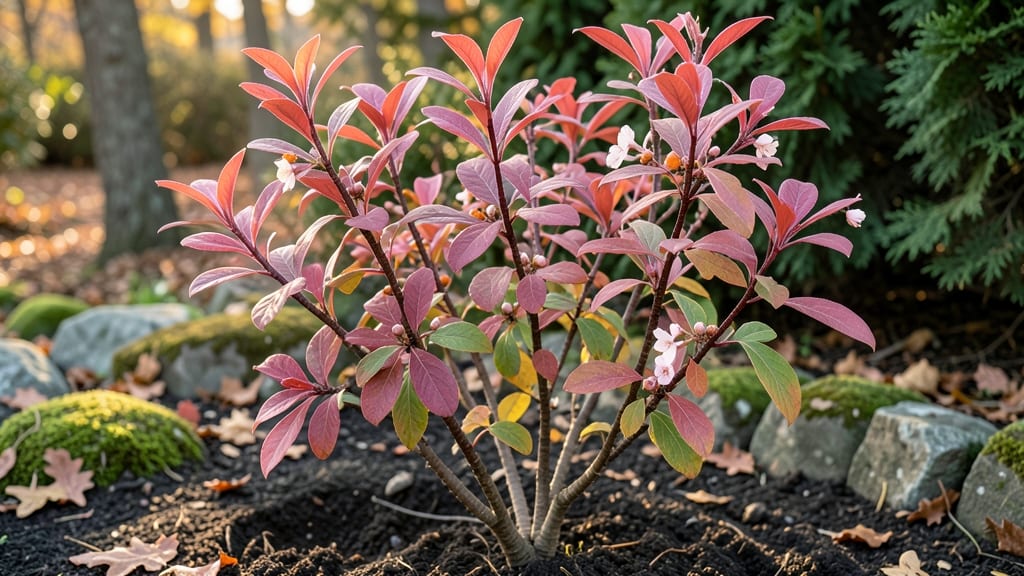
A burning bush shrub looks like a striking landscape feature with its bold red-orange stems that blaze in autumn, glossy dark green leaves growing in opposite pairs, and delicate white flower clusters appearing in late summer. This shrub grows upright with multiple stems, reaching 6 to 12 feet tall and forming a dense, rounded shape.
A burning bush shrub gets its name from the dramatic fall color transformation that makes its stems glow like embers. 🔥 The leaves—smooth, oval, and deep green—stay vibrant until frost, while the small white flowers in late summer provide subtle contrast.
What sets it apart is how its stem color intensifies as temperatures drop, creating a fiery display that lasts through winter. Unlike similar shrubs, burning bush maintains its structure without needing heavy pruning, making it a low-maintenance choice for bold seasonal interest.
The shrub's multi-stemmed growth habit creates natural layers, giving it a fuller appearance than single-trunk alternatives. I've found that planting it in full sun enhances the stem color, while partial shade can mute the effect.
When selecting a location, consider mature size—these shrubs can spread 4 to 6 feet wide, so spacing them 8 to 10 feet apart prevents overcrowding.
💡 In This Article
- Identifying Burning Bush by Stem, Leaf, and Flower Characteristics
- Burning Bush Growth Habits and Seasonal Color Transformation
Identifying burning bush by stem, leaf, and flower characteristics
The burning bush's most iconic feature is its stem color transformation, which follows a predictable seasonal progression. In spring, the stems emerge a pale green, gradually darkening to a deep red-brown by summer.
The real show begins in fall when temperatures drop below 50°F, triggering the stems to turn a fiery red-orange hue that can last through winter. This color change occurs because the plant's chlorophyll breaks down, revealing underlying pigments called anthocyanins—similar to how maple leaves turn red in autumn.
The leaves provide another key identification mark with their opposite arrangement (two leaves emerging at each node) and smooth, oval shape measuring about 2-4 inches long.
Unlike similar shrubs like winged euonymus, burning bush leaves have no serrated edges and maintain a glossy texture that reflects light. 🌿 The leaf veins are subtle but visible, creating a slightly ribbed appearance when held against sunlight.
One distinguishing trait is how the leaves stay attached to the stems even after frost, creating a striking contrast with the colorful bark.
Flower identification is crucial for accurate species confirmation. Burning bush produces small, tubular white flowers in late summer (typically July-August), arranged in clusters at the stem tips. Each flower measures about 1/4 inch wide and has four petals that spread slightly when fully open.
These flowers lack the showy pink hues of some euonymus varieties, making them less conspicuous but equally important for identification. The flowers develop into small, red-orange berries in fall, though these are less prominent than the vibrant stems.
Comparing burning bush to its closest lookalike—the winged euonymus—reveals key differences. Winged euonymus has winged stems (visible ridges) and pink flowers, while burning bush stems remain smooth and flowers stay white.
The leaf arrangement is also different: winged euonymus often has three leaves at a node rather than the burning bush's strict opposite pairs. These distinctions help gardeners avoid confusing the two when selecting shrubs for seasonal color displays.
For a hands-on identification test, examine the stem texture—burning bush stems are smooth and slightly waxy, while winged euonymus stems feel more ridged. 🔍 Run your fingers along the stem: if it feels like a smooth pipe rather than a textured surface, you're likely dealing with a true burning bush.
This tactile difference becomes more apparent as the shrub matures, with stems reaching up to 1/2 inch in diameter.
One advanced identification trick involves checking the leaf undersides. Burning bush leaves have a slightly lighter green on the underside with visible veins, while many euonymus varieties have a more uniform coloration. This subtle detail can help confirm your identification when other traits are ambiguous.
For gardeners, this knowledge translates to better plant selection and care—choosing the right shrub ensures the dramatic fall color display you're after.