
Shrubs
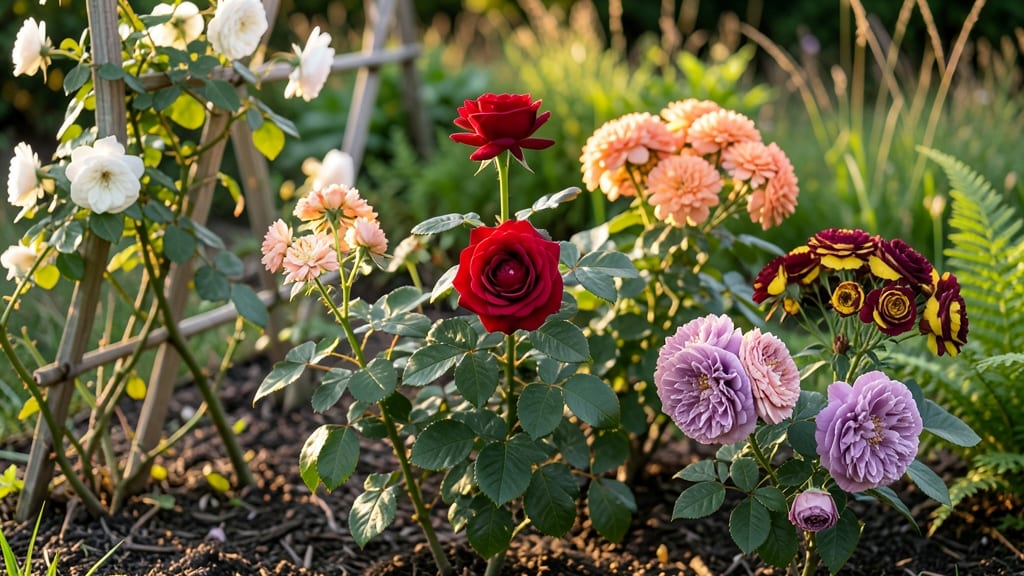
Discovering the perfect rose bush starts with browsing through types of rose bushes pictures—each variety offering its own unique charm to transform your garden. 🌹 From towering climbers that paint walls in pink to compact shrubs that spill over borders, every type brings its own drama—whether it's the classic elegance of hybrid teas or the wild romance of old garden roses.
Hybrid teas are the divas of the rose world—stunning single blooms on tall stems, perfect for cutting and dramatic centerpieces. Shrub roses, though, are the workhorses: low-maintenance, repeat-blooming, and happy in almost any spot.
Then there are climbers, which turn fences into living tapestries, and ground covers that smother weeds like a lush green blanket.
What you’ll get is a garden that feels like a curated art gallery—each rose playing its part. The velvety petals of a David Austin English rose, the bold clusters of a Floribunda, or the delicate sprays of a Polyantha—every type has its own story to tell in your outdoor space.
Whether you’re designing a romantic cottage garden or a modern minimalist landscape, these varieties give you the tools to create something truly personal. Let’s explore which one might steal your heart first.
📚 In This Guide
- What you need
- Instructions
- Tips and common mistakes
- Wrapping up and next steps
What you need
- ● Rose bushes: Choose 3–5 plants (or more!) based on your space and preferred types (e.g., hybrid teas, floribundas, climbers). Opt for bare-root (dormant season) or container-grown (year-round) varieties.
- ● Garden soil: 1–2 cubic yards of well-draining, nutrient-rich soil (amend with compost or peat moss if your soil is clay-heavy).
- ● Fertilizer: Balanced fertilizer (10-10-10) for planting (1–2 tbsp per plant).
- ● Slow-release rose fertilizer (e.g., Osmocote) for ongoing care (1–2 lbs per 100 sq ft).
- ● Mulch: 2–3 inches of wood chips or straw to retain moisture and suppress weeds.
- ● Pruning tools: Bypass pruners (for clean cuts).
- ● Loppers (for thicker stems).
- ● Garden saw (for large, woody branches).
- ○ Support structures: (Optional but recommended for climbers/ramblers) Trellis (6–8 ft tall).
- ● Arbor or pergola (for vertical growth).
- ● Stakes or cages (for shrub roses).
- ● Rose food: Liquid fish emulsion or seaweed extract for a mid-season boost.
- ● Disease prevention: Copper fungicide (to prevent black spot).
- ● Neem oil (natural pesticide).
- ● Drip irrigation system (for consistent watering).
- ● Garden gloves (to protect your hands from thorns!).
- ● Plant tags (to track varieties and care notes).
How to identify and select the best rose bush varieties for your garden
Picking the right roses transforms your garden from ordinary to extraordinary. Here's how to match varieties to your space, climate, and care style.
🌿 Step 1: Understand the Four Major Rose Categories
Roses fall into four main types, each with distinct growth habits and care needs. Hybrid teas are the classic, tall bloomers with single stems—ideal for cutting gardens. Floribundas produce clusters of blooms continuously, perfect for borders. Climbing roses need vertical support and thrive on trellises or fences, while shrub roses (like Knock Outs) offer low-maintenance, disease-resistant growth. I always start by asking: What's my garden's biggest need?
Don't overlook old garden roses or species roses—they bring unique fragrances and historical charm. For example, David Austin English roses combine old-world scent with modern disease resistance. If your garden gets hot summers, look for heat-tolerant varieties like 'Knock Out Red' or 'Earthsong'.
☀️ Step 2: Match Roses to Your Sunlight Conditions
Most roses crave 6+ hours of direct sun daily, but some varieties adapt to partial shade. Hybrid teas and floribundas shine in full sun, while climbing roses often tolerate morning sun with afternoon shade. If your space gets only 4-6 hours of sun, choose shrub roses like 'Dr. Huey' or 'Oso Easy'—they bloom reliably even with less light.
Watch for color shifts: roses in partial shade often produce fewer blooms and may develop longer, leggier stems. I test new varieties by placing them in the sunniest spot first, then moving them gradually if needed. This prevents disappointment when a rose underperforms in its permanent location.
🌱 Step 3: Consider Your Climate and Hardiness Zones
Check the USDA hardiness zone for each rose—most thrive in zones 5-9, but some, like Rosa rugosa, survive down to zone 3. If you're in a hot, dry climate, opt for drought-tolerant varieties such as 'The Fairy' or 'Iceberg'. In humid areas, disease-resistant roses like 'Knock Out' or 'Double Knock Out' fight black spot and powdery mildew better than fussy hybrids.
Note the bloom season: some roses flower once in spring (like China roses), while others bloom repeatedly (remontant varieties). For year-round interest, mix spring bloomers with summer/fall varieties. I keep a simple chart of my garden's microclimates—some spots stay dry, others stay damp—and select roses accordingly.
🪴 Step 4: Plan for Size and Spacing
Shrub roses like 'Knock Out' stay 3-5 feet tall, while climbing roses can reach 10-20 feet if given proper support. Hybrid teas often grow 4-6 feet tall but need 18-24 inches of spacing between plants. Overcrowding leads to poor airflow, increasing disease risk. I sketch a rough layout, marking each rose's mature size and spacing needs.
Consider container gardening for small spaces: miniature roses or patio roses like 'The Fairy' thrive in 15-20 gallon pots. Just ensure containers have drainage holes and use well-draining potting mix. If planting in groups, space them 3-5 feet apart for optimal airflow and light penetration.
✂️ Step 5: Test Fragrance and Color Preferences
Not all roses smell the same—old garden roses like 'Cecile Brunner' have strong tea-like fragrances, while modern shrubs often prioritize disease resistance over scent. If fragrance matters, try David Austin roses or Noisette varieties. For color, pastels (like 'Iceberg') reflect light beautifully, while deep reds (like 'Black Baccara') add drama.
Visit a local nursery and crush a leaf—some roses have stronger aromas when leaves are bruised. I also check bloom density: spray roses (like 'Iceberg') have hundreds of tiny flowers, while single roses (like 'New Dawn') feature fewer, larger blooms. This helps me decide whether to prioritize volume or statement blooms in my garden.
Tips & tricks for selecting the perfect rose bush varieties
These practical insights will help you avoid common pitfalls and choose roses that thrive in your unique garden space.
Visual Cues for Variety Identification: When comparing rose types, pay attention to bloom structure first. Hybrid teas have single stems with large, high-centered blooms, while floribundas produce clusters of smaller flowers on shorter stems. For climbing roses, look for canes that naturally grow longer than 6 feet—these varieties need sturdy trellises. I always bring a small ruler to nurseries to measure bloom sizes and stem lengths, as these details make a huge difference in garden planning.
Fragrance Testing Technique: Don't rely solely on descriptions—test fragrance in person by crushing a few leaves between your fingers. Some roses, like David Austin English roses, release their most intense scent when leaves are bruised. I've found that morning is the best time to test fragrance, as cooler temperatures enhance natural oils. If you're sensitive to strong scents, try Noisette varieties which often have milder but complex fragrances.
Microclimate Mapping: Before purchasing, walk through your garden and note the sun exposure patterns throughout the day. Mark areas that get 6+ hours of direct sun (ideal for hybrid teas), 4-6 hours (better for shrub roses), and shaded spots (where only species roses or partial-shade tolerant varieties will thrive). I color-code these zones on my garden sketch—red for full sun, yellow for partial shade, and green for shaded areas—to visualize placement options.
Seasonal Bloom Planning: Create a simple timeline of your garden's bloom seasons by researching each variety's flowering period. Mix spring bloomers like China roses with remontant varieties that bloom repeatedly through summer and fall. I keep a small calendar where I mark each rose's peak bloom time—this helps me create a garden that offers continuous color from early spring through late autumn.
Pro Tips for Types Rose Bushes Pictures
- These practical insights will help you avoid common pitfalls and choose roses that thrive in your unique garden space.
- Visual Cues for Variety Identification: When comparing rose types, pay attention to bloom structure first.
- Fragrance Testing Technique: Don't rely solely on descriptions—test fragrance in person by crushing a few leaves between your fingers.
Frequently asked questions
Got questions about choosing, planting, or caring for rose bushes?
You’re not alone! Here are answers to the most common queries from gardeners just like you.
What are the easiest rose bushes for beginners?
Start with Knock Out® roses or Floribunda roses—they’re disease-resistant, low-maintenance, and bloom repeatedly. Hybrid Teas are also great for their classic beauty, but they need a bit more care. Look for ‘Dr. Huey’ or ‘Carefree Beauty’ for foolproof options!
When is the best time to plant rose bushes?
Plant in early spring or fall (4–6 weeks before the first frost) for best results. Avoid extreme heat or cold—roots need time to establish. Pro tip: Soak bare-root roses in water for 2–4 hours before planting to reduce shock!
Can I grow roses in containers or small spaces?
Miniature roses, patio roses, or climbing roses (like ‘New Dawn’) thrive in pots. Use well-draining soil, a container at least 12–18 inches deep, and place them in 6+ hours of sunlight daily. Dwarf varieties (under 3 feet) are perfect for balconies!
Why aren’t my rose bushes blooming?
Common culprits: over-pruning (cut only dead/diseased wood), poor sunlight (roses need 6+ hours/day), or nutrient deficiencies. Feed with rose-specific fertilizer in spring and mid-summer. Check for pests too—aphids and spider mites love roses!
How do I choose roses based on their color and fragrance?
| Color | Meaning/Use | Fragrant Picks |
|---|---|---|
| Red | Passion, romance (perfect for Valentine’s Day!). | ‘Double Delight’ or ‘Mister Lincoln’ |
| Pink | Gratitude, admiration (great for gifts!). | ‘Blush Noisette’ (vintage scent!) |
| White | Purity, new beginnings (ideal for weddings). | ‘Iceberg’ (light, fresh fragrance) |
| Yellow | Friendship, joy (cheerful for gardens!). | ‘Julia Child’ (spicy, citrusy scent) |
Pro tip: Darker colors (burgundy, deep purple) often have stronger fragrances!
Wrapping up and next steps
From climbing roses that add vertical drama to shrub roses bursting with color, each type brings its own charm to your garden. 🌸 Whether you’re drawn to fragrant hybrid teas or hardy landscaping roses, the perfect variety is just a click (or a shovel) away!
Now that you’re inspired, why not sketch a quick garden layout? Pick 2-3 roses that complement your vision—maybe a bold Floribunda as a centerpiece with delicate Polyantha around it—and watch your outdoor space bloom into a masterpiece!