
Pruning
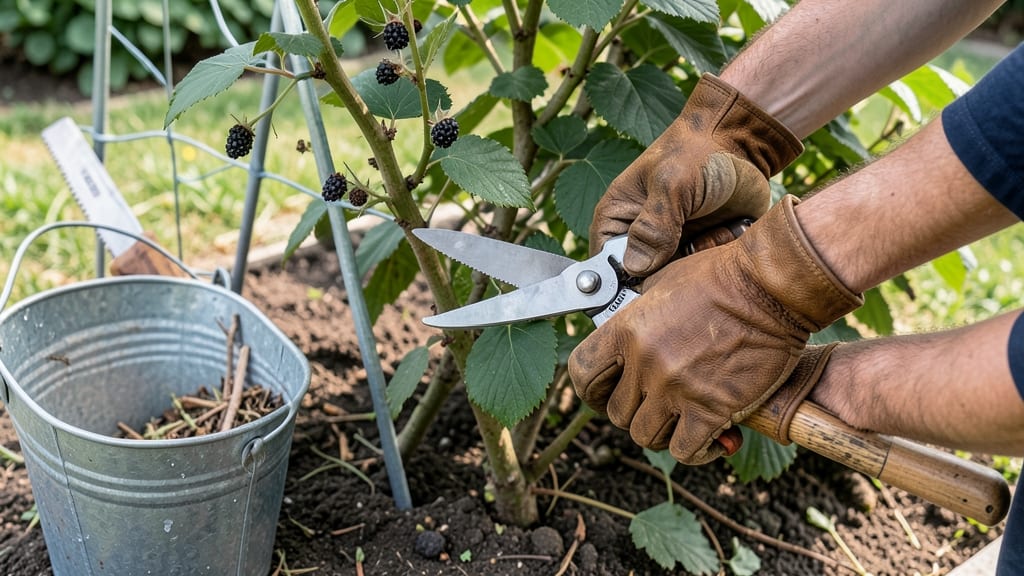
Trimming thornless blackberry bushes could produce three times more berries this year with just a few strategic cuts. ✂️ I’ve learned the hard way—skipping pruning means tangled canes, fewer fruits, and plants that struggle to recover. The secret isn’t cutting everything back, but focusing on the right canes at the right time to encourage strong, productive growth.
You’ll need sharp pruning shears, gloves (even thornless varieties can scratch), and a clear day to work—blackberries hate wet cuts. The best time to prune is late winter or early spring, right before new growth starts.
This gives the plant energy to focus on fruit production instead of repairing old canes. I’ve also found that summer pruning after harvest helps keep the plant tidy and encourages a second flush of berries.
By the end of summer, you’ll see thicker canes, more branches, and a bush that’s easier to harvest from. The berries will be larger, sweeter, and produced over a longer season.
The key is removing old, unproductive canes (those that fruited last year) and thinning out crowded growth to improve airflow—this cuts down on diseases like mold and mildew.
Works for both floricanes (last year’s canes that produce fruit) and primocanes (current year’s growth). Even if you’ve never pruned before, this method is foolproof—just follow the cane colors and growth patterns. Let’s get those bushes shaped up!
📚 In This Guide
- What you need
- Instructions
- Tips and common mistakes
- Wrapping up and next steps
What you need
- ● Pruning shears or loppers: Choose bypass pruners (for clean cuts) or loppers (for thicker branches). Opt for sharp, stainless-steel blades (8–10 inches long) to avoid crushing stems. Disinfect with rubbing alcohol between cuts to prevent disease.
- ● Gloves: Wear gardening gloves (preferably thorn-proof) to protect your hands—even though these are thornless bushes, debris or sharp edges can still cause scratches!
- ○ Rake or garden fork: Use a heavy-duty rake (for clearing debris) or a garden fork (for loosening soil post-pruning). A leaf blower (optional but handy) can speed up cleanup.
- ● Pruning saw: For thick, woody canes (if your bushes are mature), a curved pruning saw (8–10 inches) works best. Avoid serrated saws—they can tear bark.
- ● Garden twine or zip ties: A 10–15 foot roll of twine or zip ties (for tying down canes to trellises or supports).
- ● Trellis or support system: If your bushes lack one, install a T-post trellis (4–6 feet tall) or wire supports (18–24 gauge) to train canes vertically.
- ○ Mulch (optional but recommended): Shredded bark or straw mulch (2–3 inches thick) to retain moisture and suppress weeds. Avoid fresh wood chips—they can harbor mold.
- ● Watering can or hose: A 5-gallon watering can or soaker hose to hydrate bushes after pruning (especially in dry climates).
- ● Hand sanitizer or wipes: Keeps your hands clean while working (and prevents spreading sap-borne diseases).
- ● Knee pads: For comfort if you’re kneeling frequently near low-growing canes.
- ● Labeling tags: If you’re pruning multiple varieties, use waterproof plant tags to mark bushes post-pruning.
- ● Compost bin: Collect pruned canes for nutrient-rich compost (avoid diseased wood).
- ● Safety glasses: Protects your eyes from debris, especially when using a pruning saw.
Instructions for trimming thornless blackberry bushes
Here's the precise method I use to maximize fruit production while keeping your bushes healthy and manageable.
✂️ Step 1: Prune in Late Winter Before New Growth Begins
Start your trimming in late winter—right after your last frost date but before the first signs of new growth. This is when the plant is dormant, making it easier to see the structure. Use clean, sharp pruners to avoid tearing branches, which invites disease. I like to work on a dry day when the bushes aren't wet from rain or dew.
Identify last year's fruiting canes—they're the ones that produced berries. These canes will be thinner and often have a more woody texture compared to the newer, thicker canes that haven't fruited yet. Cut these old canes back to the ground completely. Don't leave any stubs; this prevents pests and diseases from hiding over winter.
🌱 Step 2: Thin Out Crowded Canes for Better Airflow
After removing last year's fruiting canes, focus on thinning the remaining canes to create space between them. Aim for 4-6 strong, healthy canes per plant—this ensures each cane gets enough sunlight and nutrients. If you see canes that are weak, diseased, or crossing over each other, remove them entirely at the base.
Here's the thing—thornless blackberries grow fast, and crowded canes lead to smaller berries and more pests. I like to step back every few cuts to visualize the plant's shape. You want sunlight to reach the center of the bush, not just the outer edges. If you're unsure which canes to keep, prioritize the ones with the thickest stems and most upright growth.
☀️ Step 3: Lightly Prune Tips to Encourage Bushier Growth
Once you've thinned the canes, give the remaining ones a light trim to encourage bushier growth. Cut back the tips of the canes by about 1/3—this stimulates branching, which leads to more fruiting laterals. Focus on the top third of the plant, as this is where new growth will emerge.
Watch for any canes that are growing inward or rubbing against each other. These should be pruned back further to prevent damage. After trimming, the bush should look balanced, with open space in the center. This isn't just about aesthetics; it's about ensuring every part of the plant gets the sunlight and airflow it needs to thrive.
⏰ Step 4: Summer Maintenance Pruning After Harvest
After your blackberries have finished fruiting, do a quick check for any dead, diseased, or damaged canes and remove them immediately. This keeps the plant tidy and reduces the risk of pests overwintering. I also like to trim back any overly vigorous growth that's shading the center of the bush.
During the growing season, you might notice some canes growing too long or flopping over. If this happens, you can lightly prune them to redirect their energy toward producing more fruit rather than just extending their length. Just be careful not to over-prune—you want to leave enough foliage to keep the plant healthy and photosynthesizing.
🌿 Step 5: Final Cleanup in Early Fall
As the growing season winds down, do a final cleanup to remove any remaining debris, dead leaves, or weak canes. This is your last chance to tidy up before winter sets in. I also like to apply a 2-3 inch layer of mulch around the base of the plant to protect the roots from freezing temperatures.
Don't forget to water the bushes deeply before the first hard frost. This helps the roots establish and ensures the plant has enough moisture to survive the winter. A well-hydrated plant is less stressed and more resilient when spring arrives. With these strategic cuts, you'll be rewarded with a bountiful harvest year after year.
Tips & tricks for perfect thornless blackberry maintenance
These strategic cuts will transform your blackberry bushes from chaotic to productive year after year.
Seasonal Timing Matters: Late winter is your golden window—prune right after the last frost when the plant is dormant but before buds swell. I've learned this the hard way: pruning too early can stimulate growth that gets nipped by cold, while waiting too long risks removing next year's fruit-bearing canes. Mark your calendar for this precise timing each year. The dormant state makes it easier to spot last year's fruiting canes (thinner, woody texture) versus this year's potential producers (thicker, green stems).
Canes Selection Strategy: When thinning to 4-6 strong canes, focus on thickness and upright growth. I use the "thumb test"—if a cane feels pencil-thin, it's likely a spent fruiter. For the remaining canes, prioritize those with the most vertical growth pattern. This creates that perfect open center you want for sunlight penetration. Pro tip: Step back every few cuts to visualize the bush's shape—you're sculpting a sun-catching sculpture, not just hacking branches.
Pruning Technique: Always use clean, sharp pruners and make cuts at a 45-degree angle just above a bud or lateral branch. This prevents water from pooling at the cut site, which invites disease. For the 1/3 tip pruning, I measure by holding the cane and estimating where the top third begins—this visual cue works better than guessing. And here's what nobody tells you: the mulch layer in Step 5 isn't just for winter protection—it also helps moderate soil temperature, which encourages stronger root growth during those critical spring months.
Pro Tips for Trimming Thornless Blackberry Bushes
- These strategic cuts will transform your blackberry bushes from chaotic to productive year after year.
- Seasonal Timing Matters: Late winter is your golden window—prune right after the last frost when the plant is dormant...
- Canes Selection Strategy: When thinning to 4-6 strong canes, focus on thickness and upright growth. I use the "thumb ...
Frequently asked questions
Got questions about keeping your thornless blackberry bushes thriving with strategic trims? Here are answers to the most common ones—so you can harvest like a pro all year!
When is the best time to trim thornless blackberry bushes?
Trim after harvest in late summer or early fall (for summer-bearing varieties) or in late winter/early spring (for fall-bearing types). Avoid heavy pruning during active growth—focus on shaping and removing dead wood. Light maintenance cuts can happen year-round, but avoid pruning during frost or extreme heat. Pro tip: Mark your calendar for post-harvest trims to maximize next year’s yield!
How much should I cut back thornless blackberry bushes?
For summer-bearing bushes, cut back 1/3 to 1/2 of the canes to the ground each year. For fall-bearing types, prune half the canes annually (remove oldest canes first). Never cut more than 50% of the plant at once—this stresses the bush. Thin out crowded canes to improve airflow and reduce disease. Remember: Younger canes produce the best fruit, so prioritize keeping them!
What if I don’t trim my thornless blackberry bushes?
Skipping trims won’t kill your bushes, but you’ll likely see smaller berries, fewer harvests, and more pests/diseases. Overgrown canes compete for sunlight and nutrients, leading to weak growth. Without pruning, thornless varieties may revert to thorny growth over time. Think of trimming as a investment in bigger, sweeter berries and easier maintenance!
Can I use the same tools for thornless and thorny blackberry bushes?
Yes, but with caution! Thornless bushes are gentler on tools, but thorny varieties can dull blades faster. Use bypass pruners, loppers, or hedge shears for clean cuts. Disinfect tools with rubbing alcohol between cuts to prevent disease spread. For large canes, a pruning saw works best. Hot tip: Keep a sharp file handy to maintain your tools—dull blades tear wood, inviting infections.
What should I do if my thornless blackberry bushes aren’t fruiting after trimming?
Check these fixes:
- Light exposure: Ensure bushes get 6+ hours of sunlight daily—move them if shaded.
- Watering: Drought-stressed plants skip fruiting. Water 1-2 inches per week (deeply, not frequently).
- Fertilizer: Test soil and add balanced fertilizer (10-10-10) in early spring.
- Age: Young bushes (under 2 years) may not fruit yet—be patient!
Wrapping up and next steps
Trimming your thornless blackberry bushes doesn’t have to be a chore—it’s your secret weapon for a bountiful, year-round harvest! 🌱 By mastering the art of strategic cuts, you’ll encourage healthier growth, bigger yields, and easier maintenance.
Now that you’re armed with the right tools, techniques, and timing, there’s no better time to roll up your sleeves and give your bushes the care they deserve.
Ready to transform your garden? Start with a single bush this season—observe how it responds, adjust as needed, and soon, you’ll be enjoying juicy, thorn-free berries all year long. Happy pruning! 🌟