
Diseases
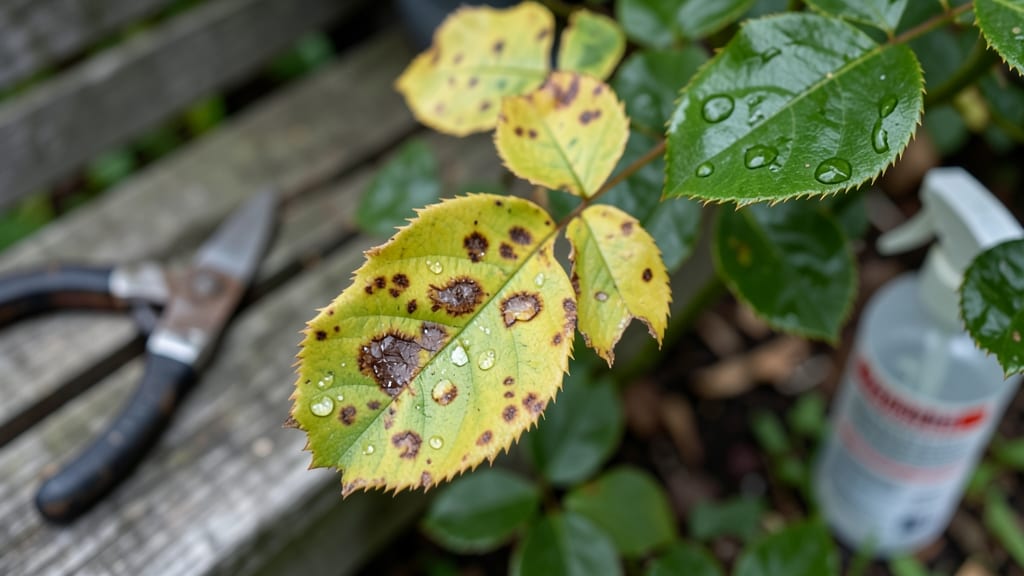
Yellow leaves and brown spots on your rose bushes aren’t just ugly—they’re a cry for help. 🌿 I’ve battled this exact problem, and the baking soda spray saved my bushes from looking like autumn too early.
The key is catching it before the spots spread, because once the fungus takes hold, even the toughest roses struggle to bounce back.
Most of the time, those spots are black spot fungus, thriving in damp, shady conditions. Overwatering or poor air circulation makes it worse, turning your prized roses into a sad, spotty mess.
The good news? You can stop it with simple, organic fixes—no harsh chemicals needed. I’ll show you how to diagnose the problem first, so you’re treating the right issue.
By the end, your roses will look vibrant and disease-free, with new growth pushing out strong and healthy. The baking soda spray isn’t just a quick fix—it builds resilience, so your bushes fight off future outbreaks. Plus, it’s safe for pollinators and kids, which makes it a win-win.
Whether you’re dealing with a single bush or a whole garden full of struggling roses, this method works in any climate. Let’s get those leaves looking green again—no more brown spots in sight!
Root Causes Of Leaf Discoloration
When your rose bush starts showing yellow leaves with brown spots, it’s rarely just one issue—it’s usually a mix of environmental stress, nutrient deficiencies, or microbial invaders. Understanding the why behind these symptoms is the first step to saving your roses.
Below, we break down the most common culprits, backed by science, so you can diagnose—and fix—the problem before it spreads.
---
Fungal diseases are the #1 cause of yellowing leaves paired with brown spots on roses. These pathogens thrive in warm, humid conditions and feed on plant tissues, disrupting chlorophyll production (which is why leaves turn yellow) and causing necrotic (dead) brown patches.
#### **🍄 Black Spot (Diplocarpon rosae) - How it starts: Tiny black or purple spots with yellow halos appear on upper leaves first.
As the fungus spreads, spots merge, creating large brown "blotches." - Why it happens: - High humidity + poor airflow (e.g., overcrowded bushes, dense foliage) creates the perfect fungal buffet. - Wet leaves (from overhead watering or morning dew) give spores a direct route to infect stomata (leaf pores). - Weakened plants (from stress, poor soil, or nutrient deficiencies) can’t fight off the invasion. - Science behind the damage: The fungus secretes cellulolytic enzymes that break down leaf cell walls, leading to premature leaf drop and stunted growth.
#### 🍃 Powdery Mildew (Podosphaera pannosa) - How it starts: White, powdery patches on leaves (like dust) that later turn brown and crispy as the fungus kills tissue. - Why it happens: - Low light + high nighttime humidity (common in shaded or densely planted gardens) slows leaf drying, giving the fungus time to colonize. - High nitrogen fertilizer promotes lush, tender growth—fungi’s favorite snack. - Water stress (under- or over-watering) weakens the plant’s cuticle, the waxy outer layer that repels pathogens.
#### 🍂 Rust (Phragmidium mucronatum) - How it starts: Bright orange-yellow pustules (like tiny blisters) on undersides of leaves, which later turn brown and papery. - Why it happens: - Cool, wet springs trigger spore germination.
The fungus needs free moisture (like dew or rain) to infect leaves. - Alternate hosts (like berry bushes or weeds) can harbor the fungus over winter, reinfecting roses the next season. - Poor air circulation (e.g., roses planted too close together) traps spores near leaves.
--- Not all brown spots are fungal—sometimes, your rose bush is begging for better conditions. Environmental factors can mimic disease symptoms, leading to yellowing and necrosis (dead tissue).
#### ☀️ Sun Scorch & Heat Stress - How it looks: Brown, papery edges on leaves, often on the south or west side of the plant.
Yellowing may follow as cells die. - Why it happens: - Sudden temperature spikes (e.g., hot afternoons post-cool nights) shock the plant’s photosynthetic machinery. - Lack of shade in intense sunlight causes oxidative stress, where excess light damages chlorophyll. - Drought stress (even mild) makes leaves more vulnerable to sun damage, as they can’t regulate water loss efficiently.
#### 💧 Overwatering & Poor Drainage - How it looks: Yellowing between veins, followed by brown, mushy spots (especially near the base). Leaves may wilt or droop. - Why it happens: - Waterlogged soil cuts off oxygen to roots, leading to root rot** (often caused by Phytophthora fungi).
Roots can’t absorb nutrients or water, so leaves starve. - Compacted or clay soil holds too much moisture, suffocating roots and promoting anaerobic bacteria that release toxins. - Fungal allies: Overwatering creates the perfect humidity for fungal spores to germinate and infect.
#### 🌬️ Wind & Physical Damage - How it looks: Irregular brown patches with torn or jagged edges, often on exposed branches. - Why it happens: - Strong winds can abrade leaf surfaces, creating microscopic tears where bacteria or fungi enter. - Hail or debris (like falling branches) can crush leaf tissue, leading to necrotic spots. - Salt spray (near coastal areas) builds up on leaves, causing osmotic stress and browning.
--- If your rose bush isn’t getting the right nutrients, leaves can turn yellow with brown or purple spots—often a sign the plant is desperately trying to survive.
#### 🟢 Chlorosis: The Yellowing Alarm - How it looks: Pale yellow leaves (especially between veins) with brown spots in severe cases. New growth may be stunted. - Why it happens: - Iron deficiency (common in alkaline soil) blocks chlorophyll production, turning leaves yellow.
Brown spots appear as oxidative damage worsens. - Magnesium deficiency causes interveinal chlorosis (yellowing between veins) and later brown, crispy edges (necrosis). - Potassium deficiency leads to weak cell walls, making leaves prone to burning and spotting, especially at the tips.
#### 🟤 Nitrogen Burn: Too Much of a Good Thing - How it looks: Dark green leaves with brown, curled edges (like they’ve been "scorched"). - Why it happens: - Excess nitrogen (from over-fertilizing) promotes rapid, tender growth that can’t support itself. - Salt buildup from synthetic fertilizers damages root cells, leading to nutrient imbalance and leaf necrosis. - Poor watering practices (e.g., dry soil after fertilizing) concentrate salts near roots, burning foliage.
--- Pests don’t always leave obvious holes—they can sap leaves dry, causing yellowing and brown spots as a secondary effect.
#### 🐜 Spider Mites & Aphids - How it looks: Stippled yellowing (tiny white or brown dots) that progresses to brown, crinkled leaves. - Why it happens: - Spider mites pierce cells to feed, causing chlorophyll loss (yellowing) and necrotic spots from toxin injection. - Aphids excrete honeydew, which fosters sooty mold (a black fungal growth) that blocks sunlight, leading to brown, dead patches.
#### 🐛 Japanese Beetles - How it looks: Skeletons of leaves with brown, chewed edges and yellowing between veins. - Why it happens: - Beetles strip leaves from the edges inward, leaving behind stressed tissue that turns brown and dies. - Saliva contains enzymes that disrupt plant cells, accelerating decay in chewed areas.
--- Not sure what’s causing the damage? Follow this quick checklist: 1. Check the undersides of leaves for fungal spores, webs (mites), or eggs.
2. Look for patterns: - Random brown spots? → Likely fungal or pest-related. - Edge browning? → Sun scorch or salt damage. - Yellowing between veins? → Nutrient deficiency (iron/magnesium). 3. Test your soil (pH and nutrient levels) to rule out deficiencies or toxicity.
4. Inspect the roots (gently dig around the base) for rot or girdling.
Revive Your Roses Naturally
Now that you know the culprits behind those unsightly yellow leaves and brown spots on your rose bush—whether it’s fungal diseases like black spot or powdery mildew, environmental stress, or nutrient deficiencies—it’s time to take action.
The good news? Most issues are fixable with simple, garden-friendly solutions. Below, we’ll break down targeted fixes for each common cause, plus prevention tips to keep your roses thriving long-term.
---
Fungal infections are the most common culprits behind yellowing leaves and brown spots. The key is early intervention and preventive care to stop the spread.
#### 🔥 Step 1: Remove Infected Foliage - 👨🍳 Snip it out: Use sterilized pruning shears (wipe with rubbing alcohol) to cut off all infected leaves—don’t leave them on the ground.
Dispose of them in the trash (not compost) to prevent reinfection. - ⏰ Best time: Do this on a dry, sunny day so the plant can dry quickly and fungi don’t spread via moisture.
#### 🥘 Step 2: Apply Fungicidal Sprays (Natural & Chemical Options) | Solution | How to Use | Frequency | |----------------------------|-------------------------------------------------------------------------------|-----------------------------------| | Baking Soda Spray | Mix 1 tsp baking soda + 1 tbsp horticultural oil + 1 tsp soap in 1 gallon of water.
Spray undersides of leaves (where fungi hide). | Every 7–10 days until cured. | | Neem Oil Spray | Combine 1 tbsp neem oil + 1 tsp soap in 1 quart of water.
Shake well and spray evenly. | Every 5–7 days for 2–3 weeks. | | Copper Fungicide | Follow label instructions for preventative treatment. | Every 2–4 weeks (or as directed). | | Commercial Fungicide | Use systemic fungicides (like Myclobutanil) for severe cases. | Follow product guidelines. |
💡 Pro Tip: Always spray early in the morning or late afternoon to avoid burning leaves in direct sunlight.
#### 🌡️ Step 3: Improve Air Circulation & Reduce Moisture - ✂️ Prune for airflow: Thin out crowded branches to allow sunlight and air to reach the center of the bush. - 💦 Water wisely: Water at the base (not overhead) and early in the day so leaves dry quickly. - 🌿 Mulch properly: Use 2–3 inches of organic mulch (like wood chips) to keep soil moist but prevent splashing water onto leaves.
---
If your roses are struggling from heat stress, overwatering, or poor soil, these fixes will help them bounce back.
#### 💧 Adjust Watering Habits - 🔥 Overwatering? Let the top 1–2 inches of soil dry out between waterings.
Yellow leaves from root rot often start at the bottom of the plant. - ☀️ Heat stress? Water deeply in the morning and provide afternoon shade (use shade cloth if needed).
#### 🥗 Boost Soil Health with Fertilizer - 📊 Test your soil: Use a DIY soil test kit (or send to a lab) to check pH (6.0–6.5 is ideal for roses) and nutrient levels. - 💪 Feed with the right mix: - Balanced fertilizer (10-10-10) for general health. - Iron supplement (chelated iron) if leaves are pale yellow (chlorosis). - Epsom salt (1 tbsp per gallon of water) for magnesium deficiency (yellowing between veins).
#### 🌿 Repot or Amend Poor Soil - If your roses are in containers, check for root-bound issues. Repot if roots are circling. - 🔨 Amend garden soil with: - Compost (for organic matter). - Perlite or sand (to improve drainage). - Bone meal (for phosphorus, which encourages blooms).
---
Once your rose bush is back in shape, keep it healthy with these easy maintenance habits:
✅ 🌱 Plant in the right spot: Choose a location with 6+ hours of sunlight and good drainage. ✅ 🍃 Prune regularly: Remove dead or diseased branches in late winter/early spring to promote airflow. ✅ 🐞 Encourage beneficial insects: Ladybugs and lacewings eat pests that weaken roses. ✅ 🌧️ Seasonal fungicide preventative: Spray neem oil or copper fungicide before rainy seasons. ✅ 🌿 Rotate fungicides: If you use chemical treatments, switch types every few weeks to prevent resistance.
--- Final Thought: 🌸 Patience is key! Some roses take 4–6 weeks to fully recover, but with consistent care, your bush will be lush and disease-free in no time. Keep an eye on new growth, and don’t hesitate to adjust treatments if symptoms persist. Happy gardening!
Frequently asked questions
Why do my rose leaves turn yellow first, then develop brown spots?
This classic pattern usually signals fungal infection like black spot or powdery mildew. The fungus first disrupts chlorophyll (causing yellowing), then kills leaf tissue (creating brown spots). Environmental stress (like overwatering) can mimic this, but fungal diseases are the most common culprit.
Is baking soda spray safe for all rose varieties?
Yes! The baking soda solution (1 tsp baking soda + 1 tbsp oil + 1 tsp soap per gallon) is gentle and safe for all rose types, including hybrid teas, floribundas, and climbers. Just avoid spraying when leaves are wet or in direct sunlight to prevent burning.
How often should I prune infected leaves to stop the spread?
Remove infected foliage immediately when you spot it, but focus on weekly maintenance pruning during outbreaks. Always use sterilized shears and dispose of clippings in the trash (not compost) to prevent reinfection.
Can I use the same fungicide spray on my roses and other garden plants?
Most organic fungicides (like neem oil or copper) are safe for vegetables, herbs, and flowers, but always check labels. Chemical fungicides may have different application rates for edible plants—never use the same concentration on both roses and food crops.
Will my roses recover if I treat them too late in the season?
Late-season treatment can still help, but recovery depends on how severe the damage is. Focus on removing infected leaves and improving airflow. For next year, start preventative sprays in early spring before fungal spores activate.