
Pests and Diseases
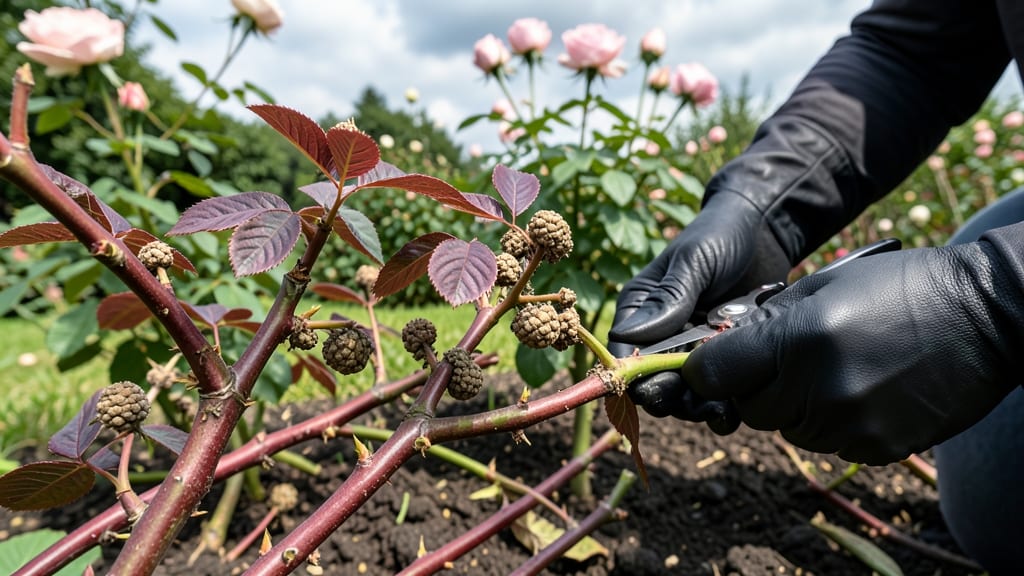
Your rose bush thorns aren't just for show—they're screaming for help when disease strikes. 🌹 I've seen thorn disease turn once-vibrant roses into sad, skeletal bushes, but these three steps can bring them back to life. The key is catching it early, when the damage is still small and fixable.
Most thorn diseases start with blackened canes or sticky sap, often caused by fungal spores hiding in old leaves or crowded branches. My roses got hit hard last summer after I skipped the cleanup, and I learned the hard way that prevention is easier than cleanup.
A 30-minute inspection every two weeks saves hours of treatment later.
You'll start by pruning out infected canes completely—no half-measures—and then apply a copper fungicide spray to stop the spread. Within 2-3 weeks, new growth should emerge clean, and the bush will bounce back stronger than before.
The secret? Consistency in care and a watchful eye for those first warning signs.
This works for hybrid teas, floribundas, and even old garden roses—just adjust the fungicide strength for severe cases. The goal isn't just to treat the disease but to build a bush that resists future attacks. Let's get those roses fighting fit again.
Root Causes Of Thorn Issues
Rose bushes are prized for their beauty, but their thorns can become a problem—whether they’re overly aggressive, diseased, or simply unsightly. Understanding why thorn-related issues arise is the first step to fixing them.
Below, we break down the key factors that lead to thorny complications in rose bushes, from natural growth patterns to environmental stress and pathogens.
Not all rose varieties are created equal when it comes to thorns. Some roses, especially wild species like Rosa rugosa or Rosa canina, evolve with dense, sharp thorns as a natural defense mechanism against herbivores. Even cultivated roses inherit this trait:
- Hybrid teas and floribundas often develop long, hooked thorns along the main canes, while climbing roses may produce thorn clusters at nodes for support.
- Old garden roses (e.g., Alba or Bourbon types) tend to have shorter, stouter thorns but in higher numbers.
- Thornless roses (like ‘Knock Out’ or ‘Carefree Beauty’) are bred specifically to minimize prickles, but even these can develop miniature thorns under stress.
Why it matters: If your roses have excessive thorns, genetics may be the culprit. However, environmental factors can amplify this trait—leading to thicker, more aggressive thorns as a stress response.
Roses are resilient, but they don’t thrive in extreme conditions. When subjected to heat, drought, poor soil, or nutrient deficiencies, they often overproduce thorns as a survival tactic. Think of it like a plant’s version of building muscle—it’s not growing more thorns for beauty, but for protection.
| Stress Factor | How It Triggers Thorn Growth |
|---|---|
| Water Stress (Drought or Overwatering) | Drought forces roses to harden their stems, leading to thicker, sharper thorns. Overwatering can also weaken roots, causing compensatory thorn production. |
| Poor Soil Nutrition | Low nitrogen (N) or phosphorus (P) makes roses more vulnerable to pests, prompting defensive thorn growth. A lack of potassium (K) can also reduce overall plant health. |
| Extreme Heat or Cold | Heatwaves cause rapid cell division in stems, resulting in longer, more frequent thorns. Cold snaps can damage buds, leading to abnormal thorn clusters as the plant recovers. |
| Compacted or Rocky Soil | Roots struggle to spread, forcing the plant to reinforce its structure with denser thorn coverage. |
Actionable fix: Improve growing conditions by amending soil with compost, ensuring consistent moisture, and providing mulch to regulate temperature. This can reduce excessive thorn growth over time.
When roses face insect attacks (aphids, Japanese beetles) or fungal/bacterial diseases (black spot, powdery mildew), their first line of defense is often chemical responses—like producing more thorns. Here’s how it works:
- Insect Damage: Chewing insects (e.g., Japanese beetles) trigger jasmonic acid in roses, a hormone that stimulates thorn development to deter future attacks.
- Fungal Infections: Diseases like black spot (Diplocarpon rosae) weaken leaves, forcing the plant to redirect energy to stem hardening—resulting in thicker, more aggressive thorns.
- Bacterial Canker (Pseudomonas syringae): This pathogen rotts stem tissue, causing the rose to overproduce thorns in affected areas as a physical barrier.
Visual clue: If thorns appear clustered in specific spots (rather than evenly spaced), it’s often a sign of localized stress or infection.
What to do:
- 💡 Treat pests with neem oil or insecticidal soap to reduce damage.
- 🌡️ Prevent fungal spread by pruning infected leaves and applying copper fungicide.
- ✨ Strengthen plant immunity with balanced fertilizer (e.g., 10-10-10) to help it fight off stressors.
Pruning is essential for rose health, but improper techniques can trigger excessive thorn growth. Here’s how:
- Cutting Too Late in the Season: Pruning after early summer removes growth hormones that suppress thorn formation, leading to wild, aggressive thorns before winter.
- Over-Pruning: Removing too many canes forces the plant to compensate by producing thicker, thornier new growth.
- Incorrect Angle/Cuts: Flat cuts (instead of 45-degree slants) can stunt growth and lead to abnormal thorn clusters.
- Not Removing Suckers: Shoots growing from the base often have denser thorns than main canes. Leaving them unchecked encourages thorny sprawl.
Pro tip: Always prune in early spring (just as buds swell) and use sharp, clean shears to make angled cuts above a bud. This minimizes stress and promotes healthier growth.
By identifying the root cause of your rose bush’s thorn issues—whether genetic, environmental, or disease-related—you can target treatments effectively and restore balance to your garden.
Fix Rose Thorn Issues Fast
Once you’ve identified the root cause of your rose bush’s thorn-related woes—whether it’s fungal infections, pest infestations, or environmental stress—it’s time to take action. Below are practical, step-by-step solutions tailored to each common problem, plus prevention tips to keep your roses thriving long-term.
Thorns aren’t just for protection—they can also trap moisture, creating the perfect breeding ground for fungi. If you spot dark spots, white powder, or orange pustules on leaves, act quickly.
🔥 Step 1: Prune Infected Areas
- 👨🍳 Use sterilized pruners (wipe with rubbing alcohol between cuts) to remove all infected leaves, stems, and thorns.
- 🗑️ Dispose of debris in the trash (not compost)—fungi can survive and reinfect.
- ✂️ Thin out crowded branches to improve airflow (fungi love humidity!).
🍳 Step 2: Apply Fungicide
- 💡 Organic option: Spray with a baking soda solution (1 tsp baking soda + 1 quart water + a few drops of dish soap) every 7–10 days until the issue clears.
- 🌡️ Chemical option: Use a copper-based fungicide (like Bonide Copper Fungicide) for severe cases.
Follow label instructions. - 🎯 Time it right: Apply in the early morning or evening to avoid burning leaves in direct sunlight.
🌱 Step 3: Boost Plant Health
- 💪 Fertilize with compost or balanced rose food (high in phosphorus for blooms, potassium for disease resistance).
- 🥗 Water at the base (avoid wetting foliage) and water early in the day so leaves dry quickly.
💡 Prevention Tip:
- ✨ Space plants 3–4 feet apart for airflow.
- 🌧️ Water deeply but infrequently (1–2 inches per week) to prevent fungal spores from thriving.
Thorns can attract pests that weaken your rose bush, making it susceptible to disease. If you see sticky residue, tiny webs, or chewed leaves, pests are likely the culprit.
🔪 Step 1: Manual Removal
- 🕷️ Aphids? Blast them off with a strong spray of water from your hose.
- 🕸️ Spider mites? Wipe leaves with a damp cloth or spray with neem oil (1 tbsp neem oil + 1 quart water + a drop of dish soap).
- 🐞 Japanese beetles? Handpick them into soapy water (they’re easy to spot—green with copper wings!).
⏰ Step 2: Natural Repellents
- 🌿 Plant companion flowers like marigolds or nasturtiums nearby—they repel pests naturally.
- 🍋 Spray with a garlic-chili mix (blend 2 garlic cloves + 1 chili pepper + 1 quart water; strain and spray).
- 🐝 Encourage beneficial insects like ladybugs and lacewings (they eat aphids and mites!).
🛡️ Step 3: Barrier Protection
- 🧢 Cover young roses with floating row covers to block beetles during peak season (June–August).
- 🪵 Wrap trunks with copper tape (Japanese beetles avoid it).
💡 Prevention Tip:
- 🌡️ Monitor regularly—check undersides of leaves where pests hide.
- 🎯 Avoid over-fertilizing with nitrogen (soft, tender growth attracts pests).
Thorns can signal your rose is struggling with environmental factors. Yellowing leaves, stunted growth, or brittle thorns? It’s time to adjust care.
🌤️ Step 1: Adjust Sun Exposure
- 🔥 Too much sun? Move potted roses to partial shade (4–6 hours of sun max).
- ❄️ Too little sun? Gradually introduce more light over 2–3 weeks to avoid shock.
💨 Step 2: Wind & Physical Damage
- 🌬️ If winds are strong, stake tall roses or plant them near a fence/wall for windbreak.
- 🪴 For potted roses, move them to a sheltered spot during storms.
💧 Step 3: Improve Soil & Drainage
- 🌱 Amend heavy clay soil with compost or sand to improve drainage.
- 🚰 Ensure pots have drainage holes—waterlogged roots lead to weak, thorny growth.
- 🥗 Mulch with 2–3 inches of organic matter (like wood chips) to retain moisture and regulate soil temp.
💡 Prevention Tip:
- ✨ Choose disease-resistant rose varieties (like ‘Knock Out’ or ‘Dr. Huey’) if your area has poor drainage.
- 🌧️ Test soil pH (roses prefer 6.0–6.5)—amend with lime (to raise pH) or sulfur (to lower it) if needed.
Final Thought: Most thorn-related issues are preventable with consistent care! Once you’ve treated the problem, stay vigilant—healthy roses are the best defense against pests and diseases. 🌹✨
Frequently asked questions
What are the first signs of thorn disease in my rose bush?
Watch for blackened canes, sticky sap, or unusual thorn clusters along stems. Early signs also include yellowing leaves with dark spots or powdery white patches. These often appear before flowers bloom, so check your bushes in early spring or after heavy rain.
Can I still prune my rose bush if it has thorn disease?
Yes, but sterilize your tools first with rubbing alcohol. Remove only the infected parts (blackened canes, spotted leaves) and dispose of them in the trash—not compost. Avoid heavy pruning during active infection to reduce stress on the plant.
Will copper fungicide harm beneficial insects like bees?
Copper fungicides are generally safe for bees when applied correctly. Apply in early morning or late evening when bees are less active, and avoid spraying flowers directly. For extra safety, choose organic options like neem oil or baking soda sprays first.
How often should I inspect my roses for disease?
Check your roses every 2 weeks during growing season (spring-fall). Focus on undersides of leaves and along thorny canes. After rain or extreme heat, do an extra check—these conditions create perfect breeding grounds for fungal spores.
Can I save a rose bush with severe thorn disease?
It depends on how far the disease has spread. If more than 50% of canes are infected, consider replacing the bush. For milder cases, aggressive pruning + fungicide treatment can bring it back. Start with a copper fungicide spray and monitor closely for 2-3 weeks.