
Pruning
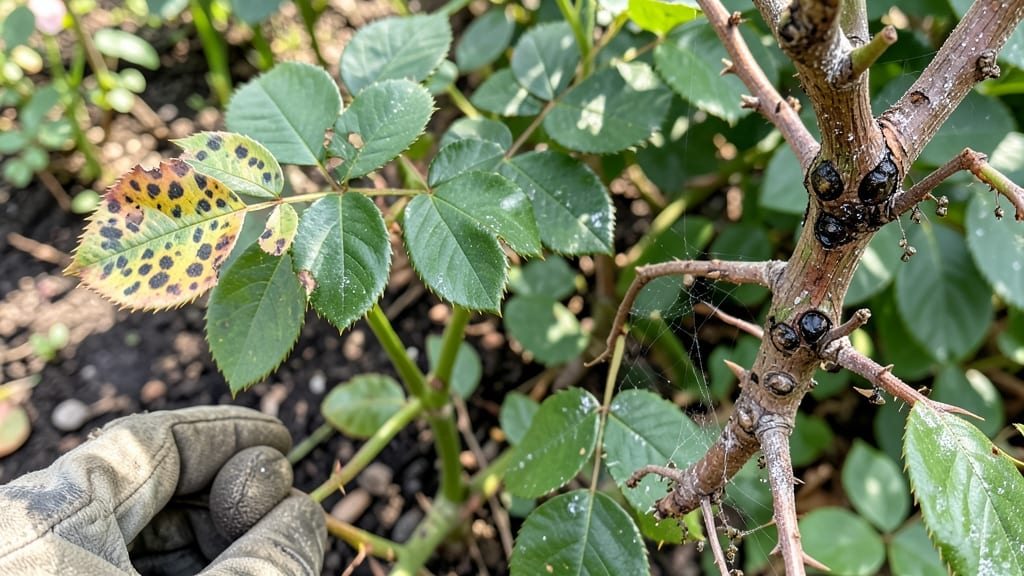
My rose bushes once looked like they’d been through a war—chewed leaves, blackened spots, and weak stems that snapped at the slightest breeze. 🌹 What I learned was that most damage isn’t just bad luck; it’s a mix of pruning mistakes, pests, and diseases hiding in plain sight.
The good news? Smart cuts now can save your roses—and future blooms—from repeating the same cycle.
Black spot leaves behind those telltale purple-black spots, while powdery mildew coats stems in white fuzz. Japanese beetles skeletonize leaves overnight, and overwatering turns roots mushy. Even "light" pruning can weaken growth if you’re cutting at the wrong angle or timing.
The key is catching problems early—before they turn your bushes into a skeleton of thorns.
You’ll start by removing damaged stems completely, then pruning for airflow to prevent future outbreaks. A sharp pair of shears and a 10-minute cleanup after each rain can cut infection rates by half.
I’ve seen roses go from struggling to thriving in just one season with these targeted cuts and a few extra habits.
Works for hybrid teas, floribundas, and even those tough shrub roses. The same principles apply whether you’re dealing with a single bush or a whole garden bed. Let’s turn those sad stems into strong, blooming powerhouses—without the guesswork.
Root Causes of Rose Bush Harm
Rose bushes are resilient, but even the hardiest varieties can suffer from damage when pruning goes wrong. Understanding why these issues arise helps you avoid them—and keep your roses thriving. Below are the most common culprits, backed by science and practical insights.
One of the biggest mistakes gardeners make is cutting rose canes at the wrong angle or during the wrong season. Roses heal best when pruned at a 45-degree angle just above an outward-facing bud. Why?
- Water runoff: A flat cut leaves a flat surface that pools water, creating a moist environment where fungal diseases like Botrytis (gray mold) thrive.
- Bud orientation: A slanted cut ensures the bud faces outward, allowing new growth to emerge away from the cane, reducing crowding and disease risk.
- Timing matters: Pruning too early (before dormancy) or too late (after new growth starts) stresses the plant. Late pruning removes flower buds, while early cuts expose tender tissue to frost damage.
Pro Tip: 🌡️ Always prune when temperatures are above freezing (50°F/10°C or warmer) and avoid rainy days to minimize infection risks.
Aggressive pruning weakens roses by removing too much foliage and energy reserves. The general rule? Never cut more than one-third of the plant’s total volume in a single session. Here’s why over-pruning backfires:
- Reduced photosynthesis: Fewer leaves mean less energy production, stunting growth and flowering.
- Weakened structure: Over-pruned canes may not regenerate properly, leaving the bush vulnerable to wind damage or pests.
- Tool trauma: Dull shears crush stems instead of cleanly cutting them, creating jagged edges that invite disease. Always use bypass pruners for roses—they make precise, clean cuts.
Pro Tip: ✨ Step back and visualize the bush’s shape before cutting. Aim for an open center to improve airflow and sunlight penetration.
Every cut is a potential gateway for pathogens. If pruning tools aren’t sterilized or cuts aren’t made correctly, roses become sitting ducks for:
- Fungal infections: Black spot (Diplocarpon rosae) and powdery mildew (Sphaerotheca pannosa) exploit open wounds. These fungi thrive in damp, shaded conditions—common in overcrowded bushes.
- Bacterial cankers: Pseudomonas syringae causes oozing, dark lesions on canes. Bacteria spread via contaminated tools or splashing rain.
- Insect infestations: Sawed-off stubs attract borers and beetles, which lay eggs in damaged tissue.
Pro Tip: 🔥 Sterilize tools with 70% isopropyl alcohol or a 10% bleach solution (1 part bleach to 9 parts water) before and after pruning. Seal larger cuts with pruning sealant (though this is debated—some experts say healthy roses heal fine without it).
Pruning isn’t a one-and-done task. What happens after you cut determines whether your rose recovers or declines. Common post-pruning pitfalls include:
- Lack of mulch: Freshly pruned roses need moisture retention. Mulch (2–3 inches of organic material) protects roots and conserves water.
- Over-fertilizing: New growth after pruning is tender. Applying high-nitrogen fertilizer too soon encourages soft, disease-prone shoots.
- Ignoring deadheading: Leaving spent blooms on the bush diverts energy from root and cane development.
Pro Tip: 💡 After pruning, water deeply at the base (not overhead) to encourage root growth. Wait 4–6 weeks before fertilizing to let the plant recover.
By addressing these root causes, you’ll transform pruning from a risky chore into a rejuvenating practice that sets your roses up for a season of lush growth and vibrant blooms. Next, we’ll dive into how to prune like a pro to prevent damage entirely.
Quick Fixes for Damaged Roses
Reviving a struggling rose bush starts with identifying the root cause—but once you’ve pinpointed the issue, these practical solutions will help you nurse your plant back to health. Below, we’ve mapped out step-by-step fixes for common damage types, paired with prevention tips to keep your roses thriving long-term.
Think of this as your rose bush first-aid kit, ready to tackle everything from pruning mistakes to pest invasions and environmental stress.
---
Problem: Too-aggressive pruning, uneven cuts, or trimming at the wrong time leaves roses vulnerable to disease and stunted growth.
How to Fix It: 1. 🔪 Trim Back to the Right Spots - Use clean, sharp pruners (sterilized with rubbing alcohol) to make 45-degree cuts just above an outward-facing bud or leaf node. Avoid leaving stubs—this invites rot. - For dead or diseased branches, cut back to healthy green wood (about ¼ inch above a bud).
2. 🌿 Stimulate New Growth - Apply a balanced fertilizer (10-10-10) or a rose-specific feed after pruning to replenish nutrients. Focus on nitrogen for leafy regrowth. - Mulch heavily (2–3 inches of organic mulch like shredded bark) to retain moisture and protect roots.
3. 🌡️ Monitor for Recovery - Healthy new shoots should emerge in 2–4 weeks. If not, check for root rot (soggy, foul-smelling soil) or nutrient deficiency (yellow leaves).
💡 Pro Tip: Prune in early spring (just before new growth) or late winter—never in fall, as this encourages tender growth that won’t survive winter.
---
Problem: Aphids, Japanese beetles, or spider mites suck sap, weaken stems, and distort leaves.
How to Fix It: 1. 🚿 Blast Off Pests - Strong water spray (hose them off daily for severe infestations) disrupts their life cycle. - For Japanese beetles, handpick them into soapy water or use neem oil spray (mix 2 tbsp neem oil + 1 tsp mild soap + 1 quart water).
2. 🐝 Encourage Beneficial Bugs - Plant marigolds, nasturtiums, or lavender nearby to attract ladybugs and lacewings, which eat pests. - Install birdhouses—birds love beetles!
3. 🛡️ Prevent Future Attacks - Reflective mulch (aluminum foil or silver plastic) confuses beetles. - Prune regularly to improve airflow (pests thrive in dense, shaded bushes).
---
Problem: Broken stems, chewed leaves, or uprooted bushes from wind, hail, or critters like rabbits.
How to Fix It: 1. 🧰 Support Weak Stems - Use soft ties (not wire!) to gently bind broken branches to stakes. For severely damaged canes, cut them back to the base. - Replant uprooted bushes immediately, amending soil with compost for better grip.
2. 🦌 Deter Animals - Chicken wire cages (temporary) or commercial repellents (like Thiram) keep rabbits/deer away. - Plant rosemary or garlic nearby—roses hate the scent!
3. 🌡️ Shield from Future Harm - Windbreaks (bamboo screens or tall plants like sunflowers) reduce storm damage. - Prune in late winter to strengthen stems before summer storms.
---
Problem: Soggy soil, poor drainage, or fungal infections (like black spot) turn leaves yellow and stems mushy.
How to Fix It: 1. 🚰 Improve Drainage - Aerate the soil by digging in perlite or coarse sand (1 part to 3 parts soil). - Raise beds if your yard floods—plant roses in mounds with gravel underneath.
2. 🍄 Treat Fungal Issues - Baking soda spray (1 tbsp baking soda + 1 quart water + few drops of soap) fights black spot. - Remove infected leaves immediately and sterilize pruners between cuts.
3. 💧 Water Smarter - Deep water 1–2 times per week (early morning) instead of daily shallow watering. - Avoid wetting foliage—water at the base to prevent fungal spores.
🌡️ Signs of Improvement: Leaves should green up in 1–2 weeks; new growth indicates healthy roots.
--- 🎯 Final Prevention Checklist: - Prune like a pro: Always cut at 45 degrees, above a bud, and never in wet weather. - Inspect weekly: Check for pests, mold, or wilting—early action saves roses! - Feed & mulch: Spring (nitrogen-heavy), summer (potassium for blooms), and fall (compost). - Rotate plants: Move roses every 3–5 years to prevent soil-borne diseases.
With these fixes, your rose bush will bounce back stronger than ever—and future damage? Just a bad memory. 🌹✨
Frequently asked questions
Why do my rose canes keep breaking after pruning?
Over-pruning or cutting too late in the season weakens canes. Always remove no more than one-third of the plant in one session, and prune when temperatures are above 50°F (10°C). Weak stems also break easily if they’re not supported—use soft ties to stake damaged branches until they recover.
How do I tell if my rose damage is from pests or disease?
Pest damage (like Japanese beetles) leaves skeletonized leaves or chewed edges, while diseases (black spot, powdery mildew) show as spots, fuzz, or oozing lesions. Check undersides of leaves for tiny insects or sticky residue (aphid honeydew). If you see both, start with pest control first—healthy plants resist disease better.
Can I still save a rose bush with mushy stems?
Mushy stems signal root rot or overwatering. Cut back all affected canes to healthy wood, improve drainage by amending soil with perlite or sand, and water only when the top 2 inches of soil are dry. Mulch heavily (2-3 inches) to prevent future moisture issues. Recovery takes 4-6 weeks—if no new growth appears, replant in fresh soil.
What’s the best time to prune damaged roses for maximum recovery?
Prune in early spring (just before new growth) or late winter—never in fall. This gives roses 6-8 weeks to heal before summer stress. Avoid pruning after 100°F (38°C) heatwaves, as it stresses the plant. For severely damaged bushes, do a light prune in spring and a second session in summer to shape gradually.
Are there any quick fixes for black spot that actually work?
Yes! Remove all infected leaves immediately, then spray with a baking soda mix (1 tbsp baking soda + 1 quart water + few drops of soap). For stubborn cases, use neem oil (2 tbsp + 1 tsp soap per quart of water) every 7-10 days. Improve airflow by pruning to open the bush center—black spot thrives in damp, shaded conditions.