
Pruning
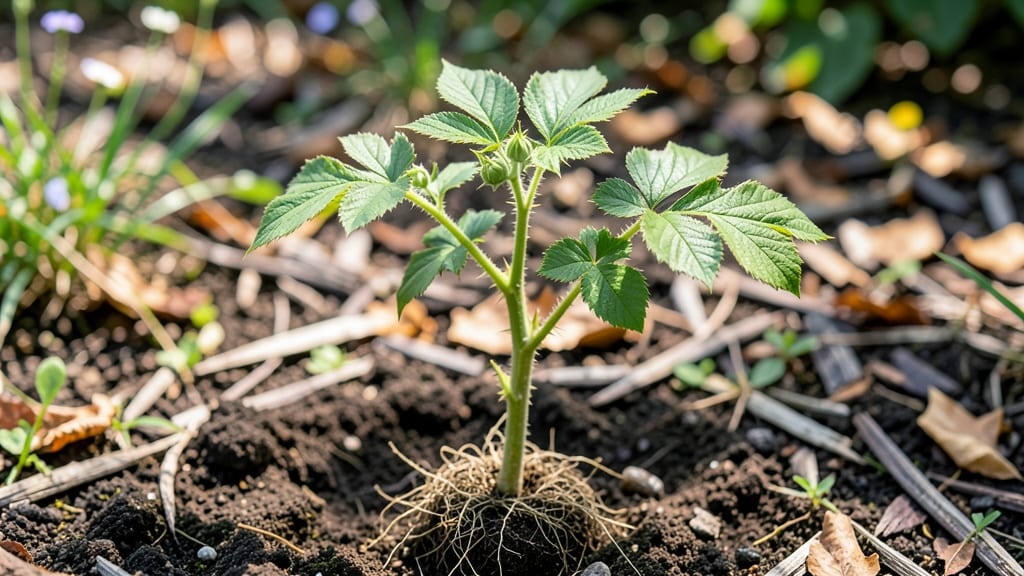
That raspberry bush seedling in your hand could become next year's berry bonanza—if you prune it right now. 🌱 The key is shaping its structure during its first growing season, which determines how many canes it'll produce (and how big those berries will be) in years to come.
Most gardeners wait too long, but the best time to train raspberries is when they're young and flexible.
Start by planting your seedling in well-draining soil with plenty of organic matter—think compost mixed into the top 12 inches. Space them 24 inches apart in rows that run north-south to maximize sunlight.
Water deeply right after planting, then keep the soil consistently moist (not soggy) for the first 4-6 weeks while roots establish. Young canes need 6-8 hours of full sun daily, so pick a spot where they won't get shaded out by trees or buildings.
Here's where the magic happens: when your seedling reaches 3-4 feet tall, it's time for the first pruning. Cut back the tallest cane by about one-third to encourage branching. This creates a bushier plant with more fruiting canes next season.
The goal is to establish 3-5 strong primary canes—these will become your berry producers in years to come. Think of it like training a young tree to grow strong branches instead of one weak trunk.
Watch for yellowing leaves (a sign of overwatering) or stunted growth (usually underwatering or poor soil). If you see black spots on leaves, it's likely fungal—remove affected leaves and improve airflow by spacing plants properly.
With the right care now, you'll harvest 2-3 times more berries next summer than if you'd ignored the pruning. The work pays off in flavor and quantity!
📚 In This Guide
- What you need
- Instructions
- Tips and common mistakes
- Wrapping up and next steps
What you need
- ● Pruning shears: Sharp, bypass-style shears (2–3 pairs, 6–8" blade length) for clean cuts.
- ● Loppers: Heavy-duty (1–2 pairs, 12–16" blade) for thicker canes (½" diameter or larger).
- ● Gloves: Thick, cut-resistant gloves (1–2 pairs) to protect from thorns and sap.
- ● Disinfectant (70% isopropyl alcohol or bleach solution): 1 small spray bottle or wipe pack.
- ● Rubbing alcohol (70%): 1 small bottle for sterilizing tools between cuts.
- ● Trash bags or bucket: 1–2 for collecting pruned canes (avoid composting diseased material).
- ● Permanent marker: 1 for labeling canes if saving for propagation.
- ● Water source: Hose or bucket with water for post-pruning hydration.
- ● Pruning saw: For stubborn, oversized canes (1 small handsaw).
- ● Knee pads: If your raspberry patch is sprawling!
- ● Sun hat/sunscreen: For those long, sunny pruning sessions.
- ● Plant tie or twine: To support newly pruned canes if needed.
- ● Garden journal: To log pruning dates and observations.
Step-by-step guide to pruning a raspberry bush seedling
Here's how to set your young raspberry plant up for a bountiful harvest next year—without cutting too much or too little.
🌱 Step 1: Wait Until Spring for First Pruning
Hold off on pruning until late winter or early spring, when new growth is just beginning. This timing ensures you're not removing buds that will produce berries this season. Look for swollen buds along the canes—these indicate where next year's fruit will form. If you prune too early, you risk cutting off potential fruiting laterals.
I always wait until after the last frost date in my zone, when soil temperatures rise above 40°F. This prevents stress on the plant from cold snaps. Use sharp pruning shears to make clean cuts—ragged edges invite disease. Disinfect your tools with rubbing alcohol between cuts to prevent spreading pathogens.
✂️ Step 2: Remove Dead or Damaged Canes First
Start by inspecting the plant for blackened, shriveled, or hollow canes—these are dead and should be cut at the base. Next, identify weak or spindly canes that grew at odd angles. These won't produce quality fruit and compete with stronger canes for nutrients. Remove them entirely, cutting 1 inch above the ground to prevent regrowth.
Here's the thing—raspberry canes are either primocanes (first-year growth) or floricanes (second-year growth). Primocanes won't fruit this year, but they'll produce next season. Leave them unless they're clearly damaged. For floricanes, keep only the healthiest 3-4 canes per plant—this ensures energy goes to bigger berries, not too many small ones.
☀️ Step 3: Thin Out Overcrowded Canes for Better Airflow
Raspberries need good airflow to prevent fungal diseases like cane blight. If you have more than 6-8 canes (after removing dead ones), thin them out by cutting the thinnest or most crowded at the base. Space remaining canes 6-8 inches apart to allow sunlight to reach the center of the plant.
Watch for crossing canes—these rub against each other, creating wounds that invite disease. Gently separate them if possible, or prune one of the canes. You'll see stronger growth in the center of the plant within a few weeks. This step is especially critical if your raspberry bush is in a shady or humid location.
🌿 Step 4: Shape the Plant for Future Growth
Now's the time to shape the plant like a small tree. Select 1-2 of the strongest primocanes and prune the rest back to 12-18 inches tall. This encourages these canes to grow thicker and stronger for next year's fruit production. Avoid cutting into the crown (the base where canes emerge)—this can kill the plant.
For floricanes, cut them back to 4-5 feet tall after they've fruited. This prevents them from becoming too woody and encourages new growth. You'll notice new canes emerging from the base in spring—these are your primocanes for the following year. Label your plant if you're unsure which canes are primocanes and which are floricanes.
⏰ Step 5: Clean Up and Mulch for Winter Protection
After pruning, remove all debris from around the base of the plant. This prevents pests and diseases from overwintering. Spread 2-3 inches of mulch (like straw or wood chips) around the plant, keeping it 6 inches away from the stem to prevent rot. Mulch helps regulate soil temperature and retains moisture.
Water deeply once a week during dry spells to encourage root growth. By late fall, your raspberry bush should look neat, with healthy canes and no dead wood. This setup ensures a stronger plant that produces larger, sweeter berries next season. Prune again in early spring to remove any winter-damaged canes before new growth starts.
Tips & tricks for strategic raspberry bush pruning
Here's what nobody tells you about pruning raspberry seedlings—these tricks will transform your harvest next year.
Timing is Everything: The 40°F soil temperature threshold isn't just a number—it's your cue that winter's harshest damage is behind you. I've seen gardeners prune too early and end up with stunted growth because they missed the swollen buds that hold next year's fruit. Mark your calendar for 2-3 weeks after your last frost date to ensure you're catching those critical buds just as they begin to swell.
Cane Identification Made Easy: Tell primocanes from floricanes by their growth pattern: primocanes are last year's canes that grew from the base, while floricanes are the current year's growth that fruited. Pro tip: Use colored tape or flags on the strongest primocanes now—they'll be your fruit producers next season. I label mine with bright green tape so I don't accidentally prune them away during my winter cleanup.
Airflow Secret Weapon: The 6-8 inch spacing between canes isn't just about aesthetics—it creates a microclimate that prevents fungal spores from finding purchase. In humid climates, I increase spacing to 8-10 inches and add a small fan on low setting for 10 minutes daily during fruiting season. This might sound extreme, but it's kept my plants disease-free for three consecutive years.
Mulch Magic: That 2-3 inches of mulch isn't just for insulation—it's a moisture regulator and weed barrier. I use straw because it breaks down slowly, adding organic matter to the soil. The key is keeping it 6 inches away from the stem to prevent rot. For extra protection in cold climates, I double the mulch thickness during winter months when temperatures drop below freezing.
Pro Tips for Raspberry Bush Seedling
- Here's what nobody tells you about pruning raspberry seedlings—these tricks will transform your harvest next year.
- Timing is Everything: The 40°F soil temperature threshold isn't just a number—it's your cue that winter's harshest damage is behind you.
- Cane Identification Made Easy: Tell primocanes from floricanes by their growth pattern: primocanes are last year's canes that grew from the base, while floricanes are the current year's growth that fruited.
Frequently asked questions
Got questions about growing raspberry bush seedlings or maximizing your harvest? Here are some answers to common concerns:
When is the best time to plant a raspberry bush seedling?
Plant raspberry seedlings in early spring (after the last frost) or late fall (4-6 weeks before the first frost). Avoid planting in summer heat or winter freezing—young roots need stable soil temps (50–70°F) to establish. Choose a sunny spot with well-draining soil for the best start!
How do I prune a raspberry seedling to encourage bigger berries next year?
For floricanes (summer-bearing types), cut back all canes to the ground in late winter/early spring—this redirects energy to new growth. For primocanes (fall-bearing types), remove old, weak canes and thin to 6–8 strong canes per bush. Never prune in summer—it stresses the plant!
What pests or diseases should I watch for in raspberry seedlings?
Common threats include spider mites, raspberry cane borers, and fungal diseases like powdery mildew. Inspect leaves for holes or webbing, and check canes for sawdust-like frass (borer sign). Use neem oil or insecticidal soap for mites, and remove infected canes immediately to prevent spread.
Can I grow raspberries from seed instead of buying a seedling?
Yes, but seedlings from seeds may not match the parent plant’s traits (e.g., flavor, size, or thorniness). For reliable results, buy certified raspberry seedlings from nurseries. If starting from seed, expect 2–3 years before fruiting—patience is key!
Why aren’t my raspberry canes producing berries?
Possible reasons: wrong pruning (e.g., cutting back summer-bearing canes too early), young age (seedlings take 1–2 years to fruit), or nutrient deficiency (lack of nitrogen/phosphorus). Test soil pH (ideal: 5.5–6.5) and fertilize with balanced 10-10-10 in spring.
Wrapping up and next steps
Growing a thriving raspberry bush starts with smart pruning—your secret weapon for bigger, sweeter berries next season! 🌱 By mastering the art of cutting back canes, removing suckers, and timing your prune just right, you’ll set your plants up for explosive growth.
Remember, consistency is key, but don’t stress: even small steps make a difference over time.
Ready to take action? Grab your pruners and schedule that pruning session—your future harvest is waiting! And if you’re new to gardening, start small with just one bush to build your confidence. Happy pruning! 🌟