
Pruning
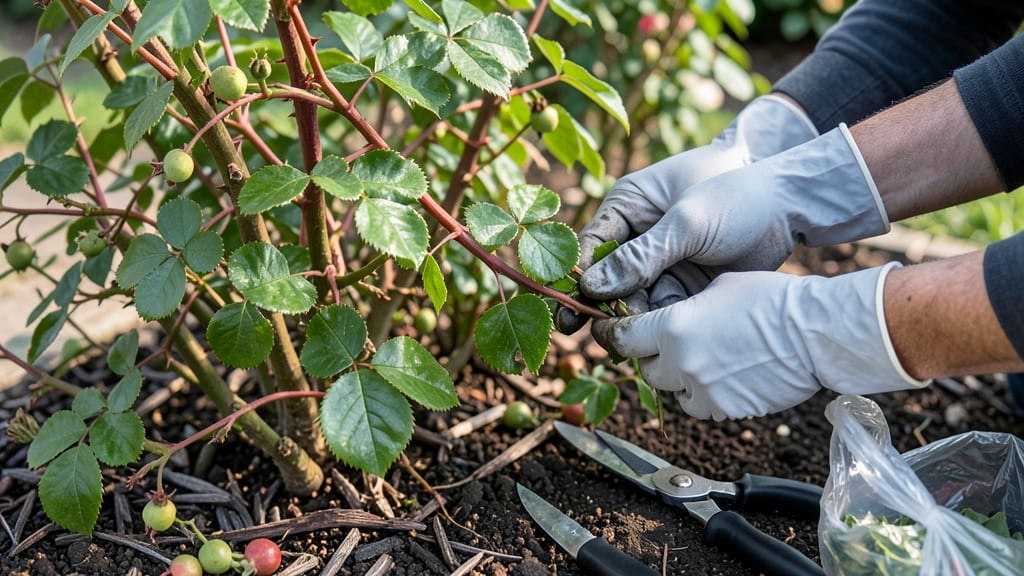
Poison ivy in rose bushes is a sneaky invader that strangles your plants before you even notice. 🌿 I’ve seen this happen to neighbors’ prized bushes—thick, glossy vines smothering new growth until the roses give up.
The key to saving your bushes isn’t brute force; it’s precision removal that keeps the poison ivy from spreading to your tools, clothes, or skin.
Most gardeners make the mistake of pulling too hard or too late. Poison ivy’s roots run deep, and if you yank it out by the leaves, you’ll leave fragments behind that regrow into a worse problem.
Instead, we’ll use a three-step method: cutting at the base, smothering regrowth, and protecting your roses from future invasions. Trust me, your bushes will thank you.
By the end of this, you’ll have a rose bush free of poison ivy—and no rash to show for it. The secret? Removing it when it’s young, using the right tools, and knowing exactly where to cut to avoid cross-contamination.
No harsh chemicals, just smart, organic tactics that work every time.
This method works for any rose variety, whether you’ve got heirloom climbers or modern shrubs. The only thing you’ll need is patience and a sharp pair of pruners. Let’s get those roses breathing easy again.
Root Causes Of Invasion
Understanding why poison ivy (Toxicodendron radicans) invades rose bushes—and other garden spaces—starts with recognizing its opportunistic nature. Unlike roses, which thrive in structured, well-maintained conditions, poison ivy exploits gaps in care, environmental stress, or human oversight. Here’s why it happens, broken down by the most common triggers:
Poison ivy thrives in low-competition environments, where roses or other plants struggle to dominate. Here’s how it wins:
- Weakened Rose Health: Roses with nutrient deficiencies (especially nitrogen or phosphorus) or compacted soil (from foot traffic or heavy mulch) create ideal conditions for poison ivy.
Its shallow roots and fast growth allow it to outcompete roses for sunlight and water. - Actionable fix: Test soil pH (ideal for roses: 6.0–6.5) and amend with compost or organic matter to boost rose resilience.
- Over-Mulching: A thick mulch layer (over 3–4 inches) can suffocate rose roots while creating a dark, moist microclimate that poison ivy loves.
Its vines spread via underground rhizomes, which thrive in damp, shaded soil. - Pro tip: Use 2–3 inches of mulch (wood chips or straw) and keep it 2–3 inches away from the rose stem to prevent rot.
Poison ivy is a heliophyte—it tolerates shade but explodes in growth when sunlight increases. Common scenarios:
| Cause | Why It Helps Poison Ivy | Solution |
|---|---|---|
| Overcrowded Roses | Dense canopies block light, weakening roses while leaving gaps for ivy to climb. | Prune roses annually to improve airflow. |
| Dead or Dying Branches | Fallen branches create shade spots where ivy takes root. | Remove deadwood immediately after spotting. |
| New Plantings | Freshly planted roses lack established shade, inviting ivy to fill the space. | Install living mulch (e.g., clover) to outcompete weeds. |
Roses under stress—whether from drought, pests, or disease—become easy targets. Poison ivy seizes the opportunity by:
- Releasing allelopathic chemicals (natural toxins) that inhibit rose root growth.
- Climbing and smothering weakened stems, blocking photosynthesis.
Key stressors to monitor:
- Drought: Roses wilt, while poison ivy’s deep taproots retain moisture.
- Pest damage (e.g., Japanese beetles): Defoliated roses leave open space for ivy vines.
- Fungal diseases (e.g., black spot): Stressed roses drop leaves, creating shade pockets.
Poison ivy rarely invades pristine gardens—it’s usually accidentally introduced by:
- Tool contamination: Pruners or gloves used on infected plants can transfer urushiol oil (the irritant) or seeds to rose bushes.
- Critical step: Clean tools with rubbing alcohol after contact with poison ivy.
- Wildlife & Wind: Birds spread seeds via their droppings, while wind carries lightweight vines into gardens.
- Improper disposal: Tossing ivy clippings in compost or near rose beds re-seeds the problem.
Poison ivy isn’t just opportunistic—it’s evolutionarily equipped to dominate:
- Rapid growth: Can grow 1 foot per week in ideal conditions.
- Climbing habit: Uses hair-like structures to grip surfaces (including rose canes).
- Perennial persistence: Dies back in winter but regrows from roots or seeds the next spring.
Roses, by contrast, are annual pruners—they rely on human intervention to stay competitive. Without regular care, poison ivy wins by default.
Quick Fixes for Unwanted Creepers
Poison ivy sneaking into your rose bushes isn’t just an eyesore—it’s a sneaky invader that can choke your prized plants and spread like wildfire. The good news? You can tackle it organically, safely, and without risking cross-contamination with the right approach.
Below, we’ve mapped out practical solutions tailored to the root causes of this problem, plus prevention tips to keep your garden ivy-free for good.
When to use: For young, localized poison ivy vines (under 1 foot tall) with minimal roots.
How to do it:
- 👨🍳 Suit up first – Wear long sleeves, thick gloves, and goggles (even a lightweight coverall helps). A disposable shower cap over your hair traps loose oils.
- 🔪 Cut, don’t yank – Use clean pruners or shears to snip vines at the base. Avoid tearing leaves, which spreads urushiol (the irritating oil).
- 🌱 Dig deep – For rooted sections, dig a 6-inch trench around the base to sever roots. A shovel or garden fork works best.
- 🗑️ Bag and dispose – Seal cuttings in a thick plastic bag (double-bag for extra safety) and toss in the trash—not compost!
✨ Pro tip: Work on a cloudy day or in the early morning when urushiol oils are less volatile.
When to use: For mature poison ivy that’s deeply entwined with rose bushes or spreading aggressively.
How to do it:
- 📊 Cover the area – Lay down cardboard or thick newspaper, then top with 4–6 inches of mulch (straw, wood chips, or leaves work). This blocks sunlight, starving the ivy.
- 🌡️ Monitor for 6–8 weeks – Check periodically. If green shoots appear, smother again.
- 💡 Bonus: This method also protects roses by suppressing weeds and retaining moisture.
⚠️ Warning: Avoid plastic sheeting—it traps heat and can bake the soil, harming your roses.
When to use: For poison ivy that’s resistant to pulling or smothering, or when you need a fast-acting organic herbicide.
How to do it:
- 🔥 Mix your solution:
- Option 1 (Vinegar): 1 gallon white vinegar + 1 cup salt + 1 tbsp dish soap (for adhesion).
- Option 2 (Saltwater): 2 cups coarse salt dissolved in 1 gallon of water.
- 👨🍳 Spray directly on leaves and stems (avoid roses!). Use a hose-end sprayer for large areas.
- ☀️ Apply on a sunny day – The sun intensifies the burn effect.
- 🌱 Repeat weekly until the ivy turns brown and dies (usually 2–4 weeks).
💡 Pro tip: Test a small area first—salt can alter soil pH over time, so use sparingly in garden beds.
Once you’ve banished the ivy, keep it from returning with these low-maintenance strategies:
- 🌿 Mulch like a pro – Apply 3–4 inches of organic mulch (wood chips, pine straw) around rose bushes to block light and suppress weeds.
- 🔍 Inspect regularly – Check for new green tendrils every 2 weeks, especially after rain.
- 🌸 Prune roses aggressively – Trim back overgrown branches to reduce hiding spots for ivy.
- 🚫 Create a barrier – Install landscape fabric under mulch in high-risk areas (like fence lines).
- 🌱 Choose ivy-resistant roses – Varieties like ‘Knock Out’ roses or climbing ‘New Dawn’ are less prone to smothering.
🚨 Emergency Kit Reminder: Keep these on hand for quick cleanup:
- Disposable gloves (nitrile or rubber)
- Plastic bags (for disposal)
- Rubbing alcohol (to clean tools and skin after contact)
- Calamine lotion or hydrocortisone cream (for accidental exposure)
Frequently asked questions
How do I tell if the vines in my rose bush are poison ivy?
Look for three glossy leaves (or leaflets) growing in a cluster—remember "leaves of three, let it be." Poison ivy also has hairy vines that climb upward and may appear reddish when young. Unlike roses, it has no thorns and grows in a creeping or climbing pattern.
Will pulling poison ivy out by hand make it worse?
Yes! Pulling spreads the urushiol oil (the irritant) through the air and onto your skin, tools, and clothes. Instead, cut vines at the base with clean pruners and dispose of them properly in sealed bags. Never compost poison ivy—it can regrow and contaminate your soil.
Can I use vinegar to kill poison ivy near my roses?
Yes, but with caution. Mix 1 gallon white vinegar + 1 cup salt + 1 tbsp dish soap and spray directly on the ivy (avoid roses). The acid burns the leaves, but it may also harm nearby plants if overapplied. Test a small area first and reapply weekly until the ivy dies.
How long does it take to completely remove poison ivy from roses?
For young vines, it may take just 1-2 weeks with proper cutting and disposal. For established patches, smothering with mulch can take 6-8 weeks. Be patient—check regularly for new growth and repeat treatments as needed. Deep roots may require multiple seasons to fully eradicate.
What should I do if I accidentally touch poison ivy while removing it?
Wash the affected area with cold water and soap immediately, then rinse with rubbing alcohol to remove urushiol oil. If irritation develops, use calamine lotion or hydrocortisone cream. Avoid scratching—it spreads the rash. Change clothes and wash them separately in hot water.