
Size
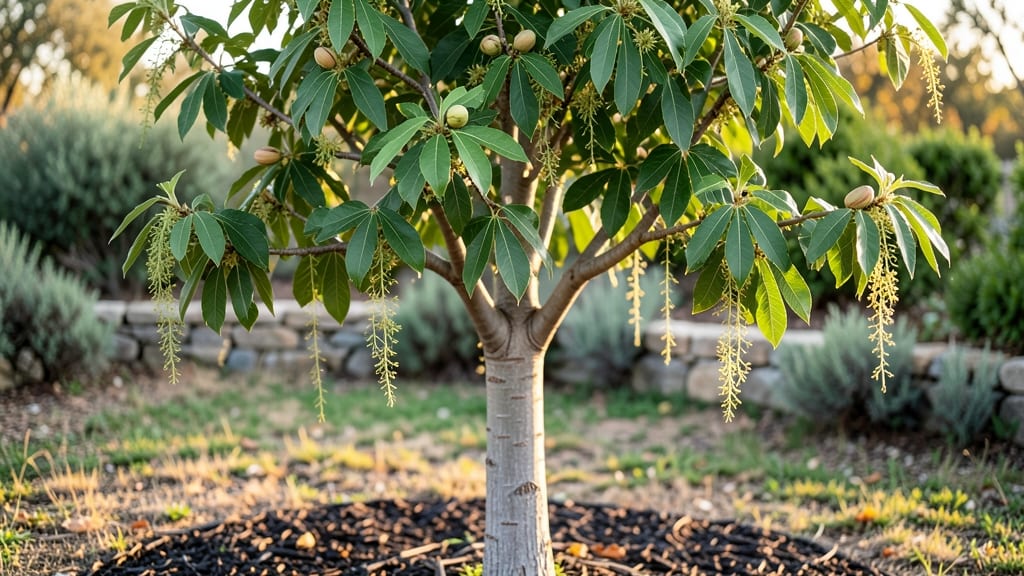
Pistachios grow on trees, not bushes, reaching heights of 20-30 feet with a sprawling, open canopy that thrives in dry climates.
Pistachio plants belong to the Pistacia vera species, a type of deciduous evergreen tree that can live for decades. 🌳 These trees develop a distinctive, rounded shape with long, flexible branches that spread widely—perfect for maximizing sunlight exposure in their native arid environments.
Unlike shrubs, pistachio trees require significant space, typically needing 30-50 feet between mature specimens to ensure proper air circulation and sunlight penetration.
What makes them unique is their dual-season foliage: they produce green leaves in spring and summer, then turn a golden-yellow in fall while retaining some evergreen characteristics.
This adaptability helps them survive in regions with hot summers and mild winters, like California's Central Valley where 99% of U.S. commercial production occurs.
💡 In This Article
- Pistachio Tree Botany: Growth Habits and Environmental Needs
- Cultivating Pistachios at Home: Key Steps for Growers
Pistachio tree botany: growth habits and environmental needs
Pistachio trees belong to the Pistacia vera species, a botanical classification that distinguishes them from shrubs through their permanent woody structure. These trees develop a deciduous evergreen habit, meaning they shed leaves seasonally but retain some foliage year-round.
Mature pistachio trees reach 20-30 feet in height with a sprawling canopy that can stretch up to 30 feet wide, creating an open, airy structure ideal for maximizing sunlight exposure in their native arid environments. 🌿
Their root systems extend deeply—often 10-15 feet—to access groundwater in dry climates, while shallow lateral roots spread horizontally to capture surface moisture.
This dual root structure allows pistachio trees to thrive in well-drained soils with pH levels between 6.5-8.0, though they tolerate slightly alkaline conditions better than acidic ones.
Unlike shrubs, pistachio trees require full sunlight exposure (6-8 hours daily) to produce the energy needed for nut development, making them poorly suited for shaded or indoor environments.
The tree's growth cycle begins with male and female flowers that appear separately on the same tree in spring. Pollination requires wind or bee assistance, after which female flowers develop into green, fleshy drupes that eventually split open to reveal the familiar shell-and-nut structure.
This process takes 180-200 days from flowering to harvest, with trees typically producing 50-100 pounds of nuts per year once mature (around 7-10 years after planting).
Pistachio trees exhibit remarkable drought tolerance once established, thanks to their ability to close stomata (pores) during water scarcity and reduce transpiration. However, young trees require regular irrigation (1-2 inches per week) during their first 3-4 years to develop strong root systems.
The trees' salt tolerance is another adaptation to arid conditions, allowing them to grow in regions where other crops would fail—like Iran's Kerman province, which produces 40% of the world's pistachios.
One fascinating botanical quirk is the tree's self-pruning habit: older branches naturally shed leaves and twigs to redirect energy to nut production. This creates the tree's characteristic open, airy canopy that improves airflow and reduces disease risk.
Gardeners often mimic this by practicing selective pruning to maintain the tree's natural shape while encouraging nut-bearing branches. The trees' lifespan can exceed 100 years with proper care, making them a long-term investment for both commercial growers and home enthusiasts. ✨
For those considering growing pistachios, understanding these botanical traits is crucial. The trees' height and sprawling growth habit mean they're not suitable for small urban gardens—minimum 30 feet of space is recommended between trees.
Their specific climate requirements (hot, dry summers; mild winters) further limit suitable growing zones to regions like California, Arizona, or Mediterranean climates. This explains why 99% of U.S. commercial production occurs in California's Central Valley, where the combination of 100+ frost-free days and low humidity creates ideal conditions.