
Pruning
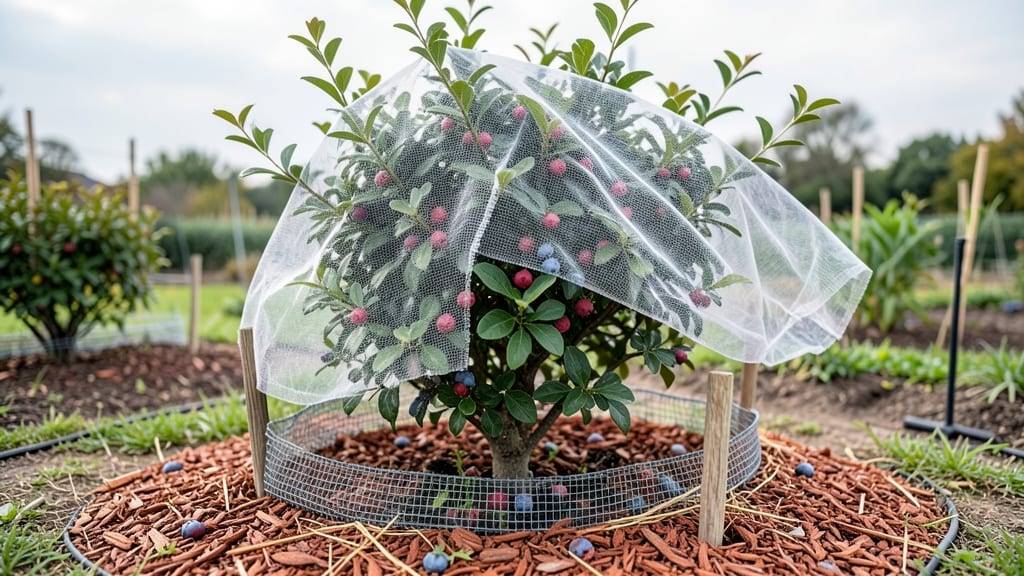
Blueberry bushes need protection from birds, deer, and pests—or your harvest will vanish overnight. 🌿 I’ve lost entire buckets of ripe berries to hungry birds and seen deer flatten entire rows.
The good news? Simple organic barriers work better than chemical sprays and keep your bushes thriving without harming pollinators.
Start with bird netting draped loosely over bushes before fruit ripens—birds can’t peck through, but bees still get in. For deer, wrap bushes in hardware cloth (not fencing) during spring growth.
Add mulch rings around stems to deter voles and slugs while locking in moisture. These methods block pests without chemicals.
You’ll see fewer holes in leaves, more berries on branches, and healthier plants by summer’s end. The key is timing: install barriers before pests arrive and check them weekly for tears. Prune out damaged branches in early spring to keep air flowing and diseases at bay.
Works for backyard bushes, community gardens, or even container-grown plants. Once you’ve tried these, you’ll never fear another harvest disaster again. Let’s get those berries protected!
📚 In This Guide
- What you need
- Instructions
- Tips and common mistakes
- Wrapping up and next steps
What you need
- ● Organic mulch: Pine needles or straw (1–2 inches thick, spread evenly around the base)
- ○ Wood chips (cedar or hardwood, 3–4 inches deep, optional for long-term suppression)
- ● Physical barriers: Chicken wire or hardware cloth (18–24 inches tall, wrapped around the bush base)
- ● Burlap or landscape fabric (for wrapping trunks, 3–4 feet high)
- ● Natural repellents: Crushed eggshells (1 cup, scattered around the base)
- ● Diatomaceous earth (food-grade, 1–2 pounds, reapply after rain)
- ● Tools: Garden gloves (1 pair, for handling mulch/barriers)
- ● Pruners (sharp, for trimming invasive growth)
- ● Rake (for spreading mulch evenly)
- ● Measuring tape (to ensure barrier height)
- ● Healthy blueberry bushes (pruned and thinned in late winter/early spring)
- ● Dry weather for applying mulch/repellents (avoid wet conditions)
- ● Time commitment: 1–2 hours for setup, plus monthly checks
Step-by-Step guide to creating organic blueberry bush barriers
Here’s how I protect my blueberry bushes naturally—no chemicals, just smart layers that keep pests and critters at bay.
🪴 Step 1: Build a Physical Barrier with Mulch and Fabric
Start by laying down a 2-foot wide ring of cardboard or thick newspaper around the base of each bush. This blocks burrowing pests like voles and creates a clean zone for your organic barrier. Overlap edges by 4 inches to prevent gaps where pests could sneak through. I use unbleached cardboard because it breaks down safely without leaving toxic residue.
Next, cover the cardboard with a 3-foot diameter circle of landscape fabric (heavyweight, 30-ounce test). Secure it with brass staples or landscape staples—just don’t drive them too deep, or you’ll damage the roots. The fabric keeps weeds down while allowing water to seep through. Leave a 6-inch gap between the fabric edge and the bush trunk to prevent moisture buildup against the bark.
🌿 Step 2: Layer Organic Mulch for Pest Deterrence
Spread 3-4 inches of coarse wood chips or straw mulch over the landscape fabric, extending the ring out to 2 feet from the bush. Pine bark mulch works best because its acidic nature mimics blueberry soil conditions while repelling slugs and snails. Avoid cedar chips—they contain natural oils that can inhibit root growth over time.
Rake the mulch evenly so it sits 1 inch away from the trunk to prevent rot. I like to refresh this layer every spring and fall, adding fresh mulch as the old layer breaks down. This keeps the barrier thick and effective while improving soil health. Watch for pileups near the base—those can trap moisture and invite fungal issues.
✂️ Step 3: Install a Wire Mesh Guard for Above-Ground Threats
Cut 18-gauge hardware cloth into 3-foot tall circles (or squares) to fit around each bush. Bend the edges outward slightly to create a 6-inch lip that presses into the mulch. This keeps out rabbits, deer, and even hungry squirrels that might nibble on buds. Secure the mesh with galvanized staples or zip ties—avoid plastic ties, as they can degrade and harm the plant.
For extra protection, wrap the lower 12 inches of the trunk with aluminum foil (yes, really!). The foil’s reflective surface confuses deer and rabbits, making them less likely to investigate. Replace the foil if it tears or darkens from weather exposure. This step is especially critical in early spring when new shoots emerge—pests target tender growth.
💧 Step 4: Add Natural Repellents to the Barrier System
Mix 1 part diatomaceous earth (DE) with 2 parts mulch and sprinkle it lightly around the base of the bush. The DE creates a microscopic barrier that dehydrates soft-bodied pests like slugs and beetles. Reapply after rain, as water washes it away. I also plant garlic and chives around the perimeter—their strong scent deters many common blueberry pests naturally.
For birds that peck at ripe berries, hang reflective tape or old CDs from nearby branches. The moving reflections scare them off without harm. In late summer, I add a shallow dish of beer near the bush—slugs and snails are drawn to it and drown, reducing their numbers around the plants. This method is 100% organic and works in harmony with your barrier system.
⏰ Step 5: Monitor and Refresh Seasonally
Check your barriers weekly in spring and summer, especially after heavy rains. Replace any torn fabric or collapsed mulch immediately—even small gaps invite pests. I schedule a deep inspection in early fall before the first frost, removing old mulch and refreshing the landscape fabric. This prevents pests from overwintering near your bushes.
Watch for chewed leaves or missing berries—these are signs your barrier needs reinforcement. If you spot persistent pests, add an extra layer of crushed eggshells around the base. The sharp edges deter crawling insects while adding calcium to the soil. With this system, my blueberry bushes stay pest-free for years, and the berries thrive without chemical interference.
Tips & tricks for effective blueberry bush protection
Here's what I've learned after years of testing these organic barriers—small details that make all the difference between a temporary fix and long-term pest control.
Material Selection Matters: For Step 1, I recommend using double-layered cardboard if you're dealing with particularly aggressive voles. The extra thickness creates more effective insulation against burrowing. When choosing landscape fabric, opt for the heaviest weight you can find (45-ounce test)—it lasts longer and blocks weeds more effectively than the standard 30-ounce. The extra investment pays off in reduced maintenance over time.
Mulch Depth Strategy: In Step 2, maintaining that 3-4 inch mulch layer is crucial, but don't let it pile up against the trunk. I've found that creating a slight cone shape with the mulch, highest at the outer edge and tapering toward the center, improves water drainage while maintaining the protective barrier. This prevents the moisture buildup that can lead to fungal issues at the base of the plant.
Mesh Installation Insight: When installing the 18-gauge hardware cloth in Step 3, I've discovered that pre-bending the edges at a 45-degree angle before pressing them into the mulch creates a more secure barrier. This angled lip makes it nearly impossible for rabbits to climb over. For larger bushes, consider overlapping two pieces of mesh with a 6-inch overlap to ensure complete coverage.
Seasonal Repellent Rotation: In Step 4, while diatomaceous earth is excellent, I rotate it with crushed eggshells every other week to prevent pests from adapting. The sharp edges of eggshells work differently than DE, creating a more comprehensive defense. I also plant marigolds at the perimeter of my blueberry patch—their strong scent confuses many pests while adding beauty to the garden.
Pro Tips for Blueberry Bush Protection
- Here's what I've learned after years of testing these organic barriers—small details that make all the difference between a temporary fix and long-term pest control.
- Material Selection Matters: For Step 1, I recommend using double-layered cardboard if you're dealing with particularly aggressive voles.
- Mulch Depth Strategy: In Step 2, maintaining that 3-4 inch mulch layer is crucial, but don't let it pile up against the trunk.
Frequently asked questions
Got questions about keeping your blueberry bushes safe from pests without harsh chemicals? You’re not alone! Here are some of the most common concerns—and straightforward answers to help you protect your bushes like a pro.
What are the most common pests that attack blueberry bushes, and how do I spot them?
Blueberry bushes often face threats from Japanese beetles, spotted wing drosophila, aphids, and deer. Look for chewed leaves , tiny fruit punctures, or sticky residue (aphid honeydew). Early signs include wilting foliage or birds pecking at berries—your cue to act fast!
When is the best time to apply organic pest barriers?
Timing matters! For physical barriers (like row covers or netting), install them before pests arrive—early spring for beetles, late spring for fruit flies. Spray treatments (neem oil, insecticidal soap) work best at dusk when pests are active. Check your local pest emergence calendar for precision!
Can I use DIY organic sprays, or should I stick to store-bought solutions?
Both work! DIY options like soapy water (1 tsp mild soap + 1 quart water) or garlic/chili pepper spray are effective for soft-bodied pests. For tougher invaders, store-bought pyrethrin-based sprays or kaolin clay are reliable. Always test sprays on a small leaf first to avoid damage.
How do I keep deer away from my blueberry bushes without harming them?
Deer love blueberries! Try these humane tricks: fencing (8-foot tall, buried 12 inches deep), repellent sprays (rotten egg or predator urine), or planting deer-resistant companions like lavender or rosemary nearby. Motion-activated sprinklers also work wonders!
What should I do if my bushes already have pests? Can I save them?
Don’t panic! Start by removing heavily infested leaves and pruning damaged branches. Apply a targeted organic spray (like neem oil) and introduce beneficial insects (ladybugs, lacewings). Monitor daily—consistency is key. Most bushes bounce back with prompt action!
Still stumped? Drop your specific pest or problem below—we’ve got more tips to share!
Wrapping up and next steps
Protecting your blueberry bushes doesn’t have to be a battle—with the right organic barriers, you can keep pests at bay while nurturing a thriving harvest. 🌱 From mulching to companion planting, these simple yet effective methods safeguard your bushes naturally, ensuring healthier plants and sweeter berries year after year.
Ready to take action? Start by implementing one or two strategies this season and observe the difference. Your blueberry bushes will thank you with bountiful, pest-free yields! 🍇