
Picking
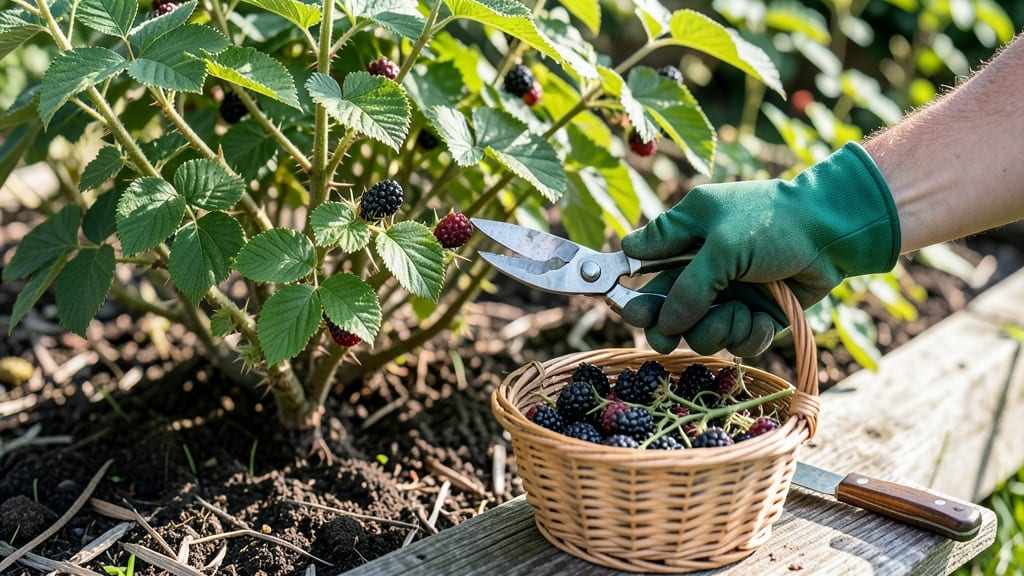
Harvesting a blackberry bush at the right time turns your backyard into a sweet, juicy treasure—but miss the window, and you’ll end up with tart, mealy berries or a bush stripped bare by birds.
Picture this: you’ve waited months for those glossy, deep-black berries to swell on the vine, only to pick them too soon and taste disappointment. The difference between perfectly ripe and underripe blackberries comes down to timing, color, and a little gentle pressure.
In USDA Zone 6a, your harvest window stretches from June to August, but early and late varieties may shift that by a few weeks. Learning the visual cues—like fully black skin, a slight give when touched, and berries that detach easily—will help you nail the harvest every time.
Below, I’ll walk you through the exact signs to pick, how to harvest without damaging the plant, and even how to store your bounty so it stays fresh longer. No more wasted berries or missed seasons!


When to harvest blackberries: the best time of year and daily signs
Timing your blackberry harvest perfectly ensures the sweetest flavor and highest yield. Most varieties ripen between mid-summer and early fall, but exact timing depends on your climate zone and the specific variety you're growing.
Early-season types like 'Chester' may ripen as early as June, while late varieties like 'Natchez' can extend harvests into September.
Understanding the temperature thresholds is key—blackberries thrive when daytime temperatures stay between 65°F and 85°F. If temperatures climb above 90°F during ripening, berries may develop off-flavors or split. Cooler climates often produce sweeter berries because they ripen more slowly, allowing sugars to fully develop.
Now let's break down the seasonal harvest windows and visual cues to pick at peak ripeness.
| Harvest Window | Variety Types | Key Ripeness Signs | Temperature Range |
|---|---|---|---|
| Early Season (June) | 'Chester', 'Triple Crown' | Fully black, shiny, detach easily | 65°F - 75°F |
| Mid-Season (July-August) | 'Arapaho', 'Ouachita' | Deep black, slight give when pressed | 70°F - 85°F |
| Late Season (August-September) | 'Natchez', 'Black Satin' | Uniform black, plump, no red hues | 60°F - 80°F |
| Extended Season (Cool Climates) | 'Shawnee', 'Darrow' | Fully black, firm but tender | 55°F - 70°F |
🌱 Note: Always check berries daily—some varieties ripen within 24 hours!
The most reliable daily ripeness signs focus on three key visual cues. First, look for uniform black color—any remaining red or purple means the berries need more time. Second, gently press a berry; it should yield slightly but not feel mushy.
Finally, check for easy detachment—ripe berries should come off cleanly when gently pulled from the stem.
Another subtle clue is the leaf color around ripening berries. As blackberries mature, nearby leaves may start to yellow slightly, signaling the plant is redirecting energy to fruit production. This is especially common in thornless varieties like 'Cheyenne,' where the plant's energy focus becomes more visible.
If you're growing floricane varieties (like 'Prime-Ark Freedom'), harvest from the second-year canes—these are the ones that produce fruit. First-year canes (primocanes) won't bear fruit until their second year, so focus your attention on the older, woody stems.
This two-year cycle means you'll get two harvests per plant if you manage your canes properly.
Temperature plays a surprising role in flavor development. In hot climates, blackberries may ripen faster but lack sweetness. To combat this, harvest in the early morning when sugars are most concentrated. In cooler regions, morning harvests also prevent berries from splitting due to rapid temperature changes.
One common mistake is waiting until berries are completely soft—this means they're overripe and will spoil quickly. The perfect berry should be firm yet tender, with a slight sheen. Overripe berries also attract birds and pests, which can reduce your overall yield if left unchecked.
For extended harvest seasons, consider planting a mix of early, mid, and late varieties. This staggered approach ensures you have ripe berries every few weeks, from June through September. Just be sure to label your plants so you know which variety is ready when!
Remember, the earlier you harvest, the longer your blackberries will last. Once picked, store them in the refrigerator for up to 3 days to maintain freshness. For longer storage, freeze berries immediately after harvest—this preserves their peak flavor and nutrients for up to 6 months.
How to pick blackberries without damaging the bush: step-by-step techniques
Picking blackberries at their peak while protecting your blackberry bush requires gentle hands and smart timing. The right technique ensures sweet, juicy berries while keeping the plant healthy for next year's harvest. Start by identifying the perfect ripe berries—they should be deep black and slightly soft when touched.
Use a harvesting tool like a pair of clean pruning shears or a small knife to snip the berry clusters from the stem. Avoid pulling berries directly off the plant, as this can damage the canes and reduce future production.
Always leave a small portion of the stem attached to prevent rot and extend shelf life.
⚠️ callout-warning
Picking overripe berries (mushy, leaking juice) invites pests and disease. These berries also attract birds and wildlife, which can strip your entire crop. Harvest daily or every other day during peak season to stay ahead.
✅ DO: Pick berries when 70-80% ripe for extended harvest.
For large harvests, consider using a harvesting tray or shallow basket lined with fabric to prevent bruising. Work systematically—start at the bottom of the canes and move upward to avoid missing hidden berries.
Wear gloves to protect your hands from thorns and stains, and use a small bucket to collect berries as you go.
After harvesting, inspect your blackberry bush for any remaining unripe berries or damaged fruit. Remove these immediately to redirect the plant's energy toward new growth. Prune any dead or diseased canes right after harvest to improve airflow and reduce the risk of fungal infections.
To encourage a bigger harvest next year, apply a balanced fertilizer (like 10-10-10) in early spring and again after harvest. Water deeply at the base of the plant, avoiding the leaves to prevent mildew. Mulch around the base with organic matter to retain moisture and suppress weeds.
Store freshly picked blackberries in the refrigerator for up to 3 days, or freeze them for long-term use. Label your containers with the harvest date to track freshness. With these techniques, you'll enjoy a bountiful blackberry harvest year after year without compromising your plant's health. 🫐