
Planting
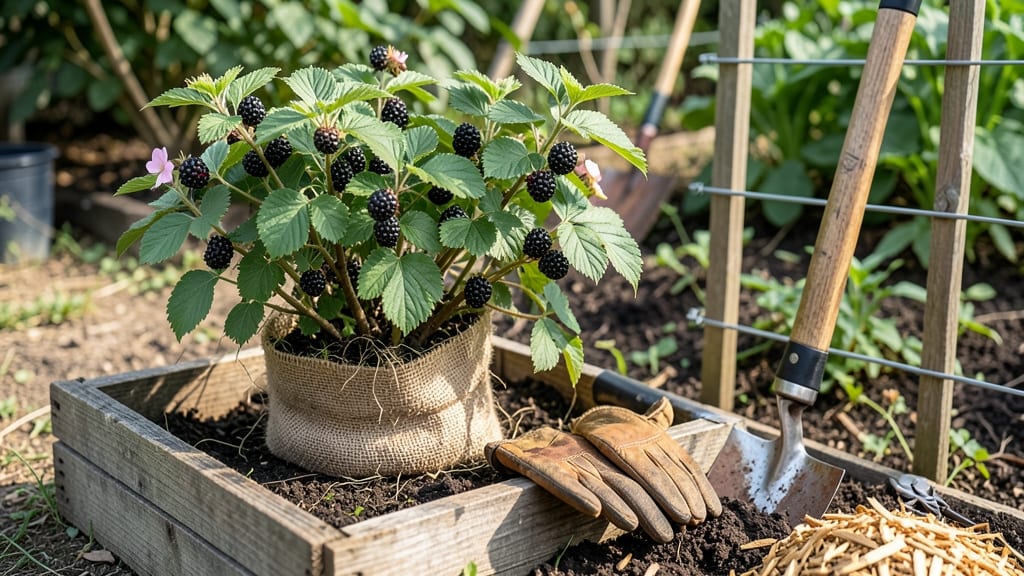
The best place to plant a blackberry bush is where it gets full sun and soil drains like a dream—because these thorny powerhouses need both to thrive. 🌿 I learned this the hard way when my first bush struggled in partial shade, producing tiny, flavorless berries.
The right spot means juicy, plump berries that taste like summer in every bite. Start with 6-8 hours of sunlight daily and soil that’s loose, not soggy. Blackberries hate wet feet—amend heavy soil with compost to improve drainage.
A south-facing fence or trellis works perfectly, giving vines support while maximizing sun exposure. You’ll end up with vibrant green canes and berries that burst with flavor by mid-summer. The key is spacing them 4-6 feet apart to prevent disease and encourage airflow.
Works for climates from Zone 5-10, but adjust planting time: early spring in cold zones, fall in warm ones. Here’s how to nail it!
📚 In This Guide
- What you need
- Instructions
- Tips and common mistakes
- Wrapping up and next steps
What you need
- ● Blackberry plants: 1–2 healthy nursery-grown bushes (everbearing or summer-bearing varieties, depending on your climate).
- ● Shovel or trowel: A sturdy garden shovel (for digging) or a hand trowel (for smaller holes).
- ● Pruning shears: Sharp, bypass pruners (to trim canes and encourage growth).
- ● Compost or well-rotted manure: 2–3 gallons per plant (for nutrient-rich soil).
- ○ Mulch (optional but recommended): Straw, wood chips, or pine needles (2–3 inches thick to retain moisture and suppress weeds).
- ● Drip irrigation or hose: For consistent watering (blackberries need 1–1.5 inches per week).
- ● Fencing or trellis: 4–6 ft tall (to support canes and improve air circulation).
- ● Soil test kit: To check pH (ideal range: 5.5–6.5; adjust with lime or sulfur if needed).
- ● Slow-release fertilizer: Balanced 10-10-10 or organic options (apply in early spring).
- ● Blackberry thorn guards: Gloves or long sleeves (blackberry thorns are no joke!).
- ● Weed barrier fabric: To reduce competition for nutrients.
- ● Plant tags: To label varieties and track planting dates.
Step-by-step guide to choosing the perfect blackberry planting spot
Here’s how I’ve learned to select the ideal location—where blackberries thrive and produce abundantly.
☀️ Step 1: Prioritize Full Sun Exposure
Blackberries demand 6-10 hours of direct sunlight daily for optimal fruit production. I always scout the sunniest spot in my yard first—usually the southern or southwestern exposure. Look for areas where sunlight reaches the ground without obstructions like trees or buildings casting shadows after noon.
Morning sun helps dry dew quickly, reducing fungal risks, while afternoon sun ensures the berries ripen fully. If your yard only offers partial sun, choose the 6-hour minimum—any less and your harvest will be sparse. I test potential spots by marking them with stakes for a week to track sunlight patterns before committing.
🌱 Step 2: Select Well-Draining Soil
Blackberry roots hate soggy feet. The ideal soil drains water within 24 hours but retains enough moisture to prevent drought stress. I dig a 12-inch deep hole in my test spot to check drainage—if water pools after 30 minutes, amend the soil with 2-3 inches of compost or plant on a slight mound.
Soil pH should be 5.5-6.5. Test your soil with a kit—if it’s too acidic, mix in lime (follow package rates). Sandy loam is perfect, but clay? Break it up with organic matter like leaf mold or well-rotted manure. I avoid low-lying areas where water collects after rain—blackberries despise root rot.
🪴 Step 3: Plan for Support and Space
Blackberries need 4-6 feet of horizontal space to sprawl, plus 5-6 feet of vertical support. I install T-posts or wire trellises before planting—these bushes get heavy with fruit! Choose a location where you can easily attach 4-5 feet of horizontal wire at 3-foot intervals for the canes to climb.
If planting multiple bushes, space them 6 feet apart to prevent overcrowding. I avoid planting near fences unless they’re sturdy—blackberry canes can weigh 20+ pounds when laden with berries. A windbreak on the northern side helps too; these plants aren’t fans of gusts that snap canes.
⏰ Step 4: Time Your Planting for Optimal Growth
Plant bare-root blackberries in early spring (just as buds swell) or fall (6-8 weeks before first frost). Container-grown bushes can go in anytime the soil is workable. I dig the hole twice as wide as the root ball to encourage root spread, then loosen the roots gently if they’re circling.
Mulch heavily with 3-4 inches of wood chips after planting to retain moisture and suppress weeds. Avoid fresh mulch touching the stem—keep it 2 inches away to prevent rot. Water deeply once a week for the first month, then taper to every 10-14 days once established. Drip irrigation works best—it delivers water at the roots without wetting the leaves.
🌿 Step 5: Monitor and Adjust for Long-Term Success
Watch for yellowing leaves—a sign of overwatering or poor drainage. If this happens, amend the soil with sand or perlite to improve drainage. Blackberries also need regular pruning to remove dead canes and encourage new growth. I prune in late winter when the plant is dormant, cutting back to 1/3 of its size to maintain vigor.
Fertilize lightly in early spring with a balanced 10-10-10 formula—too much nitrogen makes leafy growth at the expense of fruit. I avoid high-phosphorus fertilizers unless soil tests show a deficiency. The best blackberry spots I’ve planted? They’re the ones where I paid attention to sun, soil, and support from day one.
Tips & tricks for perfect blackberry planting spots
These pro insights will help you avoid common pitfalls and maximize your blackberry harvest.
Sunlight Strategy: When testing potential spots, observe sunlight patterns for a full week—not just a sunny day. I’ve seen mornings with full sun suddenly shaded by a neighbor’s tree at noon. Mark your test spots with stakes and note when shadows appear. The 6-hour minimum is non-negotiable for fruit production, but those extra 4 hours of sunlight make all the difference in sweetness and yield.
Soil Science: The 30-minute drainage test is your best friend. If water lingers after 30 minutes, you’re looking at root rot risks. For clay-heavy soils, mix in equal parts sand and compost to create that perfect loamy texture. I’ve found that amending just the planting hole (not the entire bed) often gives better results than tilling the whole area—it creates a localized ideal environment while preserving the plant’s natural rooting patterns.
Support System: Don’t skimp on trellis height! Those 5-6 feet of vertical support aren’t just for looks—they prevent cane breakage when berries are heavy. I’ve seen 20-pound canes snap like twigs when unsupported. Install your trellis before planting so you can position it exactly where the plant will grow, not where you hope it will grow. The 3-foot wire intervals create perfect climbing angles for the canes.
Timing is Everything: The 6-8 week fall planting window gives roots time to establish before winter, but don’t push it too late. If your first frost is October 15th, aim for planting by September 1st. For container-grown bushes, you’ve got more flexibility, but still plant when soil temperatures are above 50°F—blackberries are sensitive to cold soil. I always check soil temps with a simple thermometer before planting containers.
Pro Tips for Best Place To Plant A Blackberry Bush
- These pro insights will help you avoid common pitfalls and maximize your blackberry harvest.
- Sunlight Strategy: When testing potential spots, observe sunlight patterns for a full week—not just a sunny day. I’ve...
- Soil Science: The 30-minute drainage test is your best friend. If water lingers after 30 minutes, you’re looking at r...
Frequently asked questions
Got questions about planting your blackberry bush? You’re not alone! Here are answers to common concerns—from site selection to troubleshooting—to help you grow thriving, productive bushes.
What’s the ideal sunlight exposure for blackberry bushes?
Blackberries love sun! Plant them in a spot with at least 6–8 hours of direct sunlight daily. Partial shade (morning sun + afternoon shade) works in hot climates, but avoid deep shade—it reduces fruit yield and weakens canes. Pro tip: South-facing slopes or fences are perfect for maximizing sun exposure.
Can I plant blackberries in containers or raised beds?
Containers and raised beds are great for urban gardens or areas with poor soil. Use a large pot (at least 18–24 inches deep) with drainage holes and a mix of well-draining potting soil and compost. Just ensure the container gets full sun and stays consistently moist—containers dry out faster than ground soil. Bonus: Containers make it easier to move bushes if pests strike!
When is the best time to plant blackberry bushes?
Timing matters! Plant in early spring (after the last frost) or late fall (4–6 weeks before the first frost) for the best root establishment. Avoid planting in summer heat or winter freezes—both stress young plants. If you’re in a mild climate (Zone 8+), fall planting is ideal. Pro tip: Soak roots in water for 1–2 hours before planting to reduce transplant shock.
Why aren’t my blackberry bushes producing fruit?
Several factors can stunt fruit production:
- Insufficient sun: Move to a sunnier spot if canes are leggy or bare.
- Poor pollination: Plant multiple varieties nearby (blackberries are self-pollinating but thrive with neighbors).
- Improper pruning: Remove old canes (after harvest) and thin crowded growth for airflow.
- Nutrient deficiency: Feed with a balanced fertilizer (10-10-10) in early spring and after harvest.
Are there blackberry alternatives for small spaces?
If space is tight, consider these low-maintenance alternatives:
Option
Why It Works
Thornless blackberries (e.g., ‘Natchez’ or ‘Arapaho’)
Compact varieties (like ‘Triple Crown’) grow well in small gardens or containers.
Raspberries
Easier to manage in tight spaces; some varieties (like ‘Heritage’) are perennial.
Dwarf blueberries
Thrives in acidic soil and produces year-round (with proper care).
Strawberries (everbearing varieties)
Fast-growing, low-maintenance, and great for containers or hanging baskets.
Wrapping up and next steps
Choosing the perfect spot for your blackberry bush is the first step toward a thriving, bountiful harvest! 🌱 Remember, prioritize full sun exposure (6+ hours daily) and well-draining soil—these are non-negotiable for happy plants.
With the right location, proper care, and a little patience, you’ll soon be enjoying sweet, juicy berries straight from your garden.
Ready to get started? Grab your gardening tools, mark that sunny patch, and dig in! Your future blackberry patch awaits—let’s make it grow! 🍇