
Diseases
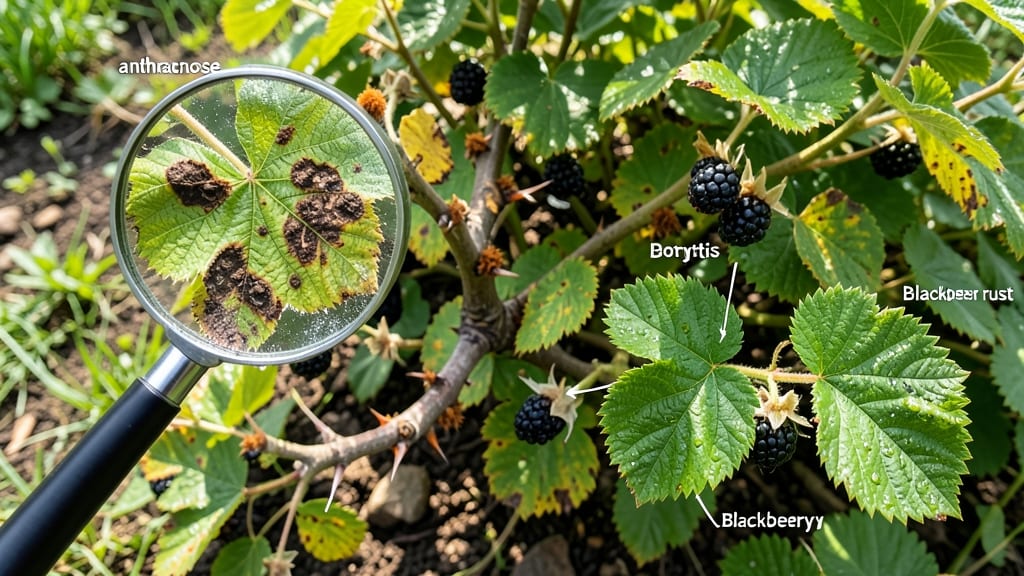
Blackberry bush diseases with pictures can turn your thriving brambles into a sad, spotted mess—🌿 but knowing the signs means you can save them.
I’ve spent years watching anthracnose, rust, and powdery mildew creep into my bushes, and I’ve learned the early warning signs that most gardeners miss until it’s too late. The key? Spotting the right symptoms before they spread, and I’ll walk you through exactly what to look for in each case.
Anthracnose starts with tiny, sunken spots on leaves that turn brown and ooze in wet weather, while rust shows up as orange pustules on the undersides of leaves. Powdery mildew, on the other hand, coats leaves in a white, flour-like dust—easy to mistake for flour if you’re not paying attention.
Each disease thrives in different conditions, so the first step is figuring out which one you’re dealing with before reaching for treatments.
Once you’ve identified the problem, treatment is straightforward but requires quick action. Prune infected branches immediately, apply a mix of baking soda and water for mildew, or use copper fungicide for anthracnose and rust.
Prevention is even easier: space plants properly, water at the base, and avoid overhead sprinklers to keep foliage dry. A few simple steps now mean fewer headaches—and more berries—next season.
This guide includes visual cues for each disease so you can diagnose problems fast, plus organic and chemical solutions tailored to your needs. Whether you’re dealing with a new outbreak or just want to keep your bushes healthy, these tips will help you act before the damage gets worse.
Let’s get those bushes back in fighting shape!
Root Causes Of Blackberry Woes
Blackberry bushes are resilient, but when diseases strike, understanding the why behind them is half the battle. Fungal infections, bacterial attacks, and environmental stressors don’t just appear out of nowhere—they thrive because of specific conditions your blackberry plants may be creating.
Let’s break down the real culprits behind common blackberry bush diseases, so you can tackle them at their source.
Blackberries love space, but when their canes grow too densely, disaster follows. Fungal spores like those causing anthracnose or botrytis blight (gray mold) cling to damp leaves and stems, spreading like wildfire in tight quarters.
- Why it happens:
- Limited airflow creates a humid microclimate, perfect for fungal growth.
- Wet foliage lingers longer when canes brush against each other, trapping moisture.
- Shaded leaves (from overgrowth) stay cooler and wetter, weakening defenses.
- Actionable fix:
- Prune aggressively in late winter/early spring to open the canopy.
- Space new plants 4–6 feet apart to allow sunlight and breeze.
- Remove dead or diseased canes immediately to stop spore spread.
Blackberries hate soggy roots. Overwatering, poor drainage, or heavy rains create the ideal breeding ground for root rot (caused by Phytophthora fungi) and leaf spot diseases like Elsinoë (blackberry rust).
- Why it happens:
- Waterlogged soil cuts off oxygen to roots, stressing the plant and inviting fungal invaders.
- Frequent overhead watering wets leaves, promoting Botrytis or powdery mildew.
- Low-lying or compacted soil prevents excess water from draining, trapping pathogens.
- Actionable fix:
- Water at the base (not overhead) and early in the day so foliage dries quickly.
- Amend soil with compost or sand to improve drainage.
- Mulch properly: Use 2–3 inches of straw or wood chips, keeping it 6 inches away from the stem to prevent rot.
Blackberry diseases often overwinter in leaf litter, old canes, or thatch. If you don’t clean up after harvest, spores from last season’s anthracnose or armillaria root rot will reinfect your bushes.
- Why it happens:
- Decaying organic matter (like fallen leaves or pruned canes) hosts fungal spores.
- Weeds and grass around the base can harbor pests (like thrips) that spread diseases.
- Infected tools or clothing (from pruning) can carry pathogens to healthy plants.
- Actionable fix:
- Rake and remove all debris from the bed in fall and spring.
- Solarize the soil (cover with clear plastic for 4–6 weeks in summer) to kill dormant spores.
- Disinfect pruners with 70% rubbing alcohol or bleach solution between cuts.
Aphids, Japanese beetles, and spider mites sap nutrients from blackberry leaves, making plants stressed and vulnerable to secondary infections like powdery mildew or bacterial canker.
- Why it happens:
- Pest damage creates open wounds, giving bacteria/fungi an entry point.
- Honeydew (from aphids) attracts sooty mold, which blocks sunlight and weakens growth.
- Thrips spread tomato spotted wilt virus, which stunts plants and invites rot.
- Actionable fix:
- Monitor for pests regularly—look for sticky leaves (honeydew) or chewed edges.
- Spray with neem oil or insecticidal soap at the first sign of infestation.
- Introduce beneficial insects (ladybugs, lacewings) to control pests naturally.
Blackberries thrive in USDA Zones 5–9, but sudden heatwaves, late frosts, or cold snaps stress plants, lowering their resistance to diseases like fruit rot or crown gall.
- Why it happens:
- Heat stress (above 90°F) causes sunscald on fruits, making them prone to Rhizopus rot.
- Late frosts damage new growth, leaving open wounds for bacteria (Pseudomonas syringae).
- Cold snaps weaken canes, making them susceptible to armillaria root rot in spring.
- Actionable fix:
- Mulch heavily (4–6 inches) in fall to insulate roots from freeze-thaw cycles.
- Provide shade cloth (30–50%) during peak summer heat to protect fruits.
- Choose cold-hardy varieties (e.g., ‘Cheyenne’ or ‘Natchez’) if you’re in a marginal zone.
Blackberries need balanced nutrients, but too much nitrogen (from over-fertilizing) leads to soft, sappy growth—a buffet for fungi. Meanwhile, deficiencies in phosphorus or potassium weaken roots, making them prone to rot.
- Why it happens:
- Excess nitrogen = fast, weak growth = more surface area for spores to latch on.
- Low potassium = poor root strength = easier entry for Phytophthora fungi.
- Compacted or acidic soil (pH < 5.5) locks out essential nutrients, stressing the plant.
- Actionable fix:
- Test your soil (use a home kit or lab test) and amend based on results.
- Avoid high-nitrogen fertilizers—opt for a balanced 10-10-10 or low-N organic option.
- Add wood ash or lime if soil is too acidic (aim for pH 5.5–6.5).
Healthy blackberries = fewer diseases. Focus on airflow, drainage, and stress reduction—these three factors account for 80% of disease prevention. A little upfront care saves you from spraying fungicides later!
Would you like a visual cheat sheet matching symptoms to these causes? Let me know—I’ve got a table ready to help you diagnose faster.
Quick Fixes for Blackberry Bush Ailments
When your blackberry bushes show signs of distress, acting fast can mean the difference between a thriving harvest and lost plants. Below are practical, step-by-step solutions for the most common blackberry diseases, paired with prevention tips to keep your bushes healthy long-term.
🔥 Powdery Mildew: Scrub & Spray
Powdery mildew coats leaves in a white, powdery film, weakening the plant’s ability to photosynthesize. Here’s how to tackle it:
- 🧼 Prune & Clean
- Remove all infected leaves and canes (don’t compost them—dispose of them in a sealed bag).
- Sterilize pruners with 70% rubbing alcohol or a 10% bleach solution (1 part bleach to 9 parts water) to prevent spreading spores.
- 💦 Apply Fungicide
- Use a copper-based fungicide (like copper sulfate) or a baking soda spray (1 tbsp baking soda + 1 tsp dish soap + 1 gallon water). Spray both sides of leaves thoroughly.
- Reapply every 7–10 days until the mildew disappears.
- ⚡ Boost Airflow
- Thin out crowded canes to improve circulation—fungi thrive in damp, shaded conditions.
- Water at the base (not overhead) to keep foliage dry.
💡 Prevention Tip:
- Space plants 3–4 feet apart to reduce humidity.
- Plant resistant varieties like ‘Arapaho’ or ‘Natchez’ if powdery mildew is recurrent.
🍅 Anthracnose: Cut & Treat Aggressively
Anthracnose causes dark, sunken lesions on leaves, canes, and fruit. It spreads rapidly in wet conditions.
- 🗑️ Remove Infected Parts
- Prune away all diseased canes and leaves—this disease overwinters in plant debris.
- Burn or trash infected material (do not compost).
- 🛡️ Fungicide Application
- Spray with a chlorothalonil-based fungicide (like Daconil) before symptoms appear if anthracnose is common in your area.
- Repeat every 2–3 weeks during rainy seasons.
- 🌧️ Adjust Watering
- Water early in the morning so foliage dries quickly.
- Avoid overhead irrigation—use drip systems instead.
💡 Prevention Tip:
- Plant in full sun (6+ hours daily)—anthracnose loves shade and moisture.
- Rotate crops if growing blackberries in the same spot yearly.
🍓 Root & Crown Rot: Drain & Disinfect
Root rot (often caused by Phytophthora) turns leaves yellow, canes soft and mushy, and the plant wilts despite watering.
- 🚰 Improve Drainage Immediately
- Dig around the base of the plant to check for waterlogged soil.
- Amend soil with compost or sand to loosen heavy clay.
- Raise beds if soil drains poorly—consider mounding soil around the base.
- 🌱 Transplant if Necessary
- If roots are black and mushy, the plant may be beyond saving. Dig up and replace with a healthy cutting.
- Disinfect the hole with a 3% hydrogen peroxide solution before replanting.
- 🍄 Fungicide Soil Drench
- Use phosphite-based fungicides (like Subdue or Aliette) to treat soil.
- Avoid overwatering—stick to 1 inch per week unless it rains.
💡 Prevention Tip:
- Choose well-draining soil—blackberries hate soggy roots!
- Mulch with straw (not wood chips) to prevent fungal splash from soil.
🕷️ Spider Mites: Blast & Block
These tiny pests weaken plants, making them susceptible to secondary infections.
- 💦 Blast Off with Water
- Spray plants with a strong jet of water (early morning) to knock mites off.
- Repeat every 2–3 days for severe infestations.
- 🧴 Apply Horticultural Oil
- Use neem oil or insecticidal soap (follow label rates).
- Spray undersides of leaves—mites love hiding there.
- 🕸️ Introduce Predators
- Ladybugs and lacewings eat spider mites. Buy them online or attract them with dill or fennel plants.
💡 Prevention Tip:
- Keep humidity above 50%—mites thrive in dry conditions.
- Use reflective mulch (like aluminum foil) to disorient mites.
Prevention is the best cure! Follow these year-round tips to keep diseases at bay:
- 🌿 Prune Properly
- Remove dead or weak canes in late winter/early spring.
- Thin canes to 6–8 per plant for better airflow.
- 🍃 Fertilize Smartly
- Use a balanced fertilizer (10-10-10) in early spring.
- Avoid high-nitrogen fertilizers—they encourage lush (but disease-prone) growth.
- 🛡️ Rotate Fungicides
- Alternate between copper, sulfur, and phosphite fungicides to prevent resistance.
- 🌱 Plant Disease-Resistant Varieties
- Try ‘Chester’, ‘Triple Crown’, or ‘Ouachita’—these are bred for tougher disease resistance.
Final Thought: 🌱 Healthy blackberries start with healthy soil and smart care. Catch problems early, act decisively, and your bushes will reward you with juicy, disease-free berries for years!
Frequently asked questions about blackberry bush diseases
How can I tell if my blackberry leaves have powdery mildew vs. rust?
Powdery mildew appears as a white, flour-like coating on both leaf surfaces, while rust shows as orange-yellow pustules (like tiny blisters) on the undersides of leaves. Check both sides of leaves—rust’s pustules are a dead giveaway!
Can I save a blackberry bush with root rot?
Early-stage root rot might be salvageable if you improve drainage immediately and apply phosphite fungicides. However, if roots are black and mushy, the plant is likely beyond saving—replace it with a healthy cutting. Prevention (like raised beds) is key!
Why does my blackberry plant keep getting anthracnose every year?
Anthracnose spores overwinter in old canes and leaf litter. If you don’t remove and dispose of infected debris (don’t compost it!), the disease will return yearly. Prune in late winter and sterilize tools between cuts.
Is baking soda really effective for treating blackberry diseases?
Yes! A baking soda spray (1 tbsp baking soda + 1 tsp dish soap + 1 gallon water) works well for powdery mildew and early-stage fungal issues. Reapply every 7–10 days until symptoms disappear. It’s organic and budget-friendly!
How do I prevent blackberry diseases without chemicals?
Focus on airflow, drainage, and resistant varieties. Space plants 4–6 feet apart, water at the base (not overhead), and mulch with straw. Choose disease-resistant types like ‘Arapaho’ or ‘Natchez’ for long-term protection.