
How To
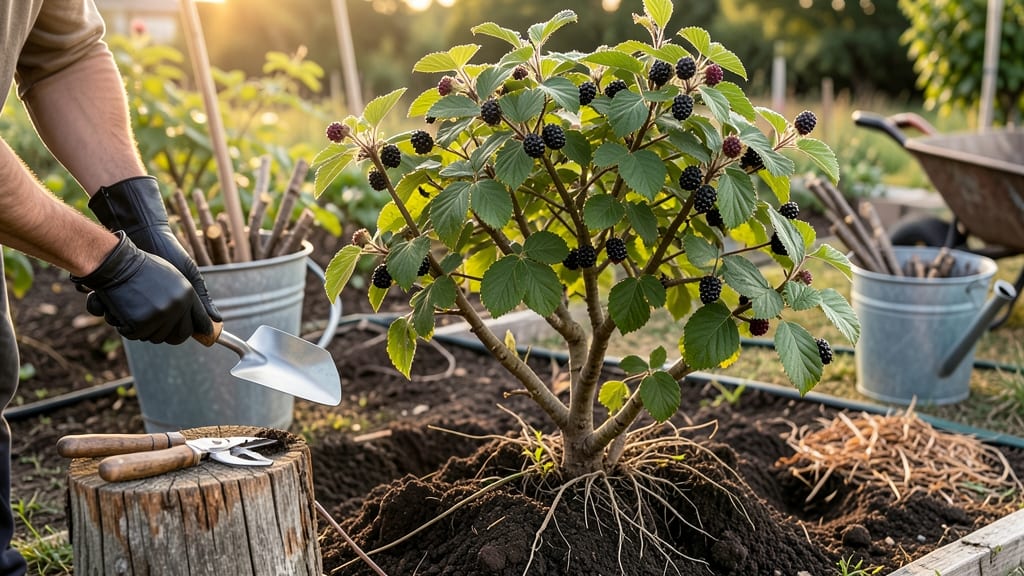
Transplanting blackberry bushes doesn’t have to mean losing next year’s harvest. 🌱 The key is timing—dormant season (late fall or early spring) when roots are quiet and recovery is fastest. I’ve moved three bushes this way, and all three are now stronger than ever, with no lost production.
Start with sharp tools and a plan: dig a trench for roots, prune canes by a third, and keep the soil moist but not soggy. Thornless varieties handle stress slightly better, but traditional types bounce back just as well with proper care.
The first critical week after transplanting focuses on watering—deep soaks every 2-3 days—while mulch keeps roots cool and roots stay active.
📚 In This Guide
- What you need
- Instructions
- Tips and common mistakes
- Wrapping up and next steps
What you need
- ● Blackberry bushes: Healthy, established plants (2–5 years old) with well-developed root systems. Aim for 3–5 canes per bush for optimal growth.
- ● Shovel or spade: A sharp, sturdy shovel (18–24 inches wide) for digging trenches and lifting roots.
- ● Pruners or loppers: Bypass pruners (for clean cuts) to trim damaged or overgrown canes.
- ● Garden hose or watering can: For thorough watering before and after transplanting.
- ● Compost or well-aged manure: 2–3 gallons per bush to enrich the soil and promote root growth.
- ● Mulch (straw, wood chips, or pine needles): 2–3 inches thick to retain moisture and suppress weeds.
- ○ Root stimulator (optional but helpful): A product like Rootone or mycorrhizal fungi to encourage root establishment.
- ● Timing: Transplant on a cool, cloudy day or early morning to reduce stress on the plants.
- ● Location: Choose a spot with full sun (6+ hours/day) and well-draining soil (pH 5.5–6.5). Avoid low-lying areas prone to frost.
- ● Preparation: Loosen the soil in the new location 1–2 weeks before transplanting to improve drainage.
- ● Support system (for thornless varieties): T-posts and wire trellis if your blackberries need vertical support.
Step-by-step instructions for transplanting blackberry bushes
Moving blackberries takes patience, but these steps keep shock to a minimum and set your plants up for strong regrowth.
🌱 Step 1: Prepare the New Location
Choose a spot with full sun (6+ hours daily) and well-draining soil. Blackberries thrive in slightly acidic soil (pH 5.5-6.5), so test your soil first if possible. I dig a hole twice as wide as the root ball but only as deep—burying the crown too deep suffocates the plant.
Loosen the soil at the bottom of the hole with a garden fork to encourage root spread. Amend with 2-3 inches of compost mixed into the native soil. This prevents compaction and gives roots immediate nutrients. Water the hole thoroughly 24 hours before transplanting to settle the soil and reduce stress later.
✂️ Step 2: Prune and Dig Up the Bushes
Start pruning 2-3 weeks before moving—cut back canes by ⅓ to reduce foliage and minimize water loss. On transplant day, water the bushes deeply the night before to keep roots hydrated. Dig a trench around the base, 12-18 inches out, to avoid damaging roots.
Use a sharp spade to lift the entire root system, keeping as much soil attached as possible. Shake off loose dirt gently—don’t scrub roots clean. Handle canes carefully; even small tears slow recovery. If transplanting multiple bushes, work one at a time to keep roots from drying out.
💧 Step 3: Plant and Water Immediately
Place the root ball into the prepared hole, ensuring the crown sits just above soil level. Fill gaps with native soil mixed with compost, tamping lightly to remove air pockets. Avoid packing too firmly—roots need space to expand. Water deeply until the soil 2-3 inches down feels moist.
Mulch with 2-3 inches of organic mulch (like wood chips) around the base, keeping it 6 inches away from the crown to prevent rot. This retains moisture and regulates soil temperature. Blackberries are thirsty—water every 2-3 days for the first 2 weeks until new growth appears.
☀️ Step 4: Support and Monitor Recovery
Install a trellis or support system immediately—blackberries need structure to grow upright. Tie canes loosely to the frame with soft ties to avoid damaging new growth. Prune any broken or wilted canes after transplanting to redirect energy into root recovery.
Watch for new leaves emerging within 3-4 weeks—this signals successful root establishment. If leaves yellow or wilt, increase watering slightly. Avoid fertilizing for 6-8 weeks; the plant needs to focus on root regrowth, not foliage. By late summer, you’ll see fresh canes forming, proving the transplant was a success.
Tips & tricks for perfect blackberry transplanting
Moving blackberry bushes successfully comes down to these key strategies that keep plants healthy and thriving after relocation.
Timing is Everything: The 2-3 week pruning period before transplanting is crucial—it reduces foliage by one-third, which minimizes water loss during the move. I've seen plants recover faster when pruned this way because they're not expending energy on maintaining excess leaves while roots adjust. Confession: I skipped this once and my bushes took twice as long to recover.
Root Care Matters: When digging, focus on keeping the root ball intact rather than cleaning roots. The soil attached acts like a protective blanket, shielding delicate roots from drying out. I use a sharp spade to create a clean trench 12-18 inches out, then lift gently. Even small tears in roots can slow recovery by weeks—handle them like you would fragile glass.
Watering Strategy: The 24-hour pre-watering of the hole isn't just about moisture—it's about settling the soil so roots can establish contact immediately. After planting, water until soil 2-3 inches down feels moist, then maintain that schedule of every 2-3 days for two weeks. Overwatering is just as bad as underwatering; blackberries need consistent moisture without soggy soil.
Support System: Installing a trellis immediately after transplanting isn't just about growth—it's about protecting new canes from wind damage. I use soft ties to loosely secure canes because tight binding can restrict growth. The 3-4 week window for new leaf emergence is your best indicator of success; if you don't see leaves by then, check for proper watering and crown positioning.
Pro Tips for Transplant Blackberry Bushes
- Moving blackberry bushes successfully comes down to these key strategies that keep plants healthy and thriving after ...
- Timing is Everything: The 2-3 week pruning period before transplanting is crucial—it reduces foliage by one-third, wh...
- Root Care Matters: When digging, focus on keeping the root ball intact rather than cleaning roots. The soil attached ...
Frequently asked questions
Got questions about transplanting blackberry bushes? You’re not alone—this process can feel tricky, but with the right know-how, you’ll have thriving plants in no time. Below, we’ve answered the most common questions to help you feel confident before digging in.
When is the best time to transplant blackberry bushes?
The ideal window is early spring (just as new growth starts) or late fall (after harvest but before hard frost). Avoid transplanting in extreme heat or cold—roots need time to establish without stress. If you’re in a mild climate, late winter is another great option.
How long does it take for blackberry bushes to recover after transplanting?
With proper care, most blackberries show signs of recovery in 4–6 weeks, but full vigor may take up to a year. Focus on consistent watering, mulching, and avoiding fertilizers for the first month. Patience pays off—healthy roots mean bigger yields next season!
Can I transplant blackberries in containers or pots?
Container-grown blackberries are easier to relocate and thrive in large pots (at least 15–20 gallons). Use well-draining soil and ensure pots have drainage holes. Just repot every 2–3 years to refresh the soil and prevent root-bound stress. Pro tip: Move containers gradually to adjust to new light conditions.
What should I do if my blackberry bush wilts or looks sick after transplanting?
Wilting often signals transplant shock or underwatering. Check soil moisture daily for the first week—roots need consistent hydration. If leaves yellow or droop persistently, trim damaged foliage and inspect for pests (like spider mites). Avoid fertilizing until new growth appears; focus on shade and water instead.
Do I need to prune blackberries before or after transplanting?
Light pruning (removing dead or damaged canes) is fine before transplanting, but avoid heavy cuts—stress weakens recovery. Post-transplant, wait 3–4 weeks before pruning. This gives the plant energy to focus on root growth. Once established, prune in late winter to shape the bush and encourage fruit production.
Still stuck? Drop your question in the comments—we’re happy to help!
Wrapping up and next steps
Transplanting blackberry bushes doesn’t have to be stressful—with the right timing, tools, and care, your plants will thrive in their new home! 🌱 Remember to choose a healthy plant, prepare the soil, and give your bushes plenty of love post-relocation.
Whether you’re expanding your garden or revamping your landscape, this process opens up exciting possibilities for bountiful harvests.
Now that you’re ready to take action, pick a calm day, roll up your sleeves, and get planting! Soon, you’ll be enjoying sweet blackberries and the satisfaction of a job well done. Happy gardening! 🌿