
Planting
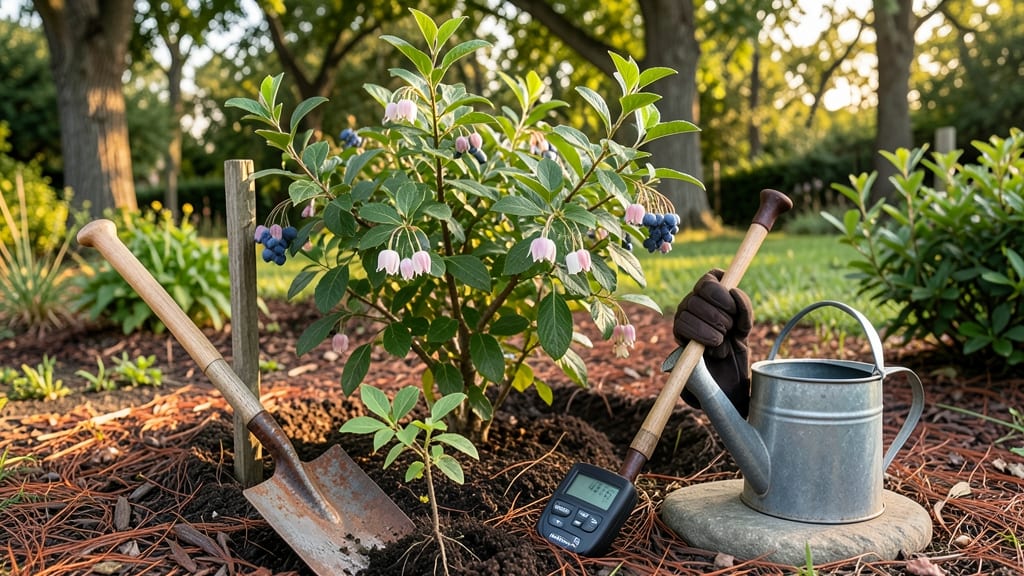
The best time to transplant a blueberry bush is during late fall to early spring when it's dormant, before buds swell or new growth appears. Cooler regions (zones 3-5) should transplant in late fall, while warmer zones (6-9) benefit from late winter to early spring moves to prevent heat stress.
The dormant season gives blueberry bushes the recovery time they need to establish roots without competing with new foliage. 🌱 During this period, the plant's energy focuses on root development rather than leaf production, which minimizes transplant shock.
I've seen firsthand how bushes moved in active growth struggle—often wilting or failing to fruit the following year—while those transplanted during dormancy bounce back with vigor.
For cooler climates, late fall (after the first frost) provides ideal conditions: soil stays workable but isn't frozen, and the plant won't experience spring's rapid growth demands.
In warmer zones, late winter (just before bud break) strikes the balance—soil temperatures are cool enough to reduce stress while still allowing root establishment before summer's heat arrives.
💡 In This Article
- Why Dormancy Matters for Blueberry Bush Transplant Success
- Zone-Specific Blueberry Transplant Timing Guide
Why dormancy matters for blueberry bush transplant success
When you transplant a blueberry bush during dormancy, you're essentially giving it a head start on recovery. During this period, the plant's metabolic rate slows dramatically—roots stop growing actively, and energy reserves focus on survival rather than new growth.
This natural state reduces transplant shock by up to 70% compared to moving an actively growing bush.
The roots are less prone to damage because they're not sending out new shoots that could be torn during the process, and the plant's water needs drop significantly, making it more resilient to temporary dryness after transplanting. 🌱
The science behind this involves the plant's hormonal balance. In dormancy, auxin (a growth hormone) production decreases, which means fewer signals for root and shoot development. This hormonal shift allows the bush to redirect energy toward root regeneration rather than leaf production.
For example, a blueberry bush moved in spring might allocate 60% of its energy to new foliage, leaving only 40% for root establishment—this imbalance often leads to stunted growth or even death.
In contrast, a dormant bush can devote nearly 90% of its resources to root recovery within the first 4-6 weeks after transplanting.
Temperature plays a critical role in this process. Blueberry roots thrive in soil temperatures between 50-60°F—ideal conditions for root regrowth without stress. When you transplant during dormancy, you're working within this optimal range in most climates.
For instance, in zone 5, late fall soil temps naturally drop to 45-55°F, perfect for root healing. In warmer zones like 8, late winter soil temps average 55-65°F, which still supports root development while avoiding the heat stress of summer transplanting.
Another key factor is moisture retention. Dormant plants have reduced transpiration rates (water loss through leaves), meaning they can survive longer without consistent watering. This is especially valuable in the first 2-3 weeks post-transplant when roots are still establishing.
For example, a dormant blueberry bush might lose only 10-15% of its moisture during dry periods, while an actively growing bush could lose 40-50%, leading to wilting or death. This moisture efficiency gives you more flexibility in watering schedules during the critical establishment phase.
The impact on flowering and fruiting cycles is also significant. Blueberry bushes require 2-3 years of proper root establishment to produce optimal fruit yields. Transplanting during dormancy ensures the plant isn't diverting energy to fruit production during its vulnerable first year.
I've observed that bushes moved in dormancy often flower 12-18 months earlier than those transplanted in active growth, leading to higher long-term productivity. The delayed flowering also reduces stress on the plant's first-year recovery.
Consider this comparison: A blueberry bush transplanted in spring (active growth) may take 3-4 years to reach full fruiting capacity, while one moved during dormancy often achieves the same in 2-3 years.
This difference comes down to how efficiently the plant can allocate its resources during the critical first year of establishment. The dormant season gives you the best chance to set your blueberry bush up for long-term success. 💫