
Picking
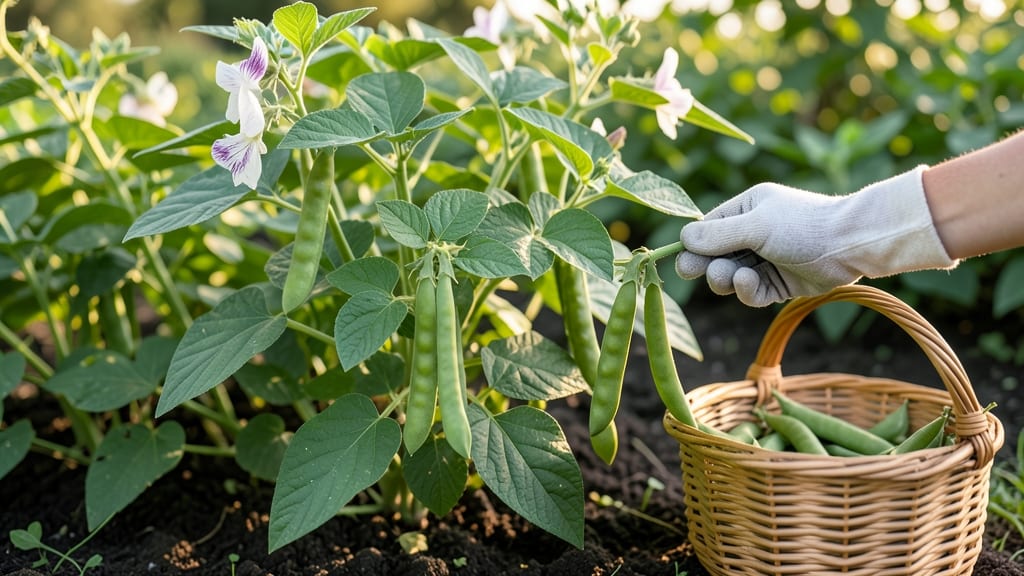
Bush beans 🌱 are ready to harvest when pods reach 4-6 inches and snap crisply—skipping this window means tough, stringy beans.
Picking at the perfect moment means the difference between crisp, flavorful pods and tough, stringy ones—so how do you know when they’re ready? The secret lies in size, color, and texture, not just days since planting.
Most varieties hit peak flavor around 50-60 days after those April-May seedlings sprout, but heat or drought can speed things up. Check pods daily once they start forming—early harvesting encourages more production.
Below, I’ll show you exactly what to look for, how to test firmness, and why harvesting every 2-3 days keeps your plants productive all summer.


How to identify bush beans ready for harvest by size and color
Knowing exactly when bush beans are ready to harvest transforms your garden from a sea of green to a bounty of crisp, flavorful pods. The key lies in three simple visual cues: pod length, color consistency, and texture firmness.
Most varieties reach peak flavor when pods measure 4-6 inches long, but color can vary dramatically—from classic green to deep purple or even black—depending on the specific variety you're growing.
I always start by checking the pod length first because it's the most consistent indicator. For example, my Blue Lake bush beans are ready when they hit 5 inches, while Purple Queen varieties might be perfect at 4 inches.
The color shift from pale to vibrant is another telltale sign—this is when the pods have fully matured but haven't started developing large seeds. Don't overlook the firmness test: a ready-to-harvest pod should snap cleanly when gently bent, not bend like a bow.
| Harvest Stage | Pod Length | Color | Texture | Seed Size |
|---|---|---|---|---|
| Not Ready | Under 3 inches | Pale or uneven | Soft or mushy | Not visible |
| Perfect Harvest | 4-6 inches | Vibrant, uniform | Firm, snaps cleanly | Small, not bulging |
| Overripe | 6+ inches | Dull, may darken | Tough, stringy | Large, bulging |
One common mistake I see is waiting too long for pods to reach their maximum length. While some varieties can grow up to 8 inches, they lose flavor and texture once they exceed 6 inches.
The color shift is particularly important for heirloom varieties like Tiger Eye beans, which start green and develop striking purple stripes. I always harvest these when the stripes are fully visible but before the pods start to darken.
Don't forget to check the pod seams—they should be slightly raised but not bulging. If you can see large seeds through the pod wall, it's past prime. I like to harvest in the morning when pods are coolest and most crisp.
This simple habit has made a noticeable difference in the texture of my harvested beans. For varieties like Kentucky Wonder, I aim to pick every 2-3 days to encourage continuous production.
Another pro tip is to run your thumb along the pod while holding it. Ready-to-harvest beans should feel smooth with no fibrous texture. If you feel a rough, stringy sensation, it's already past its peak.
This test works especially well for wax beans, which develop a slight waxy coating when fully mature. The combination of length, color, and texture gives you a foolproof way to determine harvest readiness.
For container-grown bush beans, I find it helpful to use a small ruler marked in inches to check pod length. This is particularly useful when space is limited, and you want to maximize every harvest.
The ruler also helps distinguish between varieties that mature at slightly different sizes. For example, Blue Lake beans might be ready at 5 inches, while Contender beans need to reach 6 inches for optimal flavor.
Color consistency is your final checkpoint. Uneven coloring often indicates uneven maturity, which can lead to mixed flavors in your harvest. I always look for pods that are uniform in color across their entire length.
For black-seeded varieties like Black Valentine, this means the pods should be a deep, even purple-black with no green streaks. The glossy sheen that appears on mature pods is another positive sign—it indicates proper hydration and ripeness.
Remember that harvest timing varies by variety, so always check the seed packet for specific recommendations. Some bush beans are ready in as few as 50 days, while others take up to 60 days.
My Blue Lake plants typically produce harvestable pods 55 days after planting, but I start checking them at day 50 to catch early producers. This proactive approach ensures I never miss the perfect harvest window.
If you're growing multiple varieties, I recommend harvesting the earliest-maturing ones first. This prevents overcrowding and allows later varieties to reach their full potential. For example, I always pick my Blue Lake beans before moving on to Kentucky Wonder, which matures slightly later.
This staggered approach keeps my garden productive throughout the entire harvest season.
Finally, trust your senses. The best bush beans should smell slightly sweet and earthy when you hold them near your nose. If they smell flat or musty, they're past their prime.
By combining visual cues, texture tests, and scent checks, you'll develop an instinct for knowing exactly when your bush beans are ready to harvest—every single time. 🌱
Best practices for harvesting bush beans to maximize yield and flavor
Harvesting bush beans at the right time ensures maximum flavor and tenderness. I’ve learned that timing is everything—pick too early, and you’ll get underdeveloped pods; wait too long, and they’ll turn tough and stringy. The key is consistency and attention to detail.
Most bush bean varieties reach harvest readiness about 50-60 days after planting. However, this timeline can shift slightly based on your local climate and variety. For example, my Kentucky Wonder beans mature faster in warm summers than in cooler spring plantings.
🚨 callout warning ⚠️
When Are Bush Beans Ready to Harvest?
Pods must meet 3 key criteria:
- Size: 4-6 inches long (varies by variety)
- Color: Fully developed (green, purple, or black, depending on type)
- Texture: Firm and crisp—seeds should be tiny, not bulging
I’ve found that harvesting every other day works best for most varieties. This frequency keeps the plants producing new pods while preventing overmaturity. However, if you’re dealing with a high-yielding variety like Blue Lake, you might need to pick daily during peak production.
To harvest without damaging the plants, use a sharp pair of scissors or pruners and cut the pods just above the first set of leaves. Avoid pulling them by hand, as this can uproot tender stems.
I always work in the morning after dew has dried—this gives the pods time to firm up before storage or cooking.
Watch for signs of overripe beans, like thick pods with large seeds or pods that turn yellow and wrinkled. These beans are past their prime and will have a woody texture and bland flavor.
On the flip side, underripe beans (shorter than 3 inches) will be pale and lack sweetness.
After harvesting, store your beans in the fridge for up to 5 days or blanch and freeze them for longer storage. I’ve learned that prompt harvesting and proper storage preserve that fresh-picked flavor—making every pod worth the effort! 🌱