
Pruning
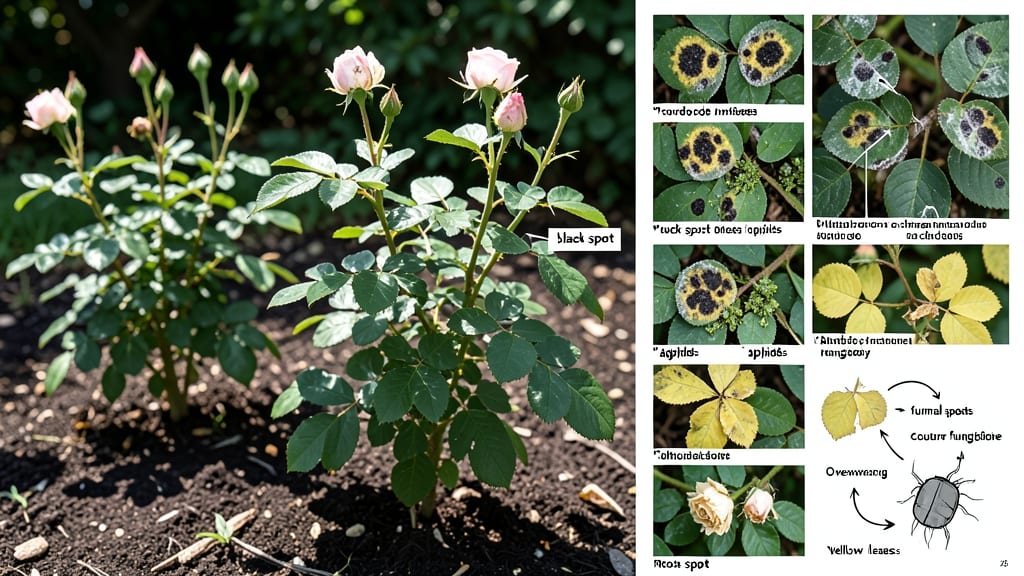
What’s wrong with my rose bush?—those black spots, yellow leaves, or wilted canes aren’t random; they’re signals your roses are crying for help. 🌹 I’ve diagnosed every one of these symptoms in my own garden, and the fixes are simpler than you’d think. Start by checking the leaves, soil, and stems for clues, because the solution depends on what’s really wrong.
Most problems fall into five categories: fungal diseases (like black spot), pests (aphids or spider mites), nutrient deficiencies (yellowing leaves), overwatering (mushy stems), or winter damage (brown canes).
The good news? Each has a targeted fix—from pruning out infected branches to adjusting your watering schedule. No mystery here, just methodical detective work.
You’ll walk away knowing exactly what’s stressing your roses and how to stop it. Prune correctly, apply the right treatment (organic or not), and your bush will bounce back with stronger growth and more blooms than ever.
The key is acting fast—once you spot the symptoms, you’ve got a 2-4 week window to turn things around.
Even if you’ve tried everything before, this step-by-step approach cuts through the guesswork. Let’s get your roses back to their thriving, fragrant best—starting with the right diagnosis. No more wasted time or frustrated pruning.
Root Causes Behind Rose Bush Struggles
When your rose bush starts looking less than its vibrant best, it’s often a cry for help from its roots, leaves, or environment. Understanding why these issues arise is half the battle—because once you know the science behind the struggle, you can fix it fast.
Let’s break down the most common culprits and the hidden factors that trigger them.
Roses hate soggy feet—literally. Overwatering or compacted, poorly draining soil suffocates roots by cutting off oxygen, leading to:
- Yellowing leaves (chlorosis): Iron and nutrient uptake fails in waterlogged soil.
- Blackened stems or wilting: Root rot (from Phytophthora or Pythium fungi) sets in when roots can’t breathe.
- Slow growth or stunted blooms: Roots starve for oxygen, halting energy production.
Why it happens: Clay-heavy or amended soil without sand/perlite holds too much moisture. Overzealous watering (especially in pots) or lack of raised beds worsens it. Even "light" rains can drown roots if the soil doesn’t dry between waterings.
Actionable fix: Test drainage by digging a 6-inch hole—if water pools after 30 minutes, amend with compost + coarse sand. Water deeply but infrequently (1–1.5 inches per week), and avoid wetting foliage.
Roses are drought-tolerant but not drought-proof. When soil dries out too much, roots shrink and leaves wilt as a survival tactic. Signs include:
- Drooping leaves that recover at night: Temporary wilting from moisture loss.
- Crispy, brown leaf edges: Permanent damage from dehydration.
- Bud drop before blooming: The plant prioritizes survival over flowers.
Why it happens: Shallow root systems (common in young roses) can’t reach deep moisture. Mulch breaks down, exposing soil to evaporation, and summer heat accelerates water loss. Containers dry out 3x faster than ground soil.
Actionable fix:
- 💡 Mulch properly: Use 2–3 inches of organic mulch (straw, wood chips) but keep it away from the stem to prevent rot.
- 🌡️ Water deeply: Soak soil until water drains 6–8 inches down (stick a screwdriver in to check). Early morning watering reduces evaporation.
- 🔥 Shade cloth: In extreme heat (above 90°F), use 30–50% shade to protect leaves.
Roses are a buffet for pests and pathogens. The most destructive culprits include:
| Problem | Signs | Why It Happens |
|---|---|---|
| Japanese Beetles | Skeletons of leaves (chewed edges), honeydew (sticky residue), wilting. | Adult beetles feast on foliage, while larvae munch on roots. Stress from drought or poor soil makes roses more attractive to them. |
| Black Spot Fungus (Diplocarpon rosae) | Black spots with yellow halos, defoliation, weak stems. | Fungal spores thrive in humid, wet conditions (e.g., overhead watering, dense foliage). Poor air circulation traps moisture. |
| Aphids/Spider Mites | Curled leaves, white webbing, stunted growth. | Dry heat or dusty leaves attract mites, while aphids swarm stressed plants (e.g., nutrient-deficient or overcrowded). |
Actionable fix:
- 🔪 Prune aggressively: Remove infected leaves (black spot) or chewed foliage (beetles) and dispose of them (don’t compost!).
- 💡 Neem oil or insecticidal soap: Spray undersides of leaves where pests hide. Repeat every 5–7 days.
- 🌡️ Improve airflow: Space bushes 3–4 feet apart and prune to open the center.
Roses are heavy feeders, and soil depletion shows up in telltale symptoms:
- Yellow leaves (especially between veins): Iron or nitrogen deficiency (common in alkaline soil).
- Purple stems or small leaves: Phosphorus deficiency (critical for root/bloom development).
- Weak, leggy growth: Lack of potassium or micronutrients (e.g., magnesium, zinc).
Why it happens: Soil tests often reveal low organic matter or pH imbalances (roses prefer 6.0–6.5). Synthetic fertilizers can lock out nutrients (e.g., iron becomes unavailable in alkaline soil). Over-pruning also depletes stored energy.
Actionable fix:
- 📊 Test your soil: A $20 kit from a garden center reveals pH and nutrient gaps. Adjust with sulfur (to lower pH) or lime (to raise it).
- 💪 Feed smart:
- Spring: Balanced fertilizer (10-10-10) for new growth.
- Bloom season: High-phosphorus (5-10-5) to encourage flowers.
- Fall: Compost or bone meal to rebuild roots for winter.
- 🍎 Epsom salt hack: For magnesium deficiency, dissolve 1 tbsp in a gallon of water and spray leaves monthly.
Roses are resilient but can’t handle extreme swings. Look for these red flags:
- Sudden leaf drop: Temperature drops below 20°F or heatwaves above 100°F.
- Stunted growth or no blooms: Daylength changes (short days in fall) or transplant shock.
- Curling or scorched leaves: Windburn or reflected sunlight from pavement.
Why it happens:
- Cold damage: Roses go dormant below 32°F, but young canes or hybrid teas lack hardiness. Mulch depth matters—too little = frozen roots.
- Heat stress: High temps + low humidity cause physiological leaf drop (the plant sheds leaves to conserve water).
- Transplant shock: Roots disrupted during moving can take 6–8 weeks to re-establish, leaving the bush vulnerable.
Quick Fixes for Struggling Roses
If your rose bush is looking less than its vibrant best, don’t panic—most issues have simple, effective solutions. Below, we’ll break down the fixes for each common problem, from nutrient deficiencies to pest invasions, with actionable steps to revive your roses.
Prevention tips are included to keep your garden thriving long-term!
Yellowing leaves are often a cry for help from your roses. Here’s how to diagnose and fix it:
🔥 Step 1: Check the Soil
- Overwatering? Feel the soil 2 inches down—if it’s soggy, your roses are drowning. 💦
- Underwatering? If the soil is bone-dry, it’s time to hydrate.
- Solution: Water deeply 1-2 times per week (adjust for climate).
Ensure pots or beds have drainage holes to prevent root rot.
🍳 Step 2: Test for Nutrients
Yellow leaves can also signal a lack of nitrogen, iron, or magnesium.
- Quick fix: Apply a balanced rose fertilizer (10-10-10) or an iron supplement like chelated iron.
- Prevention: Feed roses every 4-6 weeks during growing season (spring-fall).
Use compost or organic mulch to enrich soil naturally.
💡 Pro Tip:
If older leaves yellow first, it’s likely a nitrogen deficiency. If new leaves turn yellow, check for iron chlorosis (common in alkaline soil). Add sulfur or peat moss to lower pH if needed.
Those ugly dark spots on leaves? Fungal diseases like black spot thrive in wet, humid conditions. Act fast to save your bush!
👨🍳 Step 1: Prune Infected Leaves
- Remove all leaves with black spots immediately. Don’t compost them—dispose of them in the trash to stop the spread.
- Sanitize your pruners with rubbing alcohol between cuts.
🥘 Step 2: Fungicide Treatment
- Preventive spray: Use a copper fungicide or neem oil spray every 7-10 days during wet seasons.
- Baking soda remedy (mild cases): Mix 1 tsp baking soda + 1 quart water + a few drops of dish soap. Spray leaves thoroughly.
⏰ Step 3: Improve Airflow & Light
- Space plants at least 3-4 feet apart for better airflow.
- Prune inner branches to reduce humidity buildup.
- Water in the morning so leaves dry quickly.
🌡️ Prevention:
Choose disease-resistant rose varieties (e.g., ‘Knock Out’ roses). Avoid overhead watering—use a drip irrigation system instead.
Tiny invaders can wreak havoc on your roses. Here’s how to evict them:
🔪 Step 1: Manual Removal (For Aphids & Japanese Beetles)
- Aphids: Blast them off with a strong stream of water or wipe leaves with a soapy sponge (1 tsp mild soap per gallon of water).
- Japanese beetles: Handpick them into soapy water. Neem oil or kaolin clay can deter them.
🍎 Step 2: Natural & Chemical Controls
- Spider mites: Spray with neem oil or insecticidal soap every 5-7 days. They hate humidity—mist plants occasionally.
- Grubs/worms: Apply beneficial nematodes to the soil to kill larvae.
🎯 Prevention:
Encourage predatory insects like ladybugs and lacewings by planting marigolds or dill nearby. Remove debris from the base of the plant to discourage pests.
If your roses are growing slowly or not at all, the problem might be underground—or in the soil itself.
📊 Step 1: Check the Roots
- Gently loosen soil around the base to inspect for root rot (mushy, brown roots) or compacted soil.
- Solution: If roots are healthy but soil is hard, amend with compost or sand to improve drainage.
💪 Step 2: Boost Soil Health
- Add organic matter: Mix in compost or well-rotted manure to enrich soil.
- Test pH: Roses prefer slightly acidic soil (6.0-6.5). Adjust with lime (to raise pH) or sulfur (to lower pH).
✨ Prevention:
Plant roses in well-draining soil and avoid over-fertilizing with nitrogen-heavy feeds, which can burn roots. Mulch with straw or wood chips to retain moisture and nutrients.
With these fixes, your rose bush should bounce back in no time! Remember, consistency is key—whether it’s watering, fertilizing, or pest control. Happy gardening! 🌹
Frequently asked questions
1Why are my rose bush leaves turning yellow between the veins?
This classic symptom usually means iron chlorosis—a nutrient deficiency caused by alkaline soil (pH above 7.0). Roses need slightly acidic soil (pH 6.0–6.5) to absorb iron properly. Try adding chelated iron or sulfur to lower pH, and mulch with peat moss to improve soil structure. Test your soil first to confirm the issue.
2My rose bush has black spots on leaves—what’s the fastest way to stop it?
Those are almost certainly signs of black spot fungus, which spreads rapidly in wet conditions. Prune all infected leaves (don’t compost them!) and spray with a copper fungicide or neem oil every 7–10 days. Improve airflow by spacing plants 3–4 feet apart and watering at the base—not overhead.
3Can I save my rose bush if the stems are mushy and black at the base?
Mushy, blackened stems signal root rot, often from overwatering or poor drainage. Act fast: Prune away all infected stems below the blackened area with sterilized shears. Repot in fresh, well-draining soil with perlite or sand, and water only when the top 2 inches are dry. If the roots are severely damaged, you may need to propagate from healthy canes.
4Why do my rose bush leaves look curled and sticky?
Curled, sticky leaves are classic signs of aphids or spider mites. Blast aphids off with water or wipe leaves with soapy water (1 tsp mild soap per gallon). For mites, spray neem oil every 5–7 days. Encourage natural predators like ladybugs by planting marigolds or dill nearby, and keep your garden debris-free to deter pests.
5My rose bush isn’t blooming—what am I doing wrong?
Poor blooming often stems from over-pruning, nutrient deficiencies, or too much shade. Feed with a high-phosphorus fertilizer (like 5-10-5) in early spring, and prune only in late winter to encourage new growth. Ensure your roses get 6–8 hours of sunlight daily, and avoid cutting back blooms until they fade naturally.