
Plants
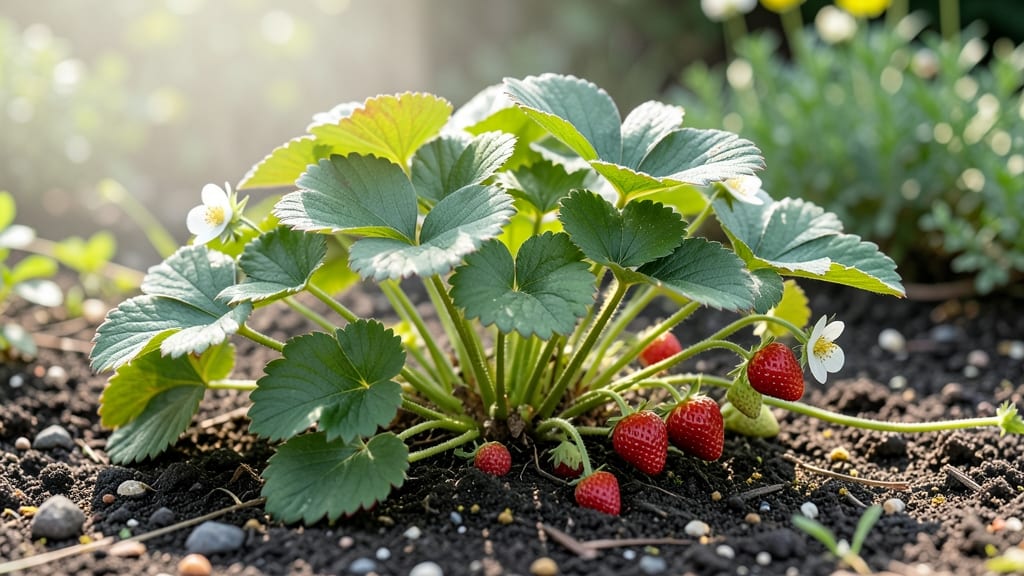
A strawberry bush looks like a low-growing plant with bright green, three-lobed leaves that have jagged edges, creeping stems called stolons, and delicate white flowers with yellow centers that eventually turn into bright red berries. Its tidy, sprawling growth makes it perfect for garden borders or container gardening.
A strawberry bush's most recognizable feature is its trifoliate leaves—three leaflets per stem with serrated edges that catch the light beautifully. 🌿 These leaves grow on long, trailing stems called stolons, which root where they touch the soil, creating new plants.
The flowers appear in clusters, each with five white petals and a bright yellow center that signals the start of fruit development.
What many don't realize is how the plant's growth habit changes with the seasons: in spring, it focuses on leaf and flower production, while summer shifts to berry development.
The berries themselves start as tiny green buds that gradually turn pink before ripening to their signature deep red. These aren't true botanical berries but rather aggregate fruits made up of many tiny fruits fused together.
This unique structure is what gives strawberries their distinctive texture and sweet-tart flavor. The plant's compact size—typically staying under 12 inches tall—makes it incredibly adaptable for both ground cover and container growing.
💡 In This Article
- Identifying Strawberry Plant Leaves, Flowers, and Fruit
- Optimal Growing Conditions for Strawberry Bushes
Identifying strawberry plant leaves, flowers, and fruit
The strawberry plant's trifoliate leaves are its first visual clue—each leaf consists of three oval-shaped leaflets arranged in a fan-like pattern. These leaflets measure about 1-3 inches long and have serrated edges that create a saw-tooth appearance when backlit by sunlight.
The leaves are deep green and slightly waxy, which helps repel water and reduces fungal diseases. 🌿 This leaf structure is unique compared to raspberry plants, which have compound leaves with multiple smaller leaflets (typically 3-7) arranged along a single stem.
What truly sets strawberries apart are their stolons—long, slender runners that spread horizontally across the soil. These stolons can grow up to 2 feet long and develop roots at nodes where they touch the ground, creating new plants. This vegetative propagation is how strawberries naturally spread, creating dense patches.
The flowers appear in clusters of 5-10 on upright stems and have five white petals surrounding a bright yellow center, which contains the plant's reproductive organs. Each flower can produce a single berry, and the entire blooming process typically occurs over 2-3 weeks in spring.
The fruit development is equally fascinating. Strawberry "berries" are actually aggregate fruits made up of many tiny individual fruits (achenes) fused together on the plant's receptacle. These achenes are the tiny seeds you see on the surface of a ripe strawberry.
The fruit starts as a small green bud, gradually turning pink as it matures, and finally ripens to a deep red color.
This color change isn't just cosmetic—it indicates the fruit's sugar content has increased from 3-5% in unripe berries to 7-10% in ripe ones, making them sweeter and more flavorful.
One common point of confusion is distinguishing strawberry plants from weeds or other berry plants. Strawberry stolons are hairless and green, while raspberry canes are bristly and reddish-brown. Additionally, strawberry leaves have a more triangular shape compared to the elongated, lobed leaves of blackberries.
The presence of white flowers with yellow centers is another key identifier—raspberries and blackberries produce flowers with different color patterns and structures. 🌸 These visual cues make it easier to spot strawberry plants even when they're mixed with other vegetation.
Seasonal changes also affect how strawberry plants look. In early spring, you'll see fresh green foliage emerging as the plant prepares for flowering. By late spring, the white flowers dominate the scene, creating a delicate, almost ethereal appearance.
Summer brings the red berries, which stand out against the green leaves and create a striking contrast. In fall, the plant may produce a second flush of flowers and fruit in some climates, though this is less common than the spring harvest.
Understanding these visual characteristics helps gardeners and plant enthusiasts identify strawberry plants accurately and care for them properly. Whether you're growing strawberries in garden beds or containers, recognizing these features ensures you can provide the right conditions for healthy growth and abundant fruit production. 🌱