
Plants
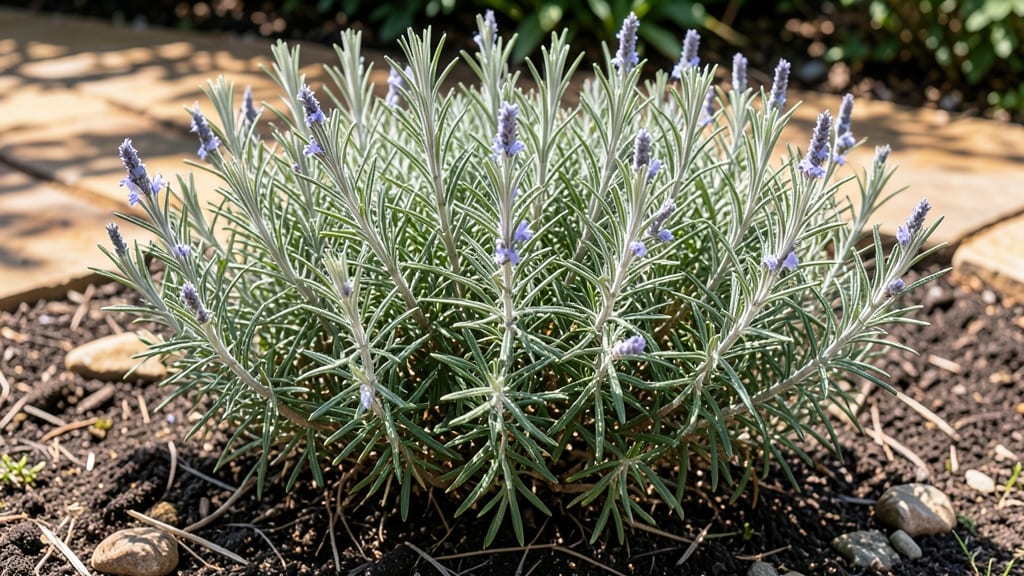
A rosemary bush looks like an evergreen shrub with slender, needle-like leaves arranged in tight clusters along stiff, woody stems. The leaves have a bright green top and silvery undersides, releasing a strong, piney aroma when crushed, and the plant typically grows in a compact, bushy form that thrives in dry, sunny environments.
A rosemary bush's most striking feature is its linear leaves, which can grow between 1 to 2.5 inches long and 0.1 to 0.2 inches wide, resembling tiny pine needles. 🌿 These leaves emerge in opposite pairs along the rigid stems, creating a dense, layered appearance that makes the plant instantly recognizable.
Unlike many herbs that wilt in dry heat, rosemary maintains its vibrant color and fragrance, even in arid conditions—this hardiness is part of what makes it so popular in Mediterranean landscapes.
The plant's growth habit varies by variety, with some developing upright, bushy forms reaching 3 to 5 feet tall, while others sprawl horizontally, creating a low, trailing effect. The woody stems add structure, distinguishing rosemary from softer-stemmed herbs like thyme or oregano.
When you brush against the leaves, the pine-like scent is unmistakable—a key identifier that sets it apart from other culinary herbs.
💡 In This Article
- Rosemary Leaf Structure and Growth Patterns
- Visual Differences Between Rosemary and Similar Herbs
Rosemary leaf structure and growth patterns
The leaves of a rosemary bush are needle-like and linear, measuring about 1 to 2.5 inches long and just 0.1 to 0.2 inches wide.
What makes them unique is their opposite arrangement—each pair of leaves grows directly across from one another along the stem, creating a symmetrical, layered look.
This structure allows the plant to maximize sunlight exposure while conserving moisture, a perfect adaptation for its native Mediterranean climate where water is scarce. 🌿
The stems of rosemary are another defining feature—they're woody and rigid, especially as the plant matures, unlike the softer, herbaceous stems of many other herbs. Younger stems may appear green, but they quickly harden into a grayish-brown color, adding to the plant's architectural appeal.
The leaves themselves have a leathery texture, which helps them retain water and resist damage from wind or heat. When crushed, they release an intense, pine-like fragrance due to essential oils like camphor and eucalyptol, which also act as natural pest repellents.
Rosemary's growth habit varies dramatically between varieties. Upright types, like 'Tuscan Blue', grow in compact, bushy forms reaching 3 to 5 feet tall, with dense clusters of leaves along the stems.
In contrast, trailing varieties such as 'Prostratus' spread horizontally, creating a low-growing, ground-cover effect perfect for borders or containers. The plant's evergreen nature means it retains its foliage year-round, though older leaves may turn silver-gray in winter, especially in colder climates.
This color shift is a natural response to reduced sunlight and temperature changes.
One fascinating aspect of rosemary's growth is its slow but steady expansion—it doesn't grow quickly like annual herbs, but once established, it can live for decades with minimal care.
The plant's deep root system (up to 5 feet) allows it to access water deep underground, contributing to its drought tolerance. Pruning is key to maintaining its shape; regular trimming encourages denser foliage and prevents the stems from becoming too woody.
Without pruning, older rosemary bushes can develop a semi-woody, almost shrub-like appearance with a mix of green and gray tones.
Consider these key factors when identifying rosemary in the wild or garden:
- Leaf shape: Needle-like and 1-2.5 inches long, arranged in opposite pairs
- Stem texture: Woody and rigid, turning grayish-brown with age
- Fragrance: Strong pine-like scent when crushed (unlike the earthy smell of thyme)
- Growth habit: Upright or trailing, depending on variety
- Seasonal color: Bright green in summer, may turn silver-gray in winter