
Shrubs
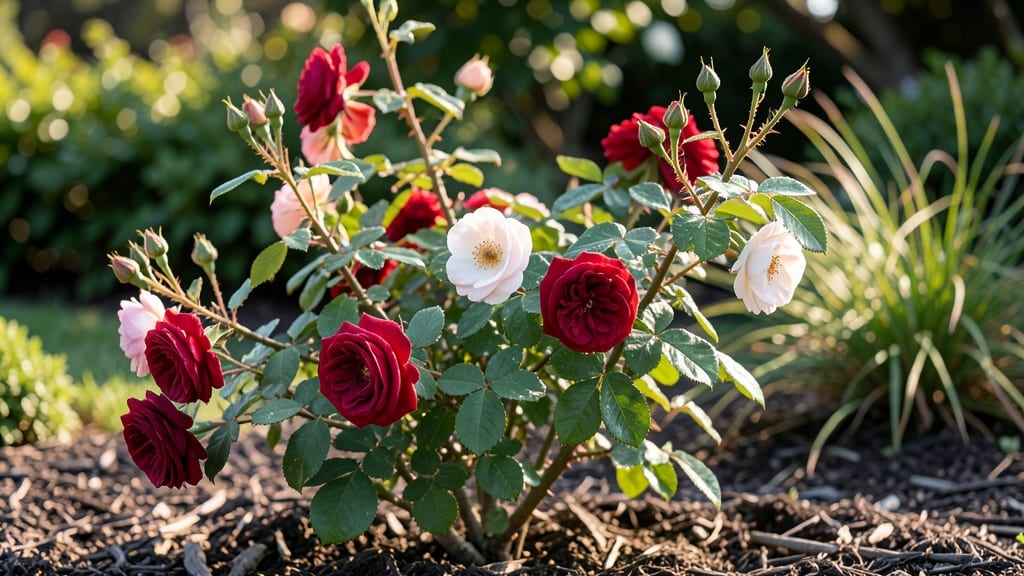
My rose bush maintenance care routine boils down to three key moves: pruning at the right time, watering deeply but not drowning them, and keeping pests off before they start. 🌹 Last year, my Knock Out roses bloomed from May to frost—no chemicals, no fuss—just consistent care.
The secret isn’t complicated; it’s about timing and attention to detail when it matters most.
Start with pruning in late winter when the plant is dormant. Cut back to an outward-facing bud, removing any dead or crossing branches. Water deeply twice a week during dry spells, but never let them sit in soggy soil—roses hate wet feet.
A 3-inch layer of mulch keeps roots cool and conserves moisture, cutting down on weeding and watering chores.
You’ll notice the difference in just a few weeks: vibrant green foliage, strong canes, and blooms that last longer. The key is staying consistent—skipping a watering or delaying pruning throws off the whole routine.
But once you get it right, your roses will reward you with months of effortless blooms and fewer headaches.
This works for hybrid teas, floribundas, and shrub roses alike. The only variation is pruning timing—some varieties need a second light trim after the first flush of blooms. Let’s get those roses looking their best with minimal effort!
📚 In This Guide
- What you need
- Instructions
- Tips and common mistakes
- Wrapping up and next steps
What you need
- ● Pruning shears – Sharp, bypass-style (1 pair, $15–$30)
- ● Gardening gloves – Heavy-duty, thorn-resistant (1 pair, $10–$20)
- ● Trowel or spade – For digging and aerating soil (1, $10–$25)
- ● Watering can or hose – With adjustable nozzle for gentle watering (1, $15–$40)
- ● Mulch (organic or inorganic) – 2–3 inches of shredded bark, straw, or pine needles (1 bag, $10–$20)
- ● Fertilizer – Balanced (10-10-10) or rose-specific (1 bag, $15–$30)
- ○ Pest control (optional) – Neem oil or insecticidal soap (1 bottle, $10–$20)
- ● Stakes or supports – For climbing roses (bamboo or metal) (4–6 stakes, $5–$15)
- ● Soil tester kit – To check pH (ideal: 6.0–6.5)
- ● Compost or worm castings – For nutrient-rich soil amendments
- ● Rose food (liquid or granular) – For extra blooms
- ● Drip irrigation system – For consistent watering
Step-by-Step rose bush maintenance for year-round health
Here’s the simple system I’ve used to keep my roses blooming effortlessly—no fancy tools, just consistent care.
✂️ Step 1: Prune for Shape and Airflow in Early Spring
Start pruning as soon as new growth appears, usually in late February or early March when temperatures stay above 40°F. Cut back to an outward-facing bud or branch to encourage airflow and prevent fungal diseases. Remove any dead, diseased, or crossing branches first—they’ll steal energy from your plant.
I like to make cuts at a 45-degree angle about ¼ inch above a bud to prevent water from pooling. If you’re unsure where to cut, imagine a golf ball sitting on the bud—your cut should be just above it. Never leave stubs; clean cuts heal faster and reduce infection risk.
💧 Step 2: Water Deeply at the Base, Never the Leaves
Water your roses once a week during dry spells, delivering 1-2 gallons per bush directly at the base. Early morning is best—this gives leaves time to dry before evening humidity sets in. Wet foliage overnight invites black spot and powdery mildew, the two biggest rose killers.
Check moisture by sticking your finger 2 inches into the soil. If it feels dry, water again. If damp, wait another day. Mulch with 2-3 inches of organic material (like shredded bark) to retain moisture and regulate soil temperature. Just keep mulch 2 inches away from the stem to prevent rot.
☀️ Step 3: Feed and Mulch for Continuous Blooms
Apply a balanced 10-10-10 fertilizer in early spring and again in mid-summer to fuel blooms. I use ½ cup per bush and work it into the top 4 inches of soil. Over-fertilizing leads to lush foliage but fewer flowers—roses need a balance of food and pruning to keep blooming.
After feeding, top off with fresh mulch. This keeps roots cool in summer and insulated in winter. I add a slow-release rose-specific fertilizer in late summer to prep for fall blooms. Watch for new growth after feeding—that’s your sign the plant is happy and ready for more.
⏰ Step 4: Prepare for Winter Dormancy by Mid-October
Stop fertilizing by mid-October to let the plant harden off. Prune again lightly to remove any remaining spent blooms and weak stems. Wrap the base of the bush with burlap or rose cones to protect against freezing winds. I also mound 6-8 inches of soil or mulch around the base for extra insulation.
If your winters are harsh (below 10°F), consider adding a lightweight frost blanket over the entire bush. Remove it on warm days to prevent overheating. In spring, uncover gradually to avoid shocking the plant. You’ll know winter prep worked when you see fresh green shoots by late March.
🌱 Step 5: Monitor and Adjust Year-Round
Check roses weekly for pests like aphids or spider mites. A strong spray of water usually knocks them off, but for stubborn infestations, use neem oil (mix 1 tablespoon per gallon of water). Apply in the evening to avoid harming bees.
Adjust care based on what you see: yellow leaves mean overwatering or nutrient deficiency; sparse blooms signal under-fertilizing or too much shade. Move your roses to at least 6 hours of direct sun if they’re struggling. Roses reward consistency—stick with this routine, and you’ll have blooms from spring to frost.
Tips & tricks for perfect rose bush maintenance
These simple strategies will help you avoid common pitfalls and keep your roses thriving with minimal effort.
Pruning Precision: When you're pruning in Step 1, focus on removing branches that cross or grow inward—they create congestion that invites disease. I use sharp bypass pruners to make clean cuts, and I always disinfect them with rubbing alcohol between cuts to prevent spreading any potential pathogens. The 45-degree angle isn't just for looks; it helps water run off the cut instead of pooling and rotting the stem. If you're unsure about a cut, look for the outward-facing bud—this is where new growth will emerge most vigorously.
Watering Wisdom: The once-a-week watering schedule in Step 2 works best when you deliver that 1-2 gallons directly at the base, not just a light sprinkle. I've found that using a soaker hose or drip irrigation system makes this much easier and more consistent. The 2-inch soil check is your best guide—if it's dry at that depth, water again. Pro tip: Water in the early morning so any moisture on leaves has time to evaporate before evening humidity sets in, which dramatically reduces fungal risks like black spot.
Fertilizing Balance: In Step 3, that ½ cup of 10-10-10 fertilizer per bush is your sweet spot for spring and summer feeding. I've learned the hard way that more isn't better—over-fertilizing leads to lush foliage but fewer blooms. The slow-release rose-specific fertilizer in late summer is my secret for fall blooms. Always work fertilizer into the top 4 inches of soil where roots are actively growing, not just sprinkling it on top. You'll know you've got the right balance when you see new growth within 2-3 weeks after feeding.
Winter Protection: For the mid-October winter prep in Step 4, don't skimp on the 6-8 inches of soil or mulch around the base—this insulation is what protects roots from freezing. I've seen roses survive winters with just this protection, even in zones with occasional dips below 10°F. When using frost blankets, leave some air space around the bush to prevent overheating during any warm spells. The gradual uncovering in spring is crucial—sudden exposure to warm weather can shock the plant after months of dormancy.
Pro Tips for Rose Bush Maintenance Care
- These simple strategies will help you avoid common pitfalls and keep your roses thriving with minimal effort.
- Pruning Precision: When you're pruning in Step 1, focus on removing branches that cross or grow inward—they create congestion that invites disease.
- Watering Wisdom: The once-a-week watering schedule in Step 2 works best when you deliver that 1-2 gallons directly at the base, not just a light sprinkle.
Frequently asked questions
Got questions about keeping your roses lush and blooming with ease? Here are some of the most common ones—plus straightforward answers to save you time and stress!
When is the best time to prune my rose bushes?
The ideal time to prune most roses is late winter or early spring (just before new growth starts). For climbers or repeat-bloomers, a light trim after the first flush of flowers helps encourage more blooms. Avoid pruning in fall—it can leave cuts vulnerable to disease before winter. Pro tip: Use clean, sharp shears and sterilize them with rubbing alcohol to prevent spreading bacteria!
How often should I water my rose bushes?
Roses need deep, infrequent watering—about 1–1.5 inches per week, including rainfall. Water at the base (not the leaves) in the early morning to reduce fungal risks. Mulch around the base to retain moisture. Warning: Overwatering can drown roots, so check soil moisture before watering again.
What should I do if my roses get aphids or black spots?
For aphids, blast them off with a strong spray of water or use insecticidal soap. For black spot fungus, remove infected leaves immediately, improve airflow, and apply a fungicide (like neem oil or copper spray). Prevention tip: Space bushes properly and avoid overhead watering to keep them healthy!
Do I need to protect my roses in winter?
Most roses tolerate mild winters, but young plants, hybrid teas, and climbers benefit from protection. Mound soil or mulch around the base (up to 12 inches) and wrap canes loosely with burlap or frost cloth. In extreme cold (<10°F), add extra insulation. Remember: Prune dead wood in early spring, not fall!
Can I grow roses in containers? What’s the best soil mix?
Dwarf or miniature roses thrive in containers. Use a well-draining mix (50% potting soil, 30% compost, 20% perlite/sand). Ensure pots have drainage holes and repot every 2–3 years. Bonus: Container roses bloom earlier and are easier to move if pests strike!
Wrapping up and next steps
Caring for your rose bush doesn’t have to be a daunting task—just a few simple, consistent steps can keep it blooming beautifully year-round! 🌹 From pruning and watering to pest control and seasonal prep, you now have all the tools to nurture a thriving rose bush with minimal effort. Remember, every little action adds up to stunning results!
Ready to see your roses flourish? Start small: pick one task from this guide—like pruning or fertilizing—and build from there. Before you know it, your garden will be the talk of the neighborhood! 🌿