
Pruning
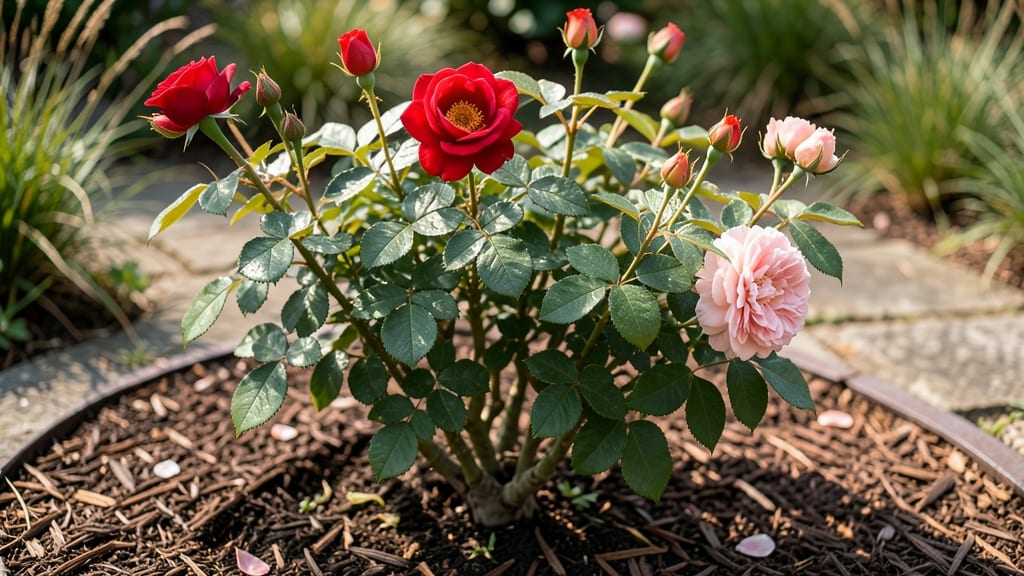
Mastering rose bush identification by their leaves and thorns saves you from pruning the wrong plant—or worse, assuming it’s a rose at all. 🌹 I’ve spent years untangling tangled canes, and the secret lies in those small details: the shape of the leaves, the pattern of the thorns, and even how the stems grow.
One set of five-leaflets means hybrid tea; another means your plant might be a wild rose or a different variety entirely.
Start by counting leaflets—most roses have 5-7, but some, like rugosas, have 9-11. Then check the thorns: hybrid teas have stiff, straight thorns pointing downward, while climbers often have curved, hook-like thorns.
A healthy rose bush has glossy green leaves and no yellowing or spots—signs of disease or pests that change how you care for it.
Once you’ve got the basics down, you’ll spot the differences instantly. That sprawling bush with small, fragrant blooms? Likely a floribunda. The tall, arching canes with clusters of flowers? Probably a climber. Knowing these traits means you’ll prune correctly, fertilize properly, and even predict blooming seasons.
No fancy tools needed—just your eyes and a notebook. For tricky cases, apps like PlantNet or a field guide to local roses can help. And once you’ve mastered ID, you’ll be ready to tackle pruning, feeding, and troubleshooting like a pro. Let’s get started!
What Triggers Misidentification
When you’re staring at a lush rose bush, it’s easy to assume its identity based on a few familiar leaves or thorns—but nature has a way of throwing curveballs. 🌿 Misidentifying roses often boils down to a mix of genetic quirks, environmental stress, and human error.
Let’s break down the science—and why your rose might be playing hide-and-seek.
Roses are notorious for their hybrid vigor, meaning they can crossbreed like crazy, producing offspring that blend traits from multiple parents. This genetic mixing leads to:
- Leaf shape shifts: A Rosa rugosa might sprout a leaf that looks suspiciously like a Rosa chinensis hybrid if its parentage includes both. The American Rose Society notes that even within a single cultivar, leaves can vary by 10–15% due to genetic recombination.
- Thorn patterns that don’t match: Some roses, like Rosa wichuraiana, have nearly thornless stems, but a grafted hybrid (where two roses are fused) might sprout thorns from the rootstock while keeping the scant thorns of the top variety.
- Graft failure chaos: If the graft union (where two roses are joined) fails, the rootstock’s leaves and thorns may take over, making identification a guessing game. 🔍 Pro tip: Check the base of the stem—if it’s swollen or knobby, it’s likely a grafted plant.
Roses aren’t just victims of genetics—they’re also shaped by their surroundings. When conditions get tough, their leaves and thorns can physically change, making them look like an entirely different species:
| Stressor | Effect on Leaves/Thorns | Example |
|---|---|---|
| 🌡️ Extreme heat/drought | Smaller, thicker leaves with reduced serration (fewer "teeth"). Thorns may become sharper and denser as a defense mechanism. | A Knock Out® rose (usually glossy, 5–7 leaflets) might develop 3–5 leaflets under drought stress, mimicking a Floribunda. |
| ❄️ Cold snaps or frost | New growth can emerge with deformed leaflets (lobed or curled) and softer thorns due to disrupted cell division. | A David Austin English rose might sprout leaves resembling wild roses (Rosa multiflora) after a late frost. |
| 🌿 Poor soil nutrition | Nitrogen deficiency = darker green, smaller leaves; phosphorus deficiency = purplish stems and fewer thorns. | A Climbing rose starved for phosphorus could look like a shrub rose with sparse thorns. |
💡 Actionable fix: Compare stressed leaves to healthy reference photos from the same cultivar. If the plant’s in distress, address the root cause (water, soil, or pests) before assuming it’s a new species.
Sometimes, the problem isn’t the rose—it’s the gardener. Here’s how well-meaning (or careless) humans muddy the waters:
- Grafted roses with wild rootstock: Nurseries often graft desirable roses onto hardy rootstock (like Rosa multiflora or Rosa canina). If the top variety dies back, the rootstock’s leaves and thorns can dominate, making it look like a wild rose instead of a hybrid tea.
- Mislabelled cuttings: Rose enthusiasts frequently swap cuttings, and without proper documentation, a Tea rose cutting might end up labeled as a Floribunda.
- Chimera mutations: A rare but fascinating phenomenon where a rose develops two distinct genetic layers in its tissue. One side of a stem might produce pink flowers, while the other sprouts red, and the leaves/thorns can vary wildly between branches. 🌈
✨ Pro tip: Dig near the base of the plant to check for graft unions (a swollen bump or abrupt change in stem texture). If the roots belong to a different rose, the above-ground ID might be misleading.
Next up: How to Tell Them Apart—because once you know why roses fool you, you’ll spot the clues to get it right!
Quick Fixes for Common Rose Issues
Once you’ve identified your rose bush—whether it’s a Rosa rugosa, David Austin, or a classic hybrid tea—you’ll want to address any problems quickly. Below are practical, step-by-step solutions tailored to the most common issues, from leaf discoloration to thorny surprises.
Each fix includes prevention tips to keep your roses thriving long-term.
Cause: Overwatering, fungal infections (like black spot), or poor soil quality.
How to Fix It:
- 🔥 Prune the Problem Areas
- Use sterilized pruners (wipe with rubbing alcohol) to remove yellowed or spotted leaves. Cut back to healthy green growth just above a leaf node.
- 🌡️ Fungal Treatment
- Spray affected bushes with a copper fungicide or neem oil solution (1 tbsp neem oil + 1 tsp mild soap per quart of water). Reapply every 7–10 days until new growth appears.
- 💡 Soil & Water Adjustments
- Test your soil (DIY kits are affordable) and amend with compost or rose-specific fertilizer (high in phosphorus for blooms).
- Water at the base (avoid wetting leaves) and ensure 6 inches of mulch to retain moisture without soggy roots.
Prevention Tips: ✔ Space bushes 3–4 feet apart for airflow. ✔ Clean up fallen leaves weekly to reduce fungal spores. ✔ Avoid overhead sprinklers—they spread disease.
Cause: Root-bound plants, poor drainage, or pests like aphids.
How to Fix It:
- 👨🍳 Repot or Transplant (If Needed)
- If your rose is in a container, check roots: Gently remove it and trim any circling roots. Repot in well-draining soil with perlite or sand.
- 🔪 Pest Control
- Aphids? Spray with soapy water (1 tsp dish soap + 1 quart water) or introduce ladybugs.
- Japanese beetles? Handpick them into soapy water or use milky spore powder as a preventative.
- 🌱 Fertilizer Boost
- Use a balanced fertilizer (10-10-10) in early spring, then switch to low-nitrogen, high-phosphorus (5-10-10) when buds form.
Prevention Tips: ✔ Fertilize in stages—never overdo it (burns roots). ✔ Monitor for pests weekly, especially on new growth. ✔ Choose the right pot: Ensure drainage holes if container-grown.
Cause: Over-pruning, too much nitrogen, or stress from heat/drought.
How to Fix It:
- ⏰ Prune Strategically
- When to cut? Prune in late winter/early spring (before new growth). Remove dead or crossing branches and cut back to an outward-facing bud.
- 🍎 Adjust Fertilizer
- Stop high-nitrogen feeds (like lawn fertilizer) and switch to phosphorus-rich options (e.g., bone meal or rose fertilizer).
- 💦 Hydration & Shade
- Water deeply 1–2 times per week (roses hate drought stress).
- Provide afternoon shade in hot climates to prevent bud drop.
Prevention Tips: ✔ Deadhead spent blooms to encourage new flowers. ✔ Avoid pruning in fall—it stimulates tender growth that won’t survive winter. ✔ Mulch heavily in winter to protect roots.
Cause: Some roses (like Rosa rugosa or wild roses) have extra-thick thorns for protection.
How to Fix It:
- 🔪 Prune for Shape & Safety
- Thin out dense areas to reduce thorn clusters. Aim for an open center to improve airflow and accessibility.
- 🛡️ Wear Protective Gear
- Use thick gardening gloves and long sleeves when pruning. Leather gloves work best for stubborn thorns.
- 🌱 Choose Less Thorny Varieties
- If thorns are a nuisance, opt for hybrid teas or Floribundas (fewer thorns than wild types).
Prevention Tips: ✔ Train roses on trellises to keep them off walkways. ✔ Plant thorny roses away from high-traffic areas. ✔ Regular pruning keeps growth manageable.
Pro Tip: 💡 Label your roses! Use waterproof plant tags with the variety name to track care needs (e.g., "David Austin ‘Gertrude Jekyll’—needs winter mulch").
By addressing issues early and tailoring care to your rose’s leaf shape and thorn pattern, you’ll keep your bushes lush, blooming, and pest-free. Happy gardening! 🌸
Frequently asked questions
How do I tell the difference between a rose bush and a similar-looking plant?
Look for leaflet count—most roses have 5-7 leaflets per leaf, while other plants (like honeysuckle) often have 3-5. Also check for thorns: roses have stiff, sharp thorns along the stems, while many imposters have none or softer spines. Wild roses may have 9-11 leaflets and extra-thick thorns.
Can I identify a rose just by its flowers?
Flowers help, but focus on leaf and thorn patterns for accuracy. For example, hybrid teas have large, single blooms on tall stems, while floribundas produce clusters of smaller flowers. However, some roses (like David Austin English roses) have similar blooms but different leaf shapes—always check the foliage!
What’s the best tool for identifying roses?
Start with a magnifying glass to examine leaflet details and thorn patterns. For tricky cases, use a plant identification app like PlantNet or iNaturalist—upload photos of leaves, thorns, and flowers. If you’re still unsure, consult a local rose society or nursery expert with a sample.
Why does my rose bush look different from what I planted?
Grafted roses often revert to their rootstock if the top variety dies back. Check the base of the stem for a swollen graft union—if the roots belong to a different rose (like Rosa multiflora), the leaves/thorns may change. Also, environmental stress (drought, frost) can alter leaf shape temporarily.
Are there roses without thorns?
Most roses have some thorns, but varieties like ‘Carefree Beauty’ or ‘The Fairy’ are nearly thornless. These are often sport mutations (natural variations) of thorny roses. If you want a truly thorn-free option, look for ‘Knock Out® roses’—they’re bred for low-maintenance, disease-resistant growth with minimal prickles.