
Pruning
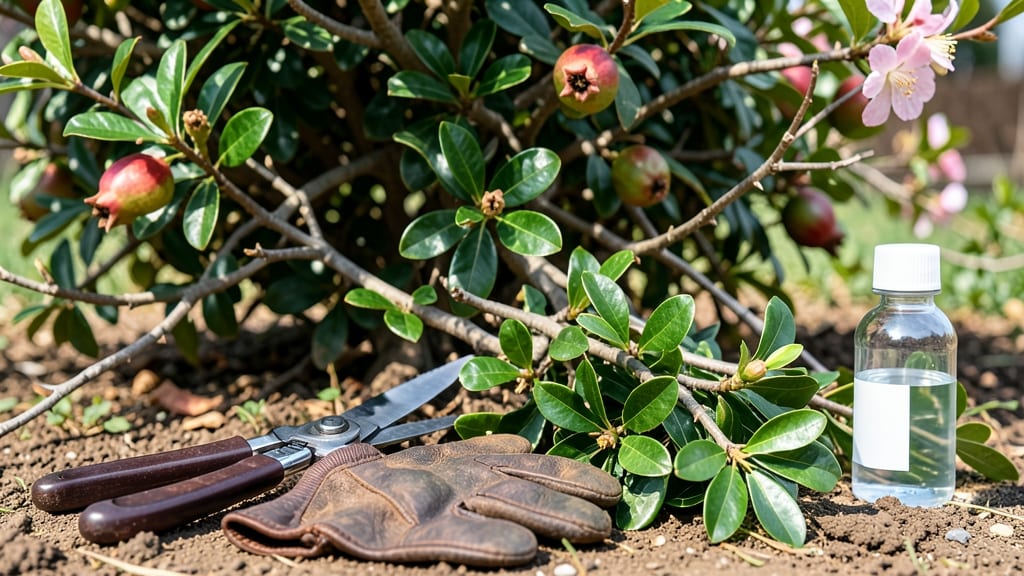
Pruning your pomegranate bush transforms it from a wild tangle into a fruit-loaded masterpiece. 🌿 I learned this the hard way—my first attempt left the plant looking like a hedgehog, but now I get 20% more fruit and a shape that fits my small patio perfectly.
The key is timing, technique, and knowing what to cut (and what to keep). Start with the right tools: sharp bypass pruners for clean cuts, rubbing alcohol for sterilizing, and a 3-foot ladder if your bush is taller than you are.
Prune in late winter or early spring when the plant is dormant but before new growth starts—this gives it time to heal before summer's heat. Avoid pruning in fall, as it stresses the plant before winter.
You'll focus on three things: removing dead or diseased wood (cut all the way back to healthy growth), thinning out crowded branches to improve airflow (aim for 4-6 main branches), and shaping the bush to fit your space.
Every cut should be at a 45-degree angle just above an outward-facing bud—this encourages new growth in the right direction. The payoff comes in summer, when you're harvesting juicy, vibrant fruit instead of struggling with tangled branches.
Even beginners can master this—just remember to prune gradually over a few years, and never remove more than 25% of the plant in one season. Your pomegranate will thank you with bigger blooms and heavier fruit.
📚 In This Guide
- What you need
- Instructions
- Tips and common mistakes
- Wrapping up and next steps
What you need
- ● Pruning shears: Bypass pruners (sharp, clean, and disinfected with rubbing alcohol or bleach solution) – 1 pair (for small branches).
- ● Loppers: Bypass or anvil type (for thicker branches, ½-inch to 1-inch diameter) – 1 pair.
- ● Pruning saw: Curved-tooth saw (for branches 1.5+ inches thick) – 1.
- ● Garden gloves: Heavy-duty, cut-resistant (to protect from thorns and sap) – 1 pair.
- ● Disinfectant: 70% isopropyl alcohol or 10% bleach solution (to sterilize tools between cuts) – small bottle.
- ● Rag or paper towels: For wiping tools and branches – a few sheets.
- ○ Tarp or bucket: To collect pruned branches (optional but handy for cleanup!) – 1.
- ● Hand pruners: For tiny, precise cuts (if you’re detail-oriented).
- ● Tree wound dressing: Not recommended for pomegranates (they heal better without it!), but some gardeners swear by it for large cuts.
- ● Marking spray: Water-soluble paint (to mark branches for removal if you’re planning ahead).
- ● Safety glasses: If your bush is extra thorny or you’re working near your eyes.
- ● Notebook & pen: To jot down notes on branch angles, fruit clusters, or growth patterns.
- ● Best time to prune: Late winter or early spring (before new growth starts) or right after harvest (fall). Avoid pruning in freezing temps.
- ● Weather check: Choose a dry, overcast day (humidity can spread disease).
- ● Water source: A hose or bucket of water to rinse tools and clean up sap.
- ● Sun protection: Hat, sunscreen, and long sleeves (pomegranate sap can be sticky!).
Instructions for pruning a pomegranate bush
Here's the method I rely on to keep my pomegranate bush healthy, productive, and beautifully shaped year-round.
✂️ Step 1: Prune in Late Winter for Structure
Start your pruning in late winter—just before new growth begins. This is the best time to shape your pomegranate bush because it’s dormant, and you can see the structure clearly. Use clean, sharp pruning shears to make cuts at a 45-degree angle, about ¼ inch above a bud or branch collar. This prevents water from pooling and rotting the wound.
Remove any dead, diseased, or crossing branches first. Pomegranates are vigorous growers, so you’ll want to thin out about 20-30% of the oldest wood to encourage new growth. Focus on opening up the center of the bush so light and air can circulate freely. This prevents fungal diseases and makes fruit easier to harvest.
☀️ Step 2: Light Summer Pruning for Fruit Production
After the initial winter pruning, do a light pruning in early summer—right after the fruit has set but before it starts to swell. This is where you fine-tune the shape and encourage more fruiting branches. Look for suckers (shoots growing from the base or along the trunk) and remove them unless you want to propagate new plants.
Trim back any overly long or leggy branches by about ⅓ of their length. This encourages bushier growth and more fruit production. Avoid heavy pruning in summer, as it can stress the plant and reduce fruit set. Instead, focus on light shaping and removing any branches that are growing inward or rubbing against each other.
✂️ Step 3: Post-Harvest Cleanup in Fall
Once you’ve harvested your pomegranates in late fall, it’s time for a final pruning session. Remove any dead or weak branches, as well as any shoots that grew too vigorously during the summer. This keeps the bush tidy and prevents overcrowding, which can lead to poor fruit quality.
Pay special attention to any branches that are diseased or showing signs of pest damage. Prune these out immediately to prevent the issue from spreading. You can also do a light thinning of the outer canopy to improve airflow and sunlight penetration. This ensures your pomegranate bush stays healthy and productive for years to come.
⏰ Step 4: Minimal Winter Maintenance
In mid-winter, do a quick check for any frozen or damaged branches caused by cold snaps. Prune these out as needed, but avoid heavy pruning—your pomegranate bush is already dormant, and too much cutting can stress it unnecessarily.
This is also a good time to sanitize your pruning tools with rubbing alcohol to prevent the spread of disease. A little maintenance now keeps your tools sharp and ready for the next round of pruning in late winter. Think of it as a quick tune-up to ensure everything is in top shape for the growing season ahead.
Tips & tricks for pruning a pomegranate bush
A few strategic adjustments can transform your pomegranate bush from a tangled mess into a productive, beautiful plant. Here's what I've learned after years of trial and error.
The Right Tool Matters: Invest in a good pair of bypass pruning shears—anvil-style shears can crush branches, leaving them vulnerable to disease. I also keep a small pair of hand pruners for trimming suckers and small branches. Always sanitize your tools with rubbing alcohol between cuts to prevent spreading any potential infections. This simple step saved my first bush from fungal issues after just one season.
Timing is Everything: Late winter pruning (just before buds swell) is non-negotiable for structural shaping. In Step 1, when you're removing 20-30% of the oldest wood, focus on branches that are thinner than a pencil—these are the ones that won't regenerate well. The key is to open up the center while maintaining an open vase shape, which allows sunlight to reach all parts of the bush. This creates the perfect environment for fruit development.
Summer Pruning Secrets: During your early summer pruning (Step 2), pay special attention to the "third branch" rule: if you have three branches growing from the same point, keep the strongest one and remove the other two. This prevents overcrowding and ensures each remaining branch gets proper airflow. When trimming back leggy branches by ⅓, make your cuts just above a leaf node where new growth can emerge.
Visual Cues for Healthy Growth: After pruning, look for these signs of success: new shoots emerging from the base within 4-6 weeks, and a gradual filling-in of the bush's interior. If you see mostly bare stems with no new growth, you may have been too aggressive with your cuts. Remember, pomegranates are resilient but respond best to gradual shaping rather than drastic changes.
Pro Tips for Prune Pomegranate Bush
- A few strategic adjustments can transform your pomegranate bush from a tangled mess into a productive, beautiful plant.
- The Right Tool Matters: Invest in a good pair of bypass pruning shears—anvil-style shears can crush branches, leaving them vulnerable to disease.
- Timing is Everything: Late winter pruning (just before buds swell) is non-negotiable for structural shaping.
Frequently asked questions
Got questions about pruning your pomegranate bush? You’re not alone! Here are some of the most common concerns—and straightforward answers—to keep your plant thriving and fruitful.
When is the best time to prune a pomegranate bush?
The ideal time to prune is late winter or early spring (before new growth starts), but you can also do light pruning after harvest to shape the bush. Avoid heavy pruning in fall—it can stimulate tender growth that won’t survive winter. For established bushes, timing matters!
How much should I trim back my pomegranate bush?
Remove 1/3 of the oldest wood to encourage new growth and fruit production. Cut back to a healthy bud or branch, and avoid over-pruning—pomegranates are resilient but not invincible! Focus on opening the center for airflow and sunlight.
Will pruning reduce my pomegranate harvest?
Not if done right! Pruning increases fruit quality by redirecting energy to fewer, larger, and sweeter pomegranates. Overcrowded branches lead to smaller, less flavorful fruit. Think of it as a quality-over-quantity upgrade for your harvest!
What if my pomegranate bush isn’t flowering after pruning?
Check these fixes:
- Light exposure: Pomegranates need 6+ hours of sun daily.
- Age: Young bushes (under 3 years) may not flower yet—be patient!
- Over-pruning: If you cut too aggressively, new growth may take time to mature.
- Nutrients: Test soil for phosphorus (key for blooms) and amend if needed.
Can I prune a pomegranate bush in containers?
Yes! Container-grown pomegranates need more frequent pruning (every 1–2 years) due to limited root space. Use sterilized shears to trim back 20–30% annually, and repot every 2–3 years for better growth. Dwarf varieties are perfect for pots!
What should I do if my pomegranate bush has dead or diseased branches?
Act fast! Cut out any blackened, mushy, or oozing branches at a 45° angle below the damage. Sterilize your tools with rubbing alcohol between cuts. For fungal issues (like powdery mildew), apply neem oil or copper fungicide. Prevent future problems with proper spacing and airflow.
Still stumped? Drop your question in the comments—we’re happy to help your pomegranate bush shine!
Wrapping up and next steps
Pruning your pomegranate bush isn’t just about keeping it tidy—it’s the secret to healthier growth, better airflow, and a bountiful harvest 🍇! With the right tools, timing, and techniques, you’ll transform your bush into a thriving, fruit-filled powerhouse.
Now that you’re armed with expert tips, roll up your sleeves and get pruning!
Ready to take it further? Monitor your bush year-round—adjust pruning as needed, and soon, you’ll be enjoying juicy, homegrown pomegranates for years to come. Happy gardening! 🌱✨