
Pruning
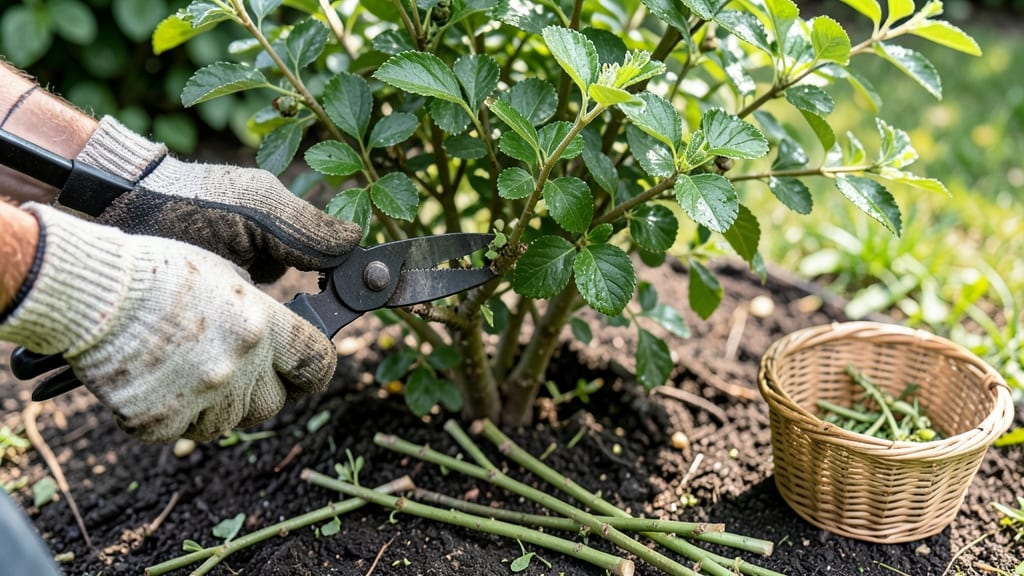
Pruning currant bushes transforms tangled vines into productive powerhouses. ✂️ After years of neglect, my black currants went from scraggly to thriving—just by cutting back the right way. The secret isn’t harsh trimming but strategic shaping that boosts airflow, sunlight, and fruit production.
Do this in late winter or early spring before buds swell, using clean, sharp pruners. Remove dead wood first, then thin crowded branches to let light reach the center. For older bushes, rejuvenate by cutting back one-third of the oldest stems each year—this keeps them vigorous for decades.
You’ll see the difference by summer: fewer tangled branches, more sunlight hitting the leaves, and bigger, sweeter berries than ever. The key is patience—currants reward careful pruning with years of abundant harvests. Avoid cutting too late in spring, or you’ll lose next year’s fruit.
Works for red, black, and white currants alike. Here’s how to do it without overcomplicating things—no green thumb required, just a steady hand and the right timing.
📚 In This Guide
- What you need
- Instructions
- Tips and common mistakes
- Wrapping up and next steps
What you need
- ● Pruning shears: Sharp, bypass-style shears (avoid anvil types—they crush stems). Size: 6-8 inches for medium-sized branches.
- ● Loppers: For thicker stems (½–1½ inches). Quantity: 1 pair with a ratcheting mechanism for easier cutting.
- ● Hand pruners: For fine-tuning small branches or suckers. Quantity: 1 pair.
- ● Gloves: Heavy-duty, gardening-grade gloves (cut-resistant if dealing with thorns). Material: Nitrile-coated or leather.
- ● Disinfectant: 70% isopropyl alcohol or a 10% bleach solution (1 part bleach to 9 parts water) to sterilize tools between cuts.
- ● Trash bags or bucket: For collecting pruned material. Size: At least 3–5 gallons to avoid overflow.
- ● Rake: A bendable-tine rake to clear debris afterward.
- ● Pruning saw: For stubborn, woody branches (if loppers won’t cut it). Type: Curved-tooth saw for clean cuts.
- ● Knee pads: If you’ll be kneeling or crouching for extended periods.
- ● Labeling tags: Small, waterproof tags to mark specific cuts (e.g., "fruit wood" vs. "water sprouts").
- ● Compost bin: If you plan to compost pruned material (avoid diseased branches).
- ● Safety glasses: To protect against debris if branches are brittle or thorny.
Step-by-Step guide to pruning currant bushes
Healthy vines start with the right cuts—here’s how to shape your currants for maximum fruit and vigor.
✂️ Step 1: Time Your Pruning for Optimal Growth
Prune red and white currants immediately after harvest, typically in late summer (August-September), while black currants get their main trim in early spring (March-April). This timing prevents disease spread and encourages strong new growth. Avoid pruning when buds are swelling—you’ll risk damaging next year’s fruit.
I always check the bush’s dormancy stage first. For spring pruning, look for bare branches with no leaves or buds. For summer pruning, wait until fruits have fully ripened and fallen. This ensures you’re not removing next year’s harvest potential.
✂️ Step 2: Remove Dead, Diseased, and Weak Wood
Start by cutting out any dead or diseased branches—they’re easy to spot as brown, brittle stems or those with blackened cankers. Use clean, sharp pruners to make cuts at a 45-degree angle just outside the branch collar (the swollen area where the branch meets the main stem). This prevents water from pooling and causing rot.
Next, identify weak or crossing branches—these compete for energy and reduce fruit production. Remove any that rub against each other or grow inward. I like to step back and visualize the bush’s shape; the goal is an open center that lets sunlight reach all branches.
✂️ Step 3: Thin Out Overcrowded Canes
Currants produce fruit on second-year wood, so you’ll see a mix of old (woody) and new (flexible) canes. Keep 4-6 of the strongest, most vigorous canes per bush—these will bear the best fruit. Cut the rest back to the ground. This rejuvenates the plant and prevents overcrowding.
For each cane you keep, look for lateral branches (smaller side shoots). These will become next year’s fruit-bearing wood. If a cane has no laterals, it’s past its prime—remove it entirely. I always make these cuts first, as they’re the most critical for long-term health.
✂️ Step 4: Shape for Airflow and Sunlight
Step back and assess the bush’s structure. Currants thrive with good airflow, so aim for a rounded, vase-like shape with branches spaced evenly. Cut back any branches that grow inward or downward—they’ll block light and encourage disease.
For red and white currants, I also shorten the remaining canes by one-third to encourage bushier growth. Black currants, however, benefit from lighter pruning—just remove dead wood and thin slightly. The key is balance: enough cuts to shape the bush, but not so many that you stunt its growth.
🌿 Step 5: Clean Up and Protect for Next Season
After pruning, remove all debris from the base of the bush and surrounding area. Diseased branches should go straight into the trash—never the compost pile. Sterilize your pruners with rubbing alcohol between cuts to prevent spreading pathogens.
Apply a 2-inch layer of mulch (like shredded bark) around the base, keeping it 6 inches away from the trunk. This conserves moisture, suppresses weeds, and protects roots during winter. I also add a balanced 10-10-10 fertilizer in early spring to support new growth.
Tips & tricks for pruning currant bushes
Here's what nobody tells you about keeping your currant bushes thriving—these insights will transform your pruning game.
Seasonal Timing is Everything: The late summer timing for red and white currants (August-September) isn't arbitrary—it's when the fruits have fully ripened and fallen, signaling the plant to focus on next year's growth rather than fruit production. For black currants, that early spring window (March-April) catches the plant while it's still dormant but ready to burst into growth. I've learned this the hard way after accidentally pruning too early and seeing reduced fruit yield the following season.
The 45-Degree Cut Secret: When removing branches in Step 2, that 45-degree angle isn't just aesthetic—it's functional. Cutting just outside the branch collar at this angle creates a larger wound surface that heals faster and prevents water from pooling, which could lead to rot. I always use a sharp pruner and make these cuts cleanly to avoid tearing the bark. For stubborn branches, I'll make two cuts: the first just outside the collar at 45 degrees, then a second cut to remove the remaining stub.
Cane Selection Strategy: Those 4-6 strongest canes you keep in Step 3 should be your bush's future fruit producers. Look for canes that are thick, straight, and have good lateral branching—they'll give you the biggest harvest. I've found that canes with multiple laterals (those smaller side shoots) often produce clusters of fruit rather than just individual berries. Don't be afraid to be ruthless—if a cane has no laterals or is completely woody, it's time to let it go.
Shape Matters More Than You Think: That rounded, vase-like shape in Step 4 isn't just for looks—it's about creating an open center that allows sunlight to penetrate to the inner branches. I visualize the bush like an umbrella, where all the branches can get equal exposure. For red and white currants, shortening canes by one-third encourages bushier growth, but with black currants, less is more—they respond better to lighter pruning. This balance between pruning and preservation is what separates a healthy bush from one that struggles.
Pro Tips for Prune Currant Bushes
- Here's what nobody tells you about keeping your currant bushes thriving—these insights will transform your pruning game.
- For black currants, that early spring window (March-April) catches the plant while it's still dormant but ready to burst into growth.
- The 45-Degree Cut Secret: When removing branches in Step 2, that 45-degree angle isn't just aesthetic—it's functional.
Frequently asked questions
When is the best time to prune currant bushes?
Prune currant bushes late winter or early spring (just before buds swell) for red and white varieties. Black currants thrive with summer pruning (June–July) to avoid silverleaf disease. Avoid heavy pruning in fall—it stresses the plant and invites pests.
How much should I trim back my currant bushes?
Remove 1/3 to 1/2 of the oldest canes each year to encourage new growth. Cut back to the base or leave a short stub (2–3 inches). Never prune more than 30% in one season—this can shock the plant. Thin crowded canes to improve airflow and fruit production.
What if I see dead or diseased branches after pruning?
If you spot blackened, mushy, or hollow canes, prune them immediately with sterilized tools (rubbing alcohol or bleach). Dispose of infected branches in the trash not the compost. Apply fungicide if fungal issues persist, like powdery mildew or anthracnose.
Can I prune currant bushes in summer?
Yes, but only black currants benefit from summer pruning (June–July). Lightly trim only the current year’s growth to shape the bush and reduce disease risk. Avoid heavy summer cuts on red/white currants—it stresses the plant and reduces next year’s fruit.
What if I skip pruning for a few years?
Don’t panic! Currants are resilient. Start with gentle pruning—remove only the most obvious dead or crossing canes. Over 2–3 years, gradually thin to open the center. Expect smaller harvests at first, but the bush will recover with patience.
Wrapping up and next steps
Pruning your currant bushes is a rewarding way to boost their health, productivity, and fruit quality—so grab those pruners and get to work! 🌿 With the right timing, tools, and techniques, you’ll enjoy stronger vines, fewer pests, and bountiful harvests for years to come.
Ready to take the next step? Mark your calendar for next year’s pruning season and watch your currant patch thrive!
Pro tip: Keep a pruning journal to track growth patterns and refine your approach each season! ✨