
Flowers
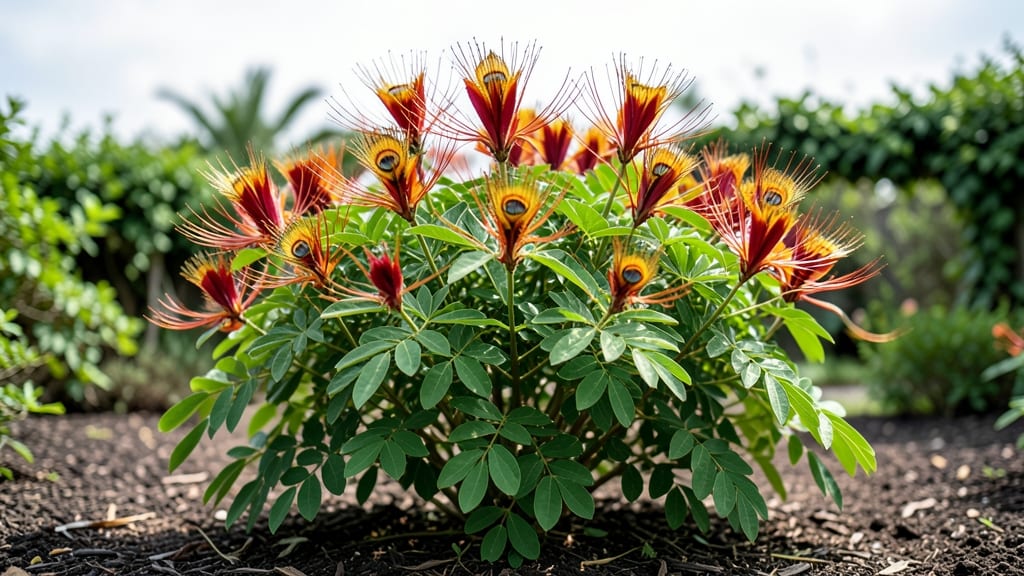
Growing a peacock flower bush means year-round color that actually stays low-maintenance—no fuss, no fussing. 🌿 I planted mine last spring, and the bold red-orange blooms with yellow centers have been putting on a show since May, with occasional bursts through winter.
The secret? It thrives on neglect almost as much as it does on attention, making it perfect for busy gardeners who still want drama in their landscape.
This tropical beauty loves full sun (think 6+ hours daily) and tolerates poor soil, though it rewards you best with well-draining, slightly alkaline dirt.
Water it deeply once a week after establishment—overwatering is its only real enemy—and watch it grow into a 6-10 foot shrub with feathery foliage that adds texture year-round. The best part? It rarely needs pruning unless you want to shape it, and even then, it bounces back fast.
You’ll end up with a drought-tolerant plant that attracts hummingbirds and butterflies while keeping pests at bay. The blooms last weeks, and even when they fade, the seed pods add winter interest. My neighbors now ask how I keep my yard so vibrant—now I’ll share the secrets with you.
Works beautifully in warm climates (zones 9-11) but can be grown in pots and overwintered indoors in cooler areas. Let’s get yours thriving with minimal effort!
📚 In This Guide
- What you need
- Instructions
- Tips and common mistakes
- Wrapping up and next steps
What you need
- ● Peacock flower bush: 1 nursery-grown plant (3–5 ft tall, mature size) or
- ● Seeds (if starting from scratch—germination can take 2–4 weeks!)
- ● Soil: Well-draining, slightly acidic to neutral (pH 6.0–7.0). Mix in compost (1 part compost to 3 parts native soil).
- ● Fertilizer: Balanced, slow-release granular fertilizer (10-10-10 or 20-20-20, 1 lb per 100 sq ft).
- ○ Optional: Organic options like bone meal (for phosphorus) or worm castings.
- ● Gardening tools: Trowel or shovel
- ● Pruning shears (sterilized with rubbing alcohol)
- ● Gloves (to protect from thorns!)
- ● Planting supplies: Planting hole (twice as wide as the root ball)
- ● Mulch (2–3 inches of organic mulch like pine bark or shredded leaves)
- ○ Optional (but helpful): Soil pH test kit (to ensure ideal growing conditions)
- ● Drip irrigation system (for consistent moisture)
- ● Stakes or cages (if your bush needs support in windy areas)
- ● Climate: USDA Zones 9–11 (hardy to 25°F). In colder zones, grow as a container plant or bring indoors in winter.
- ● Sunlight: Full sun (6+ hours daily) for optimal blooms.
- ● Watering: Deep watering 2–3 times per week (more in extreme heat). Avoid waterlogging!
- ● Space: Plant at least 6–10 ft apart (they spread via suckers!).
Step-by-step instructions for planting and maintaining a peacock flower bush
Here’s how to grow a stunning peacock flower bush with vibrant blooms that last all season—no fuss, just beauty.
🌱 Step 1: Choose the Perfect Spot and Prepare the Soil
Peacock flower bushes thrive in full sun to partial shade, so pick a location that gets at least 4-6 hours of sunlight daily. I always check the site in morning and afternoon to confirm light exposure—this plant loves warmth but can tolerate gentle afternoon shade in hotter climates.
Before planting, loosen the soil to a depth of 12 inches with a garden fork. Mix in 2-3 inches of compost to enrich the soil—peacock flowers love well-draining, fertile earth. If your soil drains poorly, add a handful of perlite or sand to improve aeration. The goal is soil that holds moisture but doesn’t stay soggy.
🪴 Step 2: Plant Your Peacock Flower Bush at the Right Depth
Dig a hole twice as wide as the root ball but only as deep as the container’s base. Gently remove the plant from its pot and place it in the hole, ensuring the top of the root ball sits just below soil level. Peacock flowers hate having their neck buried too deep—this can cause rot.
Backfill the hole with soil, pressing lightly around the edges to remove air pockets. Water deeply right after planting to settle the soil and encourage root growth. You’ll know it’s right when the soil surface looks slightly firm but not compacted. Mulch with 2-3 inches of organic mulch around the base to retain moisture and suppress weeds.
☀️ Step 3: Water Consistently and Fertilize for Vibrant Blooms
Keep the soil evenly moist for the first 2-3 weeks after planting—water when the top 1-2 inches feel dry to touch. Once established, peacock flowers are drought-tolerant, but they’ll reward you with bigger, brighter blooms if you water 1-2 times per week during dry spells.
Feed your bush with a balanced, slow-release fertilizer in early spring and again after flowering. I use a 10-10-10 blend at half strength to avoid burning the roots. Watch for new growth—this is your signal the plant is happy and ready for more color.
✂️ Step 4: Prune Lightly to Encourage Fullness and More Flowers
Peacock flowers need minimal pruning, but a little effort keeps them lush and blooming. After the first flush of flowers fades, trim back dead or damaged stems to the nearest healthy leaf. This encourages new growth and prevents the bush from looking leggy.
In late winter or early spring, prune back one-third of the oldest stems to the ground. This rejuvenates the plant and makes room for fresh, vibrant blooms. Don’t worry—peacock flowers are tough and bounce back quickly. You’ll see fresh green shoots within 2-3 weeks, signaling new life.
🌿 Step 5: Enjoy Year-Round Color With Minimal Effort
Peacock flowers bloom from late spring through fall, but with the right care, they can even surprise you with winter interest. Deadhead spent blooms regularly to encourage more flowers and keep the plant looking tidy. I like to check for fading blooms every 1-2 weeks—removing them prevents seed formation and redirects energy to new growth.
Watch for pests like aphids or spider mites, which love peacock flowers too. A strong spray of water usually does the trick, but if infestations persist, use an insecticidal soap. With minimal pruning and consistent care, your peacock flower bush will reward you with bold, show-stopping blooms all season long.
Tips & tricks for perfect peacock flower bushes
These little tricks will help you transform your garden into a nonstop color show with minimal effort!
Light Exposure is Everything: That 4-6 hours of sunlight isn't just a suggestion—it's the magic number for peak performance. If your spot gets less than 4 hours, your peacock flowers will still grow, but the blooms will be smaller and less vibrant. I've seen dramatic differences in the same variety planted in full sun versus partial shade—full sun wins every time for those show-stopping colors.
Soil Prep Secret: The 12-inch soil loosening in Step 1 isn't just about breaking up dirt—it's about creating a root-friendly environment. I like to add a handful of perlite if my soil is particularly dense, which helps with both drainage and aeration. This small extra step prevents those dreaded soggy roots that can lead to rot, especially in heavier clay soils.
Watering Wisdom: Those first 2-3 weeks of consistent moisture are critical for root establishment. I've learned the hard way that skipping this can lead to stunted growth later. Use your finger to check moisture—if the top 1-2 inches feel dry, it's time to water. For established plants, I water deeply 1-2 times per week during dry spells, focusing on the root zone rather than just sprinkling leaves.
Pruning Payoff: The one-third prune in late winter might seem drastic, but trust me—it's worth it! I've seen bushes that were pruned back aggressively bounce back with more vibrant blooms than those barely trimmed. Look for those oldest, woody stems—they're the ones holding back your plant's full potential. Those fresh green shoots you'll see in 2-3 weeks are your reward for this brave cut!
Pro Tips for Peacock Flower Bush
- These little tricks will help you transform your garden into a nonstop color show with minimal effort!
- Light Exposure is Everything: That 4-6 hours of sunlight isn't just a suggestion—it's the magic number for peak performance.
- Soil Prep Secret: The 12-inch soil loosening in Step 1 isn't just about breaking up dirt—it's about creating a root-friendly environment.
Frequently asked questions
Got questions about keeping your peacock flower bush (Caesalpinia pulcherrima) thriving? Here are some of the most common ones—plus quick answers to help you grow like a pro!
How fast does a peacock flower bush grow?
A healthy peacock flower bush grows moderately fast, adding about 12–24 inches per year under ideal conditions. With plenty of sunlight and well-draining soil, you’ll see noticeable growth within a season. Just be patient—full maturity (and those stunning blooms!) takes 3–5 years.
Can peacock flower bushes survive winter in cold climates?
These tropical beauties are not frost-tolerant—they thrive in USDA Zones 9–11. If you live in colder areas, grow them in containers and bring them indoors (or to a garage) before temps drop below 30°F. For in-ground planting, use mulch and protect the root zone with burlap wraps if frost is forecasted.
Why aren’t my peacock flowers blooming?
No blooms? Don’t worry—it’s often fixable! Common culprits include:
- Too much shade: They need 6+ hours of direct sun daily.
- Over-fertilizing: Too many nutrients (especially nitrogen) = leafy growth, not flowers.
- Young age: Bushes under 3 years old may focus on growth first.
- Dormancy: They bloom spring to fall; expect a break in winter.
Try light pruning after blooming to encourage new growth—and watch those vibrant flowers return!
What’s a good alternative if I want year-round color with less maintenance?
If peacock flowers seem high-maintenance (or you’re in a colder zone), consider these low-fuss, colorful alternatives:
- Bougainvillea: Thrives in heat, blooms nonstop, and handles drought.
- Plumbago (Leadwort): Produces sky-blue flowers year-round in warm climates.
- Duranta (Golden Shower): Fast-growing, disease-resistant, and packed with purple blooms.
- Ixora: Tropical, glossy, and blooms spring through fall.
Each has its own care needs, but all deliver bold color with minimal pruning!
Do I need to prune peacock flower bushes often?
Not at all! These bushes are low-maintenance—just light pruning is enough:
- Trim dead or leggy branches in late winter to shape the bush.
- Cut back spent blooms to encourage more flowers.
- Avoid heavy pruning—it can stress the plant and reduce blooms.
With minimal effort, your peacock flower bush will stay lush and colorful with almost no upkeep!
Wrapping up and next steps
The peacock flower bush is a stunning, low-maintenance addition to any garden, offering vibrant blooms and lush foliage with minimal effort. Whether you're drawn to its striking flowers or its resilience, this plant proves that beauty and ease go hand in hand.
Ready to transform your outdoor space? Start by choosing the perfect spot, gathering your supplies, and enjoy the rewarding process of nurturing this eye-catching shrub! 🌸
- Next step: Pick your favorite variety and get planting—your garden will thank you!