
Pruning
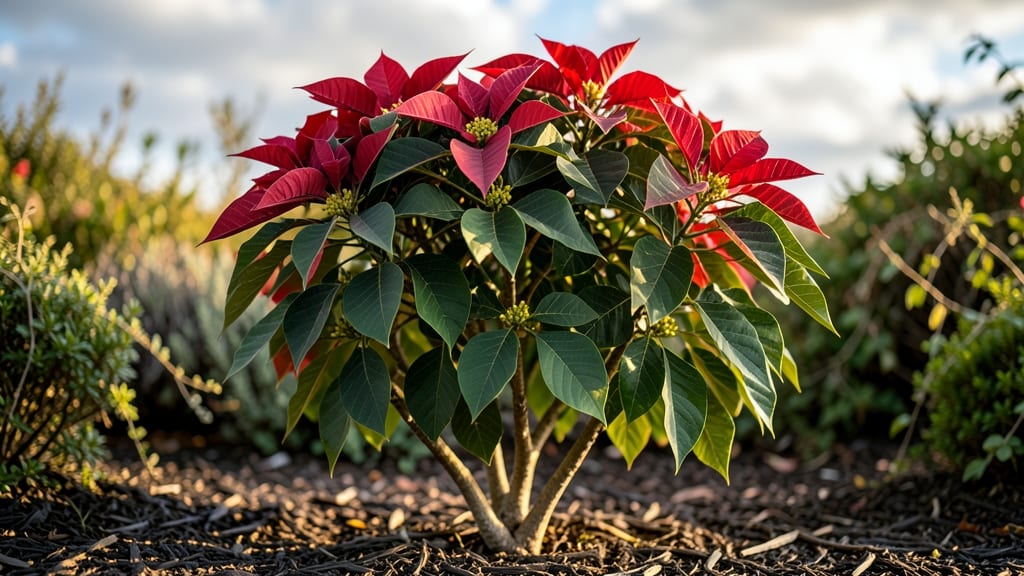
Growing a vibrant outdoor poinsettia bush means year-round color that rivals any holiday display. 🌿 I’ve turned my once-winter-only poinsettias into lush, evergreen shrubs that bloom from late summer through frost—no green thumb required.
The secret? Pruning for bushiness, protecting from cold snaps, and giving them the right mix of sun and shade.
These tropical plants thrive in USDA zones 9-11, but with winter mulch and container flexibility, you can grow them in cooler zones too. They crave well-draining soil and morning sun with afternoon shade—perfect for patios or garden edges.
Overwatering is their kryptonite, so let the soil dry between drinks, and feed lightly in spring and summer.
With just three pruning cuts a year, you’ll encourage dense growth and more blooms. Cut back leggy stems in spring, pinch new growth in summer, and trim spent flowers in winter. The result? A compact, colorful bush that outshines store-bought poinsettias—and lasts all season long.
Even in humid climates, these plants stay pest-free with proper airflow. Mulch heavily in winter, and watch them bounce back stronger every year. Ready to turn your poinsettias into a year-round showstopper?
📚 In This Guide
- What you need
- Instructions
- Tips and common mistakes
- Wrapping up and next steps
What you need
- ● Pruning shears: Bypass pruners (sharp, 5-8 inch blades) for clean cuts—1 pair.
- ● Hand pruners: Bypass or anvil type (for smaller branches)—1 pair.
- ● Gloves: Garden gloves (cut-resistant, medium-weight)—1 pair.
- ● Disinfectant: 70% isopropyl alcohol or bleach solution (1:9 ratio) (to sterilize tools)—small bottle.
- ○ Pruning saw: Curved blade, 8-10 inch (for thick stems over ½ inch)—1 optional.
- ● Weather check: Prune on a dry, calm day (avoid rain for 24 hours).
- ○ Safety gear: Sunglasses (for debris) and long sleeves (optional but recommended).
- ○ Compost bin: For trimmings—optional but eco-friendly!
- ● Plant food: Balanced fertilizer (10-10-10 or similar) (post-pruning boost)—small bag.
- ● Mulch: Organic mulch (shredded bark or pine straw) (to retain moisture)—5-10 gallons.
Instructions for pruning outdoor poinsettia bushes
Here’s how to shape and maintain your poinsettia bush for vibrant blooms all year—no complicated techniques required.
✂️ Step 1: Prune in Early Spring for New Growth
Start pruning in late February or early March when new growth begins. Cut back all stems to 6-8 inches above the ground, just above a leaf node. This encourages bushier growth and prevents leggy stems. Use clean, sharp pruners to avoid crushing the stems—ragged cuts invite disease.
I like to make my cuts at a 45-degree angle, about ¼ inch above a leaf node. This prevents water from pooling on the cut and promotes faster healing. After pruning, give the bush a light fertilizer application to support new growth. You’ll see fresh shoots emerge within 2-3 weeks—that’s your signal everything’s working.
☀️ Step 2: Summer Maintenance for Fullness and Color
Throughout summer, prune lightly to shape the bush and encourage branching. Remove any dead, diseased, or crossing branches first—these compete for energy and weaken the plant. For shaping, trim back 10-15% of the new growth to maintain a rounded form. Avoid heavy pruning now; poinsettias bloom on new wood, and late-season cuts can delay flowering.
Watch for yellowing leaves—this usually means overwatering or poor drainage. Poinsettias thrive in well-draining soil and prefer morning sun with afternoon shade, especially in hot climates. If your bush looks leggy, it’s getting too little light. Move it to a sunnier spot or supplement with a grow light for 6-8 hours daily.
🌿 Step 3: Late Summer to Early Fall: Encourage Blooming
Starting in late August, reduce watering slightly to stress the plant just enough to trigger blooming. Cut back any weak or overgrown stems to 4-6 inches to redirect energy to flower production. Remove spent blooms as they fade to encourage new buds. This is also the time to feed with a high-phosphorus fertilizer (like a 20-20-20 blend) to support flower development.
Here’s the thing—poinsettias need 12+ hours of darkness daily for 6-8 weeks to set buds. If your bush isn’t blooming by October, it’s likely getting too much light at night. Cover it with a black cloth or box from 5 PM to 8 AM for 2-3 weeks to reset the cycle. You’ll see buds form within 4-6 weeks if conditions are right.
⏰ Step 4: Winter Care for Next Year’s Blooms
Once blooms appear, keep the plant in bright, indirect light and water moderately—let the top 1-2 inches of soil dry out between waterings. Avoid cold drafts, as poinsettias are tender perennials in most climates (USDA zones 10-11). If frost threatens, move it indoors or mulch heavily and cover with burlap to protect roots.
After blooms fade in spring, you can prune again to refresh the shape. The key to long-term success is consistency: prune in early spring, maintain shape in summer, and stress the plant in late summer to trigger blooming. With this routine, your poinsettia bush will reward you with year-round color—no fuss, just beauty.
Tips & tricks for pruning outdoor poinsettia bushes
Transforming your poinsettia bush into a lush, year-round showpiece starts with these key insights—trust me, they make all the difference.
Timing is Everything: The late February to early March window for Step 1 is critical because that's when poinsettias naturally break dormancy. If you prune too early, you'll cut healthy growth; too late, and you miss the opportunity to stimulate bushier spring growth. Watch for those first tender shoots—when you see 2-3 inches of new growth, that's your cue to prune aggressively to 6-8 inches.
Cutting Technique Matters: That 45-degree angle in Step 1 isn't just for aesthetics—it's a water management strategy. The angled cut prevents water from pooling on the stem, which dramatically reduces the risk of fungal infections. And always cut just above a leaf node (about ¼ inch up)—this is where new growth will emerge. I've seen pruners make cuts too close to the node, which can leave ugly scars and stunted growth.
Light Management for Blooming: The 12+ hours of darkness requirement in Step 3 is non-negotiable for bud formation. If your bush isn't blooming by October, it's almost certainly getting too much artificial light at night. I've had to cover plants with blackout fabric during my own late-night gardening sessions—it's worth the temporary inconvenience for those stunning blooms. Remember, this darkness period needs to be consistent for 6-8 weeks straight.
Seasonal Adjustments: Summer pruning should never exceed 15% of new growth—this maintains the plant's energy balance. I've learned the hard way that heavy summer cuts delay fall blooming because poinsettias only set buds on new wood formed after late summer. For leggy plants, supplement with 6-8 hours of grow light daily rather than moving to full sun, which can scorch tender leaves in hot climates.
Pro Tips for Outdoor Poinsettia Bush
- Transforming your poinsettia bush into a lush, year-round showpiece starts with these key insights—trust me, they mak...
- Timing is Everything: The late February to early March window for Step 1 is critical because that's when poinsettias ...
- Cutting Technique Matters: That 45-degree angle in Step 1 isn't just for aesthetics—it's a water management strategy....
Frequently asked questions
Can I prune my outdoor poinsettia bush at any time of year?
Prune your outdoor poinsettia bush in early spring (March–April) for best results. Avoid heavy pruning in late fall or winter, as this can stress the plant before its next growth cycle. Light trimming to shape or remove dead foliage is fine year-round, but major pruning should wait until after the last frost.
How do I protect my outdoor poinsettia bush in winter?
Outdoor poinsettias thrive in USDA Zones 9–11, but colder climates need protection. Mulch the base with 3–4 inches of straw or wood chips and wrap the plant in burlap or frost cloth if temps drop below 20°F (-6°C). Water sparingly—only when the soil is dry—to prevent root rot from thawing ice.
Why did my poinsettia bush lose its color this year?
Poinsettias need 12+ hours of darkness daily for 6 weeks in late summer/fall to trigger vibrant color. If yours faded, it may not have received enough nighttime shade. Next year, cover the plant with a black fabric box or move it indoors during daylight hours to reset its cycle.
Can I grow a poinsettia bush from cuttings?
Take 4–6 inch cuttings from healthy stems in spring or early summer, dip them in rooting hormone, and plant in moist potting mix. Keep them warm (70–75°F) and humid (use a plastic bag) until roots form—usually in 4–6 weeks. Transplant outdoors after the last frost.
What pests should I watch for on my outdoor poinsettia bush?
Keep an eye out for aphids, mealybugs, and spider mites, which thrive on poinsettias. Treat infestations early with neem oil or insecticidal soap. For severe cases, hose off pests with water or use a mild horticultural oil spray. Healthy plants with good airflow resist pests better!
Wrapping up and next steps
Transforming your outdoor poinsettia bush into a year-round burst of color doesn’t have to be complicated—just a little intentional pruning and care! With the right tools, timing, and techniques, you’ll enjoy vibrant blooms well beyond the holidays. 🌿✨
Ready to take the next step? Start by observing your plant’s growth this season and experiment with light pruning in early spring. Before you know it, your poinsettia will be thriving—and so will your confidence as a plant parent!
Pro Tip: Share your progress with fellow gardeners—inspiration spreads faster than bracts in bloom! 🌸