
Pests and Diseases
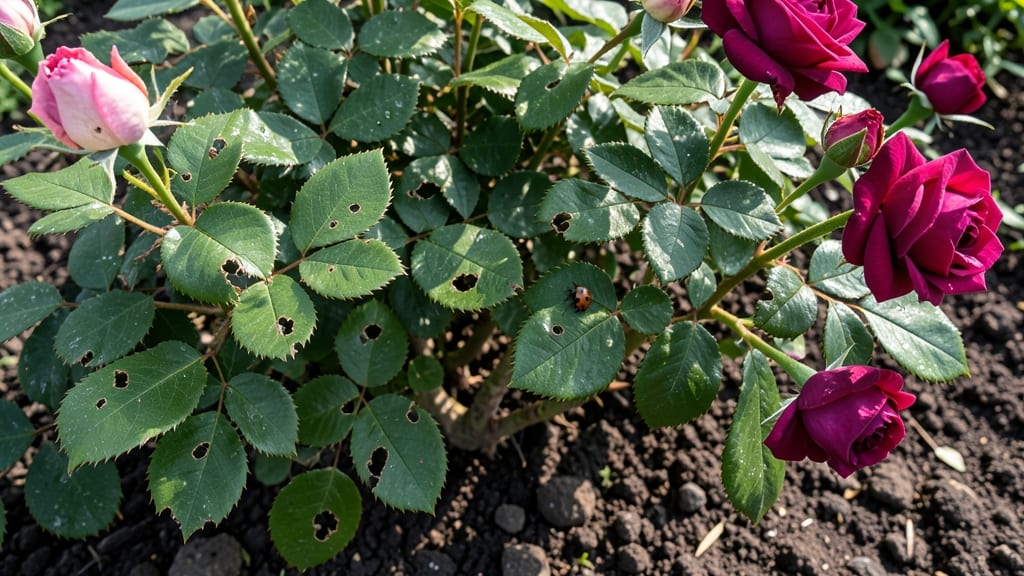
Your rose bush has holes in the leaves—and it’s not the wind. 🌿 Those jagged edges or skeletonized foliage mean hungry pests are at work, and the good news is you can stop them without harsh chemicals.
I’ve battled every type of leaf-chewer on roses, from Japanese beetles to sawfly larvae, and these organic fixes actually work.
The culprits? Japanese beetles leave behind shiny, half-eaten leaves, while sawfly larvae create windowpanes of chewed tissue. Fungal issues like black spot can mimic damage too, but real pests leave behind frass (tiny black pellets) and active movement. The key is acting fast—once the damage spreads, recovery takes weeks.
You’ll learn to handpick beetles, use neem oil sprays, and deploy row covers before they strike next season. My roses now stay lush and pest-free with weekly checks and a few simple tools. The best part? These methods protect pollinators while keeping your bushes thriving.
Whether you’re dealing with a sudden outbreak or just want to prevent future damage, this guide covers the exact steps I’ve used to save dozens of roses. No more guessing—just actionable fixes that work.
Hidden Culprits Behind Leaf Damage
When your rose bush starts showing up with holes in its leaves, it’s often a sign that something is feasting on it—whether it’s tiny insects, hungry larvae, or even larger pests. Understanding the why behind these holes is the first step to protecting your prized plant.
Below, we break down the most common causes, complete with scientific insights and actionable clues to help you identify the troublemaker.
Many pests are voracious leaf chewers, leaving behind jagged or smooth-edged holes as they dine. These insects don’t just nibble—they can devour entire leaves if left unchecked. Here’s what’s likely gnawing on your roses:
- Japanese Beetles 🪲
These shiny, copper-colored beetles are notorious for skeletonizing rose leaves—eating the soft tissue between veins while leaving the veins intact. Adults emerge in late spring to summer, and their larvae (grubs) also damage grass roots. Look for: Groups of beetles on leaves, especially in sunny areas.
- Rose Slugs (Sawfly Larvae) 🐛
Unlike actual slugs, these green, spiny larvae (called rose slugs) are the culprits. They chew leaves into a lace-like pattern or leave large, irregular holes. Unlike caterpillars, they lack prolegs (the small "legs" on the rear). Look for: Clusters of larvae on the underside of leaves, often near new growth.
- Caterpillars (Tent Caterpillars, Gypsy Moths, etc.) 🐛🌿
Caterpillars from moths like the gypsy moth or tent caterpillar can strip leaves overnight. They often web leaves together (tent caterpillars) or leave irregular, ragged holes. Look for: Silken tents, frass (poop pellets), or hair-like setae on leaves.
💡 Pro Tip: Shake leaves over a white tray—many chewing pests will drop to the ground, making them easier to spot and count!
Not all pests chew—they suck the sap from leaves, weakening them and making them more susceptible to holes from secondary damage (like wind or other insects). These pests often leave stippled, yellowed, or distorted leaves before holes appear:
- Aphids 🐜
These tiny, pear-shaped insects cluster on new growth and suck sap, causing leaves to curl, yellow, or develop sticky honeydew (which attracts sooty mold).
While they don’t chew holes, their damage weakens leaves, making them easier targets for other pests. Look for: Sticky residue on leaves or ants (which farm aphids for honeydew).
- Spider Mites 🕷️
Though they’re microscopic, these arachnids pierce cells to feed, causing tiny yellow or white speckles (stippling) that can expand into larger holes. Severe infestations lead to webbing on leaves. Look for: Fine webbing, especially on the undersides of leaves.
- Thrips 🪰
These slender, fragile insects scratch leaves while feeding, creating silver or bronze streaks that can turn into holes. They’re often found in flower buds and new shoots. Look for: Distorted flowers or leaves with a "sandpaper-like" texture.
🌡️ Warning: Sucking pests thrive in hot, dry conditions. If your roses are stressed (underwatered or over-fertilized), you’re more likely to see these invaders!
Not all leaf holes come from pests—sometimes, environmental factors weaken leaves, making them vulnerable to secondary damage. Here’s how:
- Wind or Hail Damage 🌪️
Strong winds or hail can tear leaves, creating irregular holes or ragged edges. Unlike pest damage, these holes lack chew marks or frass. Look for: Damage across multiple plants or in exposed areas.
- Fungal or Bacterial Infections 🍄
Diseases like black spot or powdery mildew create lesions or spots that can expand into holes as tissue dies. Overwatering or poor airflow encourages these issues. Look for: Dark spots with halos, white powdery patches, or leaf drop.
- Nutrient Deficiencies 🌱
Lack of nitrogen (yellowing leaves) or magnesium (interveinal chlorosis) weakens leaves, making them easier targets for pests or physical damage. Look for: Uniform yellowing between veins or stunted growth.
✨ Quick Check: Hold a leaf up to light—pest holes often have frass (poop) or silk trails, while environmental damage lacks these clues.
Now that you know who’s behind those holes, the next step is identifying and removing them organically. But first—grab your magnifying glass and inspect those leaves closely! 🔍
Fixing Chewed Rose Leaves Naturally
Now that you’ve identified the culprit behind those pesky holes in your rose bush leaves, it’s time to take action! The good news? Most chewing pests can be managed—even eliminated—with organic, chemical-free methods.
Below, we’ve mapped out targeted solutions for each common offender, along with prevention tips to keep your roses lush and hole-free.
Japanese beetles are aggressive feeders, and their larvae (grubs) also wreak havoc in lawns. Here’s how to outsmart them:
🔥 Step 1: Handpick Adult Beetles
- When? Early morning (they’re sluggish and easier to catch).
- How? Drop beetles into a soapy water bucket (1 gallon of water + 1 tbsp dish soap).
This kills them instantly. - Pro Tip: 💡 Wear gloves—their bright green bodies stain skin!
🍳 Step 2: Set Up Traps (Carefully!)
- DIY Trap: Fill a jar with beer or apple cider vinegar—beetles are drawn to the scent.
Bury the jar neck-deep in soil near your roses. - Store-Bought Trap: Use Japanese beetle traps, but place them far from your roses (they attract more beetles to your plants!).
👨🍳 Step 3: Apply Organic Repellents
- Neem Oil Spray: Mix 1 tbsp neem oil + 1 tsp mild soap + 1 quart water.
Spray every 3–5 days (avoid direct sun to prevent leaf burn). - Kaolin Clay: Sprinkle Surround WP (a clay-based powder) on leaves—it creates a barrier beetles dislike.
🌡️ Prevention for Next Season
- Plant beetle-resistant roses like ‘Knock Out’ or ‘Dr. Huey’.
- Encourage natural predators (birds, toads) by adding a small birdbath or shallow water source.
- Mulch with wood chips—beetles avoid mulched areas.
These squishy green larvae devour leaves in minutes. Here’s how to stop their feast:
🔪 Step 1: Scrape Off Larvae
- When? Late afternoon (they’re less active).
- How? Use a putty knife or gloved hands to scrape them into a bucket of soapy water.
🥘 Step 2: Use Row Covers or Netting
- For heavy infestations, drape fine mesh netting over the bush (secure with stakes).
- Pro Tip: 🌿 Check undersides of leaves—larvae hide there!
⏰ Step 3: Apply Bacillus thuringiensis (Bt)
- Bt (Bacillus thuringiensis) is a natural bacteria that kills caterpillars/sawfly larvae but harms no other plants or animals.
- How? Mix 1 tbsp Bt powder + 1 quart water, spray at dusk (avoids harming bees).
🎯 Prevention for Next Year
- Remove fallen leaves/debris (larvae pupate in soil).
- Plant marigolds or tansy nearby—their scent repels sawflies.
- Water deeply but less often—slugs thrive in damp soil.
These tiny pests rarely kill roses but can stress plants if left unchecked.
🔥 Step 1: Disrupt Their Cycle
- Leafcutter Bees: They cut neat holes (not ragged edges). Prune damaged leaves and remove them from the garden (don’t compost—they’ll return!).
- Spider Mites: Blast them off with a strong spray of water (early morning).
🍳 Step 2: Introduce Beneficial Insects
- Ladybugs & Lacewings: Release natural predators (available at garden centers).
- Predatory Mites: If mites are the issue, release Phytoseiulus persimilis (a mite-eating mite).
🌡️ Prevention Tips
- Keep roses well-watered (mites hate humidity).
- Avoid broad-spectrum pesticides—they kill beneficial insects too!
- Rotate spraying directions so mites don’t hide in crevices.
A healthy rose bush is less appealing to pests. Follow these quick care tips:
| Action | How to Do It | Why It Works |
|---|---|---|
| Prune regularly | Remove dead/diseased canes in early spring. | Improves airflow, reduces hiding spots. |
| Fertilize properly | Use balanced organic fertilizer (10-10-10 or compost tea). | Stronger leaves = less pest damage. |
| Mulch heavily | Apply 3–4 inches of mulch (wood chips or straw). | Keeps soil moist (deters mites) and cools roots. |
| Rotate planting spots | Move roses every 3–4 years if pests persist. | Breaks pest life cycles. |
- 💡 Check leaves daily—early detection = easier removal!
- 🌡️ Monitor weather—hot, dry spells worsen mite infestations.
- 🎯 Test soil pH—roses prefer 6.0–6.5; adjust with lime or sulfur if needed.
- 🌿 Grow companion plants like garlic, chives, or thyme—they repel many pests naturally.
With these targeted, organic solutions, your rose bush should bounce back stronger—and those pesky holes will become a thing of the past! 🌹💪
Frequently asked questions
Why do rose leaves get holes only on the edges?
Edge-only holes usually mean leafcutter bees or Japanese beetles are at work. Leafcutter bees cut precise, clean edges to build their nests, while beetles chew irregular patterns along leaf margins. Check for tiny, neat cuts or shiny green beetles clustered on leaves during sunny afternoons.
Can I use dish soap spray to kill rose pests?
Yes, but use it carefully! Mix 1 teaspoon mild dish soap + 1 quart water and spray directly on pests (especially aphids, spider mites, or sawfly larvae). Reapply every 3-5 days—it disrupts their protective coatings. Avoid spraying in direct sunlight to prevent leaf burn, and always test on a small area first.
How long does it take for rose leaves to regrow after pest damage?
Healthy rose bushes can regrow leaves in 2-4 weeks if the damage isn't severe. Prune heavily damaged leaves to redirect energy to new growth. Keep soil moist (but not soggy) and fertilize with balanced organic fertilizer to speed recovery. Young shoots appear first at the tips of canes—protect these with row covers if pests return.
Are there any rose varieties that resist leaf-chewing pests?
Knock Out® roses and Dr. Huey roses are bred for disease and pest resistance. Other good choices include Earth-Kind roses (like 'Belinda's Dream') which thrive with minimal intervention. Even susceptible varieties benefit from regular pruning and companion planting with garlic or thyme to deter pests naturally.
What should I do if my roses get holes AND black spots?
You're dealing with a double threat—pests AND fungal disease. First, treat the pests with neem oil or Bt spray. Then address black spot by removing infected leaves and applying copper fungicide or a baking soda spray (1 tbsp baking soda + 1 quart water + few drops of soap). Improve airflow with pruning and avoid overhead watering to prevent future outbreaks.