
Pruning
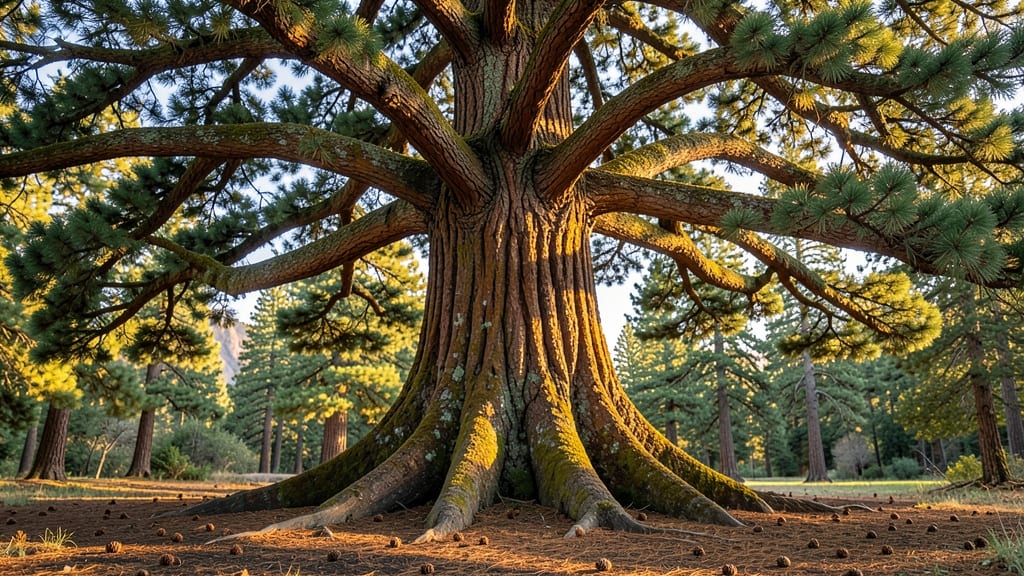
The largest bush in the world is the King Clone creosote bush (Larrea tridentata), spanning over 11,700 years old and covering 118 acres in the Mojave Desert, California. Its interconnected root system sustains a single genetic organism.
The King Clone isn't just a bush—it's a living testament to nature's resilience. 🌵 This ancient plant thrives thanks to its clonal reproduction, where individual stems sprout from the same root system, creating a genetically identical super-organism.
Unlike trees that rely on height, the creosote bush spreads horizontally, forming a sprawling "bush" that can stretch for miles. Its drought-resistant adaptations and ability to survive extreme desert conditions make it a true survivor, proving that size isn't always about vertical growth.
What's even more fascinating is how this bush defies conventional plant biology.
Scientists consider it a single organism because its roots merge underground, sharing nutrients and water across its massive expanse. 💫 This interconnectedness allows it to outlive most species, making it a rare example of longevity in the plant kingdom.
If you're curious about other giant bushes, the Pando aspen grove in Utah is another mind-blowing example—though it's technically a colony of quaking aspens.
💡 In This Article
- How the Creosote Bush Achieves Massive Growth
- Where to Find Other Giant Bush Species Globally
How the creosote bush achieves massive growth
The King Clone creosote bush's record-breaking size stems from its unique clonal reproduction system. Unlike most plants that grow from seeds, creosote bushes reproduce asexually through underground stems called rhizomes.
These rhizomes create new shoots that remain genetically identical to the parent plant, forming a connected network. 🌿 Over centuries, this process allows the bush to expand horizontally rather than vertically, creating its sprawling form.
This interconnected root system isn't just a growth strategy—it's a survival mechanism. The roots merge underground, forming a single organism that shares nutrients and water across its massive expanse. Scientists estimate the King Clone covers 118 acres, with roots extending up to 100 feet deep to access groundwater.
This underground network allows the bush to survive extreme desert conditions, including temperatures exceeding 120°F and minimal rainfall.
The bush's drought-resistant adaptations are equally impressive. Its small, waxy leaves reduce water loss through transpiration, while its deep root system taps into underground moisture sources. The creosote bush also produces a natural sunscreen—larreol—a chemical that protects its leaves from intense UV radiation.
This combination of traits allows it to thrive where most plants would perish, making it a true desert giant. 💧
What makes this bush truly unique is its longevity. The King Clone has been growing for over 11,700 years, making it one of the oldest known living organisms on Earth. This longevity isn't just about age—it's about the bush's ability to continuously regenerate through its clonal network.
Each new stem that sprouts from the roots is part of the same organism, ensuring its survival across millennia.
For comparison, consider that most trees rely on vertical growth to reach their maximum size. The King Clone, however, achieves its massive scale through horizontal expansion.
This growth pattern allows it to cover vast areas while maintaining a low profile, avoiding the wind and temperature extremes that would threaten taller plants. The result is a bush that defies conventional notions of plant growth and size. 🌵
This interconnected growth strategy also makes the King Clone resilient to damage. If part of the bush is destroyed—by fire, drought, or human activity—the remaining roots can quickly regenerate new stems.
This ability to recover ensures the bush's survival even in the harshest conditions. It's a perfect example of nature's ingenuity in adapting to extreme environments. 🌍