
Pruning
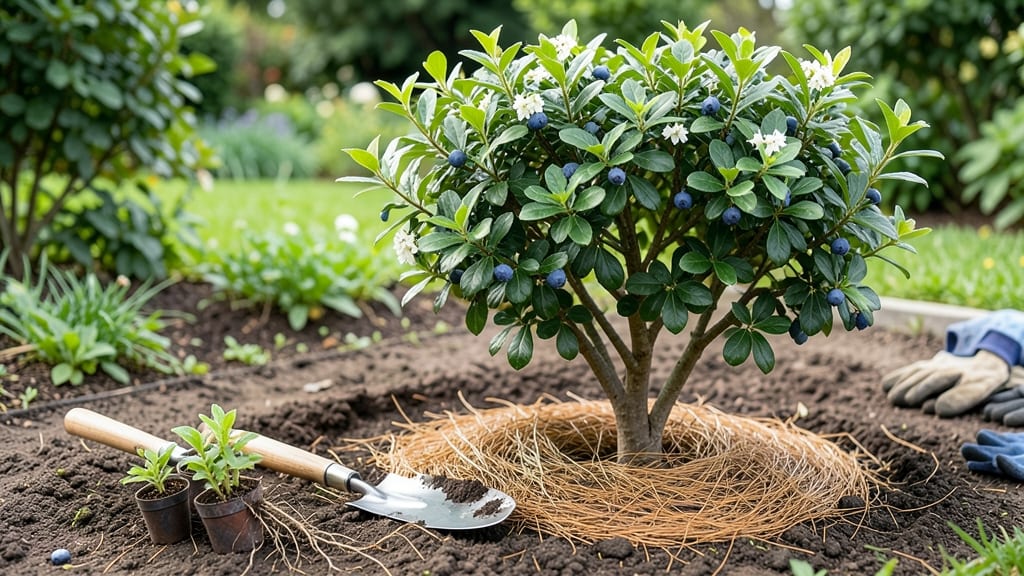
Starting a blueberry bush from bare root feels intimidating until you know the secrets. 🌱 The first year sets the foundation for decades of harvests, and I've learned the exact steps that turn floppy roots into strong plants ready for fruit.
Most beginners fail at soil prep or spacing—here's where I show you the simple way to get it right.
You'll need well-draining soil with a pH between 4.5 and 5.5 (yes, that's acidic), a sunny spot with at least 6 hours of light daily, and a 5-foot diameter planting area for each bush.
Southern varieties handle heat better, while northern types thrive in cooler climates—choose based on your last frost date. The real magic happens when you mix in 2-3 pounds of peat moss or sulfur per hole to acidify the soil naturally.
By planting at the right depth (roots covered but crown exposed) and watering deeply twice a week for the first month, you'll see new growth within 4-6 weeks. Mulch with 3-4 inches of pine needles to maintain acidity and keep weeds away.
First harvests arrive in 2-3 years, but proper care now means pounds of berries every summer after that.
This method works for both backyard gardens and containers (use 15-gallon pots for dwarf varieties). The key is patience—blueberries don't rush, but they reward careful starters with years of easy picking. Let's get those roots in the ground!
📚 In This Guide
- What you need
- Instructions
- Tips and common mistakes
- Wrapping up and next steps
What you need
- ● Blueberry plants: 1-3 bare-root or container-grown bushes (choose southern highbush, northern highbush, or lowbush varieties based on your climate zone).
- ● Well-draining soil: Mix peat moss or pine bark fines (50%) with native soil (50%) for acidic soil (pH 4.5–5.5). Test your soil’s pH with a soil test kit (available at garden centers).
- ● Organic mulch: 2–3 inches of pine needles, wood chips, or straw to retain moisture and acidify soil.
- ● Slow-release fertilizer: 10-10-10 or acid-loving plant fertilizer (follow package instructions for dosage).
- ● Watering can or hose: With a gentle spray nozzle to avoid disturbing roots.
- ● Pruning shears: Sharp, sterilized shears for trimming (6-inch blades work best).
- ● Garden gloves: A pair of cut-resistant gloves to protect your hands.
- ○ Staking (optional but helpful): 3–4 bamboo stakes (4–5 feet tall) and twist ties if planting in windy areas.
- ● Epsom salt: 1 tablespoon per plant annually to boost magnesium (great for acidic soil).
- ● Compost: Well-aged leaf mold or composted manure to enrich soil.
- ● Drip irrigation system: For consistent moisture (especially in dry climates).
- ● Bird netting: To protect ripe berries from hungry birds! 🐦
- ● Soil acidifier: Like sulfur or cottonseed meal if your soil isn’t acidic enough.
Step-by-Step instructions for starting a blueberry bush
Here's my foolproof method for getting your blueberry bush off to the strongest start—no gardening degree required.
🌱 Step 1: Prepare the Planting Hole and Soil
Blueberries thrive in acidic soil with a pH between 4.5 and 5.5. If your soil isn't naturally acidic, amend it with peat moss or sulfur before planting. Dig a hole twice as wide as the root ball but only as deep—you'll see the top of the roots clearly visible when the plant sits properly. The hole should sit 3-5 feet apart from other blueberry bushes to allow for mature spread.
Loosen the sides of the hole with a shovel to encourage root penetration. Avoid compacting the native soil—blueberry roots need air and organic matter to establish quickly. If your soil drains poorly, mix in sand or perlite to improve aeration. The goal is a fluffy, well-draining mix that holds moisture without becoming soggy.
🌿 Step 2: Soak the Bare Root and Position the Plant
Before planting, soak the bare root in lukewarm water for 15-20 minutes to rehydrate the roots. This step is critical—dry roots struggle to establish and can take weeks to recover. While the roots soak, prepare a mound of amended soil in the center of the hole. The top of the root ball should sit 1-2 inches above ground level—this prevents water from pooling around the stem and causing rot.
Place the plant in the hole so the roots spread naturally downward. Fill the hole halfway with soil, then water deeply to settle it. This prevents air pockets from forming around the roots. Gently firm the soil around the base with your hands—don't pack it down, just ensure it holds the plant upright. The plant should wobble slightly but not fall over.
☀️ Step 3: Mulch and Water for Establishment
Spread 3-4 inches of pine bark mulch around the base of the plant, keeping it 6 inches away from the stem to prevent rot. Pine bark slowly releases acidity as it breaks down, which helps maintain the ideal soil pH. Water the plant deeply right after mulching—this helps settle the mulch and encourages roots to grow outward into the moist soil.
Keep the soil consistently moist for the first 4-6 weeks, but avoid waterlogging. Blueberry roots are shallow and sensitive to both drought and excess moisture. You'll know you're doing it right when the soil feels like a wrung-out sponge—damp but not dripping. After establishment, water 1-2 times per week, depending on rainfall, to encourage deep root growth.
✂️ Step 4: Prune and Fertilize for First-Year Growth
In the first year, focus on root and shoot development rather than fruit production. Prune any dead, damaged, or crossing branches using clean, sharp pruners. Cut just above a bud or lateral branch to encourage bushy growth. Avoid heavy pruning—blueberries are sensitive to stress, and removing too much foliage can weaken the plant before it's established.
Apply a balanced, slow-release fertilizer (like 10-10-10) in early spring and again in midsummer. Blueberries don't need heavy feeding, but a light application helps them build energy for future fruiting. Watch for new growth in the first 6-8 weeks—this is your sign the plant is adapting well. By the end of the first year, you should see a sturdy framework of branches ready for next year's harvest.
Tips & tricks for perfect blueberry bush planting
Starting a blueberry bush is simpler than you think—these key insights will help you avoid common pitfalls and set your plant up for long-term success.
Soil Acidification: Test your soil's pH before planting—most home test kits are affordable and accurate. If your soil measures above 5.5, you'll need to amend it with peat moss or sulfur as specified in Step 1. I've seen beginners skip this step only to have their plants struggle for years. The goal is to create that perfect acidic environment (4.5-5.5) where blueberries truly thrive. For faster results, mix in 1-2 pounds of sulfur per 100 square feet and retest in 2-3 months.
Root Hydration: That 15-20 minute soak in lukewarm water during Step 2 is non-negotiable. I learned this the hard way after planting dry roots that took weeks to recover. Use a bucket large enough to fully submerge the roots—you'll know it's ready when tiny bubbles form around the roots. For extra insurance, add a handful of mycorrhizal fungi to the soaking water, which helps roots establish symbiotic relationships with soil microbes.
Mulching Technique: When applying that 3-4 inches of pine bark mulch in Step 3, create a slight mound around the base rather than piling it directly against the stem. This encourages roots to spread outward where they'll find moisture and nutrients. The mulch should look like a volcano shape, wider at the base and tapering toward the center. This also prevents that dreaded "mulch volcano" that can suffocate your plant.
Watering Wisdom: The 4-6 week establishment period requires vigilance. I recommend using a moisture meter to check soil dampness—aim for 30-40% moisture. If you're unsure, the "wrung-out sponge" test works: squeeze a handful of soil; it should hold together but not drip. For container-grown blueberries, water when the top inch feels dry, as they dry out faster than in-ground plants.
Pro Tips for Start A Blueberry Bush
- Starting a blueberry bush is simpler than you think—these key insights will help you avoid common pitfalls and set yo...
- Soil Acidification: Test your soil's pH before planting—most home test kits are affordable and accurate. If your soil...
- Root Hydration: That 15-20 minute soak in lukewarm water during Step 2 is non-negotiable. I learned this the hard way...
Frequently asked questions
Got questions about growing your own blueberry bush? You’re not alone—here are some of the most common ones!
Whether you’re a beginner or just need a quick refresher, these answers will help you avoid pitfalls and grow thriving bushes.
How long does it take for a blueberry bush to produce fruit?
A newly planted blueberry bush typically takes 2–3 years to bear fruit, though some varieties may take up to 5 years, especially if grown from bare root. Patience is key! Focus on proper care—watering, mulching, and soil pH—during the first year to speed up fruiting. Pro tip: Use a soil pH tester (aim for 4.5–5.5) to ensure your plant gets the acidic conditions it loves!
Can I plant a blueberry bush in the fall or winter?
Yes! Fall (after leaf drop but before hard frost) and early winter are ideal for planting bare-root blueberries. The cooler temps help roots establish before spring growth. Just avoid planting in freezing conditions—wait until the ground isn’t rock-hard. If you must plant in winter, cover the roots with mulch to protect them.
Do blueberry bushes need a pollinator to produce fruit?
Nope! Blueberries are self-pollinating, meaning a single bush can produce fruit on its own. However, planting multiple varieties nearby (like ‘Bluecrop’ and ‘Duke’) can boost yields by attracting pollinators like bees. Bonus: Different varieties also extend your harvest season!
What are the most common pests or diseases for blueberry bushes?
Watch for blueberry maggots (tiny white larvae in fruit), spider mites (yellowing leaves), and fungal diseases like powdery mildew (white powder on foliage). Preventative care helps: Prune for airflow, water at the base (not leaves), and use organic neem oil if pests appear.
Can I grow blueberries in containers or just in the ground?
Dwarf varieties (like ‘Top Hat’ or ‘Peach Sorbet’) thrive in 5-gallon containers with acidic pH soil (mix peat moss and perlite). Just ensure the pot has drainage holes and replant every 2–3 years as roots outgrow the space. Urban gardeners, rejoice!
Wrapping up and next steps
Starting a blueberry bush from bare root is a rewarding journey that leads to a bountiful harvest of sweet, juicy berries! By following these 4 simple steps—selecting the right variety, preparing the soil, planting with care, and nurturing with patience—you’ll set your plant up for long-term success. 🌱✨
Now that you’re armed with the know-how, take the next step: grab your gardening tools, mark your planting spot, and get ready to watch your blueberry bush grow into a thriving, berry-producing powerhouse. Happy planting—your future breakfast will thank you! 💙