
Companion Plants
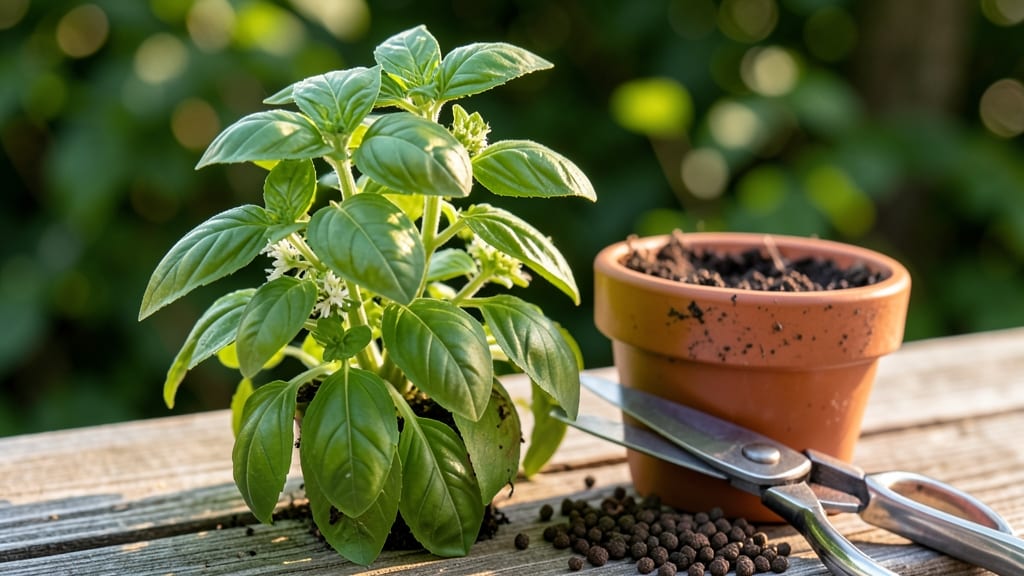
To make basil plants bushier, pinch off the top sets of leaves when stems reach 6 inches tall, encouraging lateral growth. Prune regularly to maintain shape and promote thicker foliage while avoiding flower buds.
Pinching basil plants triggers a natural growth response by redirecting energy from vertical growth to developing side branches. 🌱 This technique works because removing the apical bud (the topmost growth point) signals the plant to produce new shoots from leaf nodes below, creating a fuller, denser plant.
The key is consistency—pruning every 2-4 weeks during the growing season keeps your basil lush and productive.
For best results, use clean fingers or sharp scissors to avoid damaging stems. Always prune just above a leaf node where new growth will emerge, and never cut more than one-third of the plant at once.
This method not only boosts foliage but also delays flowering, keeping your basil flavorful and ready for harvest.
💡 In This Article
- Why Pinching Basil Promotes Bushier Growth
- Step-by-Step Basil Pruning Schedule for Maximum Foliage
Why pinching basil promotes bushier growth
When you pinch off the top sets of leaves from your basil plant, you're essentially interrupting its natural vertical growth pattern.
This triggers a hormonal response in the plant's meristem cells, where growth hormones like auxin (a plant growth regulator) redistribute from the apical bud (the topmost growing point) to the leaf nodes below.
This redistribution stimulates dormant buds along the stem to wake up and grow into new side shoots, creating that coveted bushier shape. 🌿
The science behind this is fascinating: auxin normally suppresses the growth of lateral buds to ensure the plant grows upward toward light. By removing the apical bud, you eliminate this suppression, allowing those side buds to flourish.
Think of it like redirecting traffic—when the main highway (the apical bud) is closed, the side roads (lateral buds) get more attention and start developing rapidly.
This process is most effective when the plant has reached about 6 inches tall, as this is when the apical bud is fully established but hasn't yet started flowering.
Timing is everything when it comes to pinching basil. If you prune too early, the plant may not have enough energy to support the new lateral growth.
Conversely, waiting too long allows the plant to become leggy or even start flowering, which diverts energy away from leaf production and toward seed development. Flowering basil also has a more bitter taste, so preventing this is crucial for both aesthetics and flavor.
The ideal time to pinch is during the plant's active growing season, typically between spring and early fall, when temperatures are consistently above 50°F.
What most gardeners don't realize is that the frequency of pinching also affects the plant's density. Regular pruning every 2-4 weeks encourages continuous branching, while infrequent pruning can lead to uneven growth.
This is because each time you pinch, you're essentially giving the plant a "growth reset," prompting it to focus on developing new shoots rather than just elongating.
For example, if you pinch your basil plant when it reaches 6 inches, then again when it reaches 12 inches, you'll notice a significant increase in the number of side branches compared to a plant that's only pinched once.
There's also a sensory aspect to this process: the aroma of freshly pinched basil is incredibly invigorating. The act of breaking off the top leaves releases volatile oils that intensify the plant's fragrance, making your garden smell like a sun-drenched Italian piazza.
This isn't just a visual transformation—your basil will also taste more vibrant and aromatic, as the plant redirects its energy toward producing more essential oils in the leaves. 🌱
The key to success is consistency. If you're growing basil in containers, which is common for many home gardeners, you'll need to pinch more frequently because the plant's growth is more concentrated. In-ground basil, on the other hand, may require less frequent pruning due to its larger root system.
Regardless of the growing method, always use clean tools or your fingers to avoid introducing diseases to the plant. The goal is to encourage healthy, dense growth without causing stress to the basil.