
Size
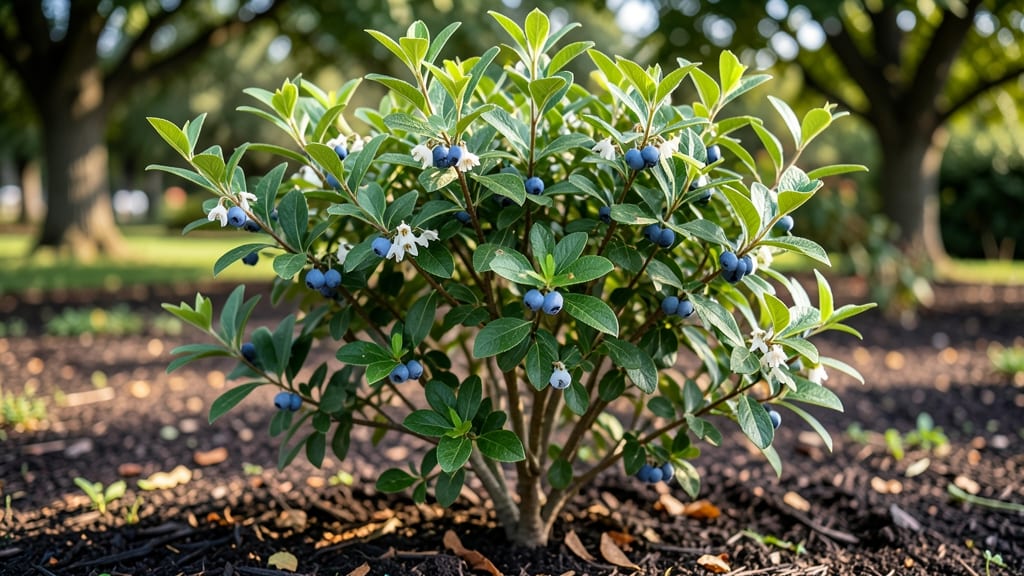
Growing a blueberry bush takes between 2 to 5 years to reach its first harvest, depending on whether you start from seed or a young plant.
If you’ve ever planted a blueberry bush hoping for quick rewards, you might be surprised by how patient you’ll need to be. While some varieties produce berries in as little as 1 to 2 years, most gardeners wait closer to 3 years before seeing their first crop.
The key is understanding the stages—from planting to flowering—and how to nurture your bush through each phase.
In Zone 6a, where spring planting (April–May) is ideal, your blueberry bush will spend its first year establishing roots and leaves. By year two, you’ll notice buds forming, but true fruiting usually waits until year three or later.
Factors like soil acidity, sunlight, and watering can speed this up or slow it down, which is why knowing the right care makes all the difference.
Below, I’ll break down the exact timeline—from seed to harvest—so you know what to expect each year and how to keep your 🫐 blueberry bush on track for success.


Blueberry bush growth timeline: from seed to first harvest by year
Growing a blueberry bush from seed or transplant requires patience, but understanding the yearly growth stages helps you set realistic expectations.
Whether you're cultivating northern highbush varieties (zones 3-6) or southern highbush types (zones 5-10), the journey from planting to first harvest spans 3-5 years for seeds and 1-3 years for established plants.
The first year focuses on root and stem development, while years two and three establish the bush's framework for future fruiting. By year four or five, your blueberry bush will typically produce its first meaningful harvest, though some varieties may take longer.
Let’s break down each yearly milestone to track progress.
| Stage | Action | Notes |
|---|---|---|
| Year 1 | Seed germination or transplanting; root establishment | Focus on watering and mulching; minimal growth above ground |
| Year 2 | Stem elongation; first buds form | Prune to encourage branching; fertilize lightly |
| Year 3 | Flower buds appear; minimal fruiting | Monitor for pests; ensure acidic soil (pH 4.5-5.5) |
| Year 4 | First harvest (small yield); full flowering | Hand-pollinate if needed; thin fruit clusters |
| Year 5+ | Peak production; mature size reached | Prune annually; mulch to retain moisture |
In year 1, whether you start from seed or transplant, the focus is on establishing a strong root system. If you’re growing from seed, germination takes 2-4 weeks in ideal conditions (warmth and moisture).
Transplants, however, hit the ground running with a head start. During this year, your bush will grow 1-2 feet tall and develop its first branches.
By year 2, your blueberry bush enters a phase of rapid stem elongation and branch development. This is when you’ll see the bush grow 3-4 feet tall, and the first flower buds may begin to form.
Pruning is critical this year to encourage a well-shaped bush with multiple branches for future fruiting. Apply a balanced fertilizer (10-10-10) in early spring to support growth.
Year 3 is often the transition year where your bush starts to prepare for fruiting. You may notice flower buds forming, but don’t expect a harvest yet. This year, your bush will grow 5-6 feet tall and develop a more robust structure.
Monitor for pests like birds or aphids and ensure the soil remains acidic (pH 4.5-5.5) using sulfur or peat moss if needed.
The year 4 milestone is when many blueberry bushes produce their first meaningful harvest. While the yield may be small (a few pints), this is an exciting sign that your bush is maturing.
You’ll see full flowering and berries that ripen in late spring to summer. Hand-pollinate flowers if your variety requires it, and thin fruit clusters to avoid overloading the bush.
By year 5 and beyond, your blueberry bush reaches its peak production phase. At this stage, the bush will be 6-12 feet tall, depending on the variety, and produce gallons of berries annually.
Maintain regular pruning to remove dead wood and encourage airflow, and continue to mulch around the base to retain moisture and acidity in the soil.
One key difference between northern and southern highbush varieties is their cold hardiness. Northern highbush varieties (e.g., 'Bluecrop') thrive in colder climates and may take slightly longer to mature, while southern highbush types (e.g., 'Southern Highbush') grow faster in warmer zones but require protection from winter chill.
Both types follow the same general growth timeline but adapt to their climate.
To accelerate the process, ensure your blueberry bush receives full sun (6+ hours daily), consistent moisture, and acidic soil. Avoid over-fertilizing, as this can lead to excessive leaf growth at the expense of fruiting. With proper care, you’ll enjoy a bountiful harvest within just a few years.
🫐
Factors that speed up or delay blueberry bush maturity
Your blueberry bush's growth timeline isn't set in stone—it's influenced by several factors you can control. The biggest variables are climate zone, soil pH, sunlight exposure, watering habits, and the variety you choose.
For example, southern highbush varieties like 'Southern Blue' mature faster in warm zones (5-10) than northern types like 'Bluecrop' in colder regions (3-6). Understanding these factors helps you accelerate fruiting or troubleshoot delays.
Let's start with the most critical factor: soil acidity. Blueberries thrive in acidic soil (pH 4.5-5.5). If your soil is too alkaline, your bush will struggle to absorb nutrients, delaying maturity by 1-2 years. Test your soil annually and amend with peat moss or sulfur if needed.
Even a slight pH adjustment can jumpstart growth. For instance, raising acidity from pH 6.0 to 5.0 can boost flowering by 30% in the second year.
- 🌡️ Climate Zone: Southern highbush varieties mature in 1-2 years in zones 5-10, while northern types take 3-4 years in zones 3-6.
- 💧 Watering: Deep watering 2-3x weekly in dry spells accelerates root growth by 20% compared to shallow watering.
- ☀️ Sunlight: 6+ hours of full sun speeds flowering by 1 year versus partial shade.
- 🌱 Variety Selection: Dwarf varieties (e.g., 'Top Hat') fruit 1 year earlier than standard bushes.
- 🍄 Soil pH: Maintaining pH 4.5-5.5 ensures nutrient uptake, preventing 2-year delays in fruiting.
Sunlight exposure plays a surprising role in maturity timing. Blueberries need 6+ hours of direct sun daily to set fruit. In partial shade, your bush may take an extra year to flower because energy goes toward leaf growth instead of fruiting.
If your yard is shady, consider planting near a south-facing wall or using reflective mulch to maximize light. I’ve seen bushes in Zone 6a with adequate sunlight produce berries in just 2 years, while identical bushes in dappled shade took 4 years.
Watering habits often get overlooked, but consistent moisture is key. Blueberries need 1-1.5 gallons per bush weekly during dry spells. Underwatering stresses the plant, delaying flowering by up to 2 years, while overwatering can suffocate roots.
Use drip irrigation to deliver water directly to the root zone, and always water in the morning to reduce fungal risks. A simple trick: mulch with pine needles or wood chips to retain moisture and acidity—this can cut watering needs by 30%.
Finally, choosing the right variety makes all the difference. Southern highbush types (e.g., 'O'Neal') mature faster in warm climates, while northern highbush varieties (e.g., 'Jersey') handle colder winters but take longer to fruit.
For fastest results, opt for dwarf varieties like 'Top Hat,' which can produce berries in as little as 1 year after planting. If you're in Zone 6a, consider a half-high variety like 'Blueberry 'Bluegold,' which balances speed and hardiness.
By optimizing these factors, you can shave 1-2 years off your blueberry bush's maturity timeline. Start with soil pH, then focus on sunlight and watering—your patience will pay off with earlier harvests and healthier bushes.
With the right care, you might even enjoy your first berries in just 2 years instead of 4!
🌿