
How To
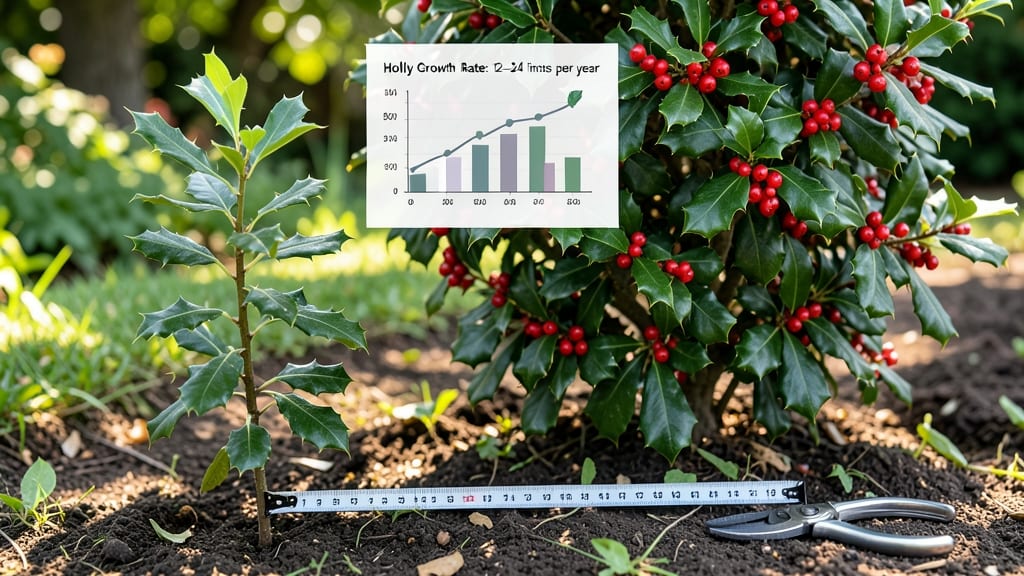
How fast do holly bushes grow depends on the variety, with some thriving at 12 to 24 inches per year under ideal conditions.
If you're dreaming of a lush, evergreen hedge or a stunning focal point in your garden, knowing how quickly holly bushes grow can help you plan for success—without waiting years for that perfect landscape.
American holly, for example, typically grows 1 to 2 feet annually, while dwarf varieties like Blue Prince Holly can reach maturity in just 3 to 5 years. The right soil, sunlight, and pruning can make a big difference in how quickly your 🌿 thrives.
In this guide, I’ll break down growth rates by variety, share tips to speed up growth, and walk you through what to expect year by year—so you can enjoy your holly bushes faster.


Holly bush growth rates by variety: fastest-growing types for quick landscaping
If you're looking to create a privacy hedge or add year-round structure to your landscape, holly bushes are an excellent choice—but not all varieties grow at the same pace. Some holly types can add 3-6 feet per year under ideal conditions, while others take decades to reach their full potential.
The key lies in selecting the right variety for your climate zone and understanding how soil quality, sunlight exposure, and pruning habits accelerate growth.
For example, American Holly (Ilex opaca) is a classic but slower-growing option, typically adding just 12-24 inches annually. In contrast, Blue Prince Holly and Sky Pencil Holly can grow 2-3 times faster—making them perfect for quick landscaping projects.
Let’s break down the fastest-growing holly varieties and what you can realistically expect from each in your garden.
| Variety | Annual Growth Rate (inches) | Mature Height (feet) | Growth Speed Ranking | Best For |
|---|---|---|---|---|
| Blue Prince Holly | 24-36 | 12-15 | ⚡ Fastest | Hedges, privacy screens |
| Sky Pencil Holly | 18-24 | 10-12 | ⚡ Fast | Narrow hedges, vertical accents |
| Dwarf English Holly | 12-18 | 3-5 | ⚡ Moderate | Foundation plantings, containers |
| American Holly | 12-24 | 20-30 | 🐢 Slow | Specimen plants, wildlife habitats |
| Burford Holly | 18-24 | 15-20 | ⚡ Fast | Formal hedges, topiary |
From the table above, you can see that Blue Prince Holly and Sky Pencil Holly are the fastest growers, making them ideal if you need a quick privacy screen or structured hedge.
These varieties can reach mature height in just 5-7 years with proper care, while slower growers like American Holly may take 15-20 years to reach their full potential. The difference often comes down to genetics, but soil fertility and watering consistency play huge roles too.
One common misconception is that all holly bushes thrive in the same conditions. In reality, English Holly varieties often grow faster in cooler climates (USDA Zones 5-7), while American Holly prefers warmer, humid zones (Zones 5-9).
If you live in a hot, dry climate, opt for drought-tolerant varieties like Burford Holly, which can handle less frequent watering once established. Always check your local USDA hardiness zone before selecting a variety to avoid disappointment.
Another factor that significantly impacts growth speed is soil pH. Holly bushes prefer slightly acidic soil (pH 5.0-6.5). If your soil is too alkaline, the plant may struggle to absorb nutrients, slowing its growth.
You can test your soil with a home pH kit (available at garden centers) and amend it with peat moss or sulfur if needed. I’ve found that adding a 2-inch layer of compost to the planting hole can give holly bushes a growth boost in their first year.
Light exposure also plays a critical role. While holly bushes tolerate partial shade, they grow 20-30% faster in full sun (6+ hours daily). However, in hot climates, afternoon shade helps prevent leaf scorch.
If you’re planting in a shady spot, choose dwarf varieties like Dwarf English Holly, which are more adaptable to low-light conditions. Pro tip: Plant holly bushes in early spring or fall to give roots time to establish before extreme heat or cold sets in.
Pruning habits can either accelerate or stunt growth. Many gardeners make the mistake of pruning too late in the season, which encourages tender new growth that won’t harden off before winter. Instead, prune holly bushes in late winter or early spring (just before new growth begins).
This timing ensures the plant has plenty of time to recover and grow before the next dormant season. For hedge-shaped holly bushes, use a sharp pair of shears to make clean cuts just above a leaf node.
Let’s talk about fertilization strategies, which can make a noticeable difference
How to maximize holly bush growth speed: pruning, soil, and care tips
Want your holly bushes to grow faster than the average 12-24 inches per year? The secret lies in smart care practices that boost their natural vigor. Holly bushes thrive when given the right conditions, but many gardeners unknowingly slow growth with poor soil, wrong pruning times, or inconsistent watering.
Let’s fix that with actionable tips to turn your holly into a fast-growing star.
First, focus on soil quality—holly bushes crave well-draining, slightly acidic soil with a pH between 4.5 and 6.0. Amend your garden soil with compost or peat moss to improve fertility and drainage.
If your soil is heavy clay, consider planting in raised beds or containers where you can control the mix. Healthy roots mean faster growth above ground, so don’t skip this step.
Next, prune at the right time—late winter or early spring before new growth begins. Avoid heavy pruning in fall, as it can stress the plant before winter dormancy.
Use clean, sharp shears to make cuts just above a bud or branch junction. Never prune more than 1/3 of the bush at once, or you’ll stunt growth instead of encouraging it.
Holly bushes grow 2-3x faster with full sun exposure (6+ hours/day) in cooler climates. In hotter zones, provide morning sun + afternoon shade to prevent stress. Mulch with 2-3 inches of organic mulch (like pine bark) to retain moisture and regulate soil temperature.
Watering plays a crucial role too. Young holly bushes need deep watering 2-3 times per week during their first year, while established plants thrive on 1 inch of water per week.
Water at the base of the plant in the morning to reduce evaporation and fungal risks. Overwatering is just as harmful as underwatering—holly bushes hate soggy roots.
Don’t forget about fertilization. Apply a balanced 10-10-10 fertilizer in early spring and again after flowering (if applicable). For a growth boost, use a slow-release fertilizer in the planting hole at installation. Avoid high-nitrogen fertilizers, which can lead to leafy growth at the expense of sturdy stems.
Finally, watch for common mistakes that slow growth: planting too deep, using contaminated soil, or ignoring pests like spider mites. Regularly inspect your bushes and treat issues early. With these tips, your holly bushes will grow 12-36 inches per year—turning your garden vision into reality faster than you’d expect!