
Planting
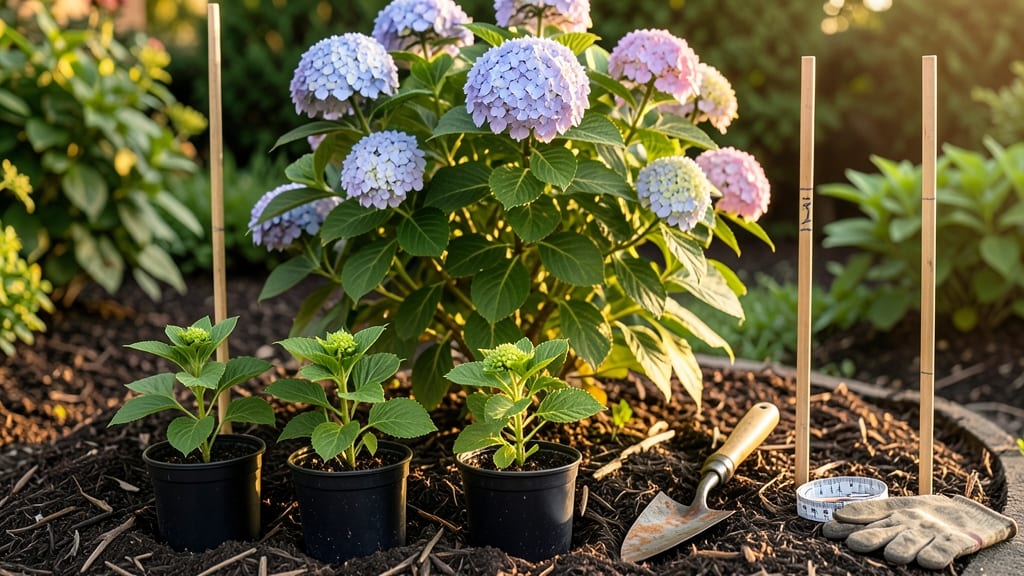
To plant hydrangea bushes properly, space compact varieties like 'Endless Summer' 18 to 24 inches apart, while larger types such as oakleaf or panicle hydrangeas need 5 to 8 feet between plants. This spacing ensures adequate root development and airflow for healthy growth.
Proper spacing prevents competition for nutrients and water, which directly impacts bloom size and plant longevity. 🌿 For example, mophead hydrangeas (like 'Nikko Blue') often reach 3-5 feet wide at maturity, so cramming them too close leads to smaller flowers and increased disease risk.
Always verify the mature width on your plant tag—some dwarf varieties can handle closer spacing, while vigorous growers need extra room to thrive.
Another key factor is airflow. Hydrangeas are prone to fungal issues like powdery mildew, and tight spacing traps moisture against leaves. I’ve seen landscapes where overcrowded panicle hydrangeas produced fewer blooms because their centers stayed damp too long.
If you’re planting in windy areas or on slopes, increase spacing by 10-20% to account for natural drift during growth.
💡 In This Article
- Hydrangea Spacing by Variety: Compact vs. Large Bush Types
- Pro Tips for Hydrangea Planting Spacing Mistakes to Avoid
Hydrangea spacing by variety: compact vs. large bush types
The spacing needs of hydrangeas vary dramatically based on their growth habits and root systems. Compact varieties like 'Endless Summer' hydrangeas (mophead type) typically mature between 3 to 4 feet wide, which is why they thrive with 18 to 24 inches of space.
Their fibrous root systems spread horizontally but stay relatively contained, making them ideal for small gardens or container plantings. 🌿 In contrast, oakleaf hydrangeas can reach 5 to 6 feet wide at maturity, requiring 5 to 6 feet of spacing to prevent root competition and ensure proper airflow through their larger foliage.
Panicle hydrangeas, such as 'Limelight' or 'Little Lime', present another dimension of spacing considerations.
The 'Little Lime' variety stays compact at 3 to 4 feet wide, but its taller stature (up to 6 feet) means it needs 4 to 5 feet of spacing to avoid shading out neighboring plants.
Meanwhile, larger panicle types like 'Grandiflora' can spread 8 to 10 feet wide, demanding 6 to 8 feet between plants. This wider spacing allows their extensive root systems to access water and nutrients without competing with other plants.
Root spread is often underestimated when planning hydrangea placement. Most hydrangea roots extend 18 to 24 inches beyond the plant's canopy at maturity, which is why the general rule is to space plants at least half their mature width apart.
For example, a 6-foot-wide oakleaf hydrangea should be planted 3 feet from other plants and structures.
This spacing prevents root girdling and ensures each plant has enough soil volume for optimal growth. 🌱 In small urban gardens, consider dwarf varieties like 'Mini Penny' (mophead) or 'Quick Fire' (panicle), which mature at 2 to 3 feet wide and can be spaced 12 to 18 inches apart.
Visualizing these differences helps with garden planning. Imagine a 5-foot-wide oakleaf hydrangea in a landscape: placing it 5 feet from a fence ensures its roots won't hit the barrier, while spacing it 6 feet from a neighboring shrub prevents competition.
In contrast, a 3-foot-wide 'Endless Summer' can fit comfortably in a 2-foot-wide garden bed with 2 feet of space on either side. Always check the plant tag for mature size—it’s the most reliable guide for spacing decisions.
Another critical factor is the plant's growth rate. Fast-growing varieties like panicle hydrangeas may need more immediate spacing adjustments, while slower-growing mopheads can sometimes be planted slightly closer initially and pruned to encourage outward growth.
For example, a 'Limelight' hydrangea might start at 4 feet spacing but could benefit from widening to 5 feet after 2 to 3 years of growth. This flexibility allows gardeners to adapt spacing as the plants mature.
Consider the microclimate of your planting area. In hot, dry climates, hydrangeas need more space to access water from deeper soil layers, while in humid regions, wider spacing improves airflow and reduces fungal diseases.
For instance, a 'Nikko Blue' hydrangea in a moist, shaded area might handle 24 inches of spacing, but the same variety in a sunny, dry location could require 3 feet to thrive. Always adjust spacing based on your local growing conditions.