
Diseases
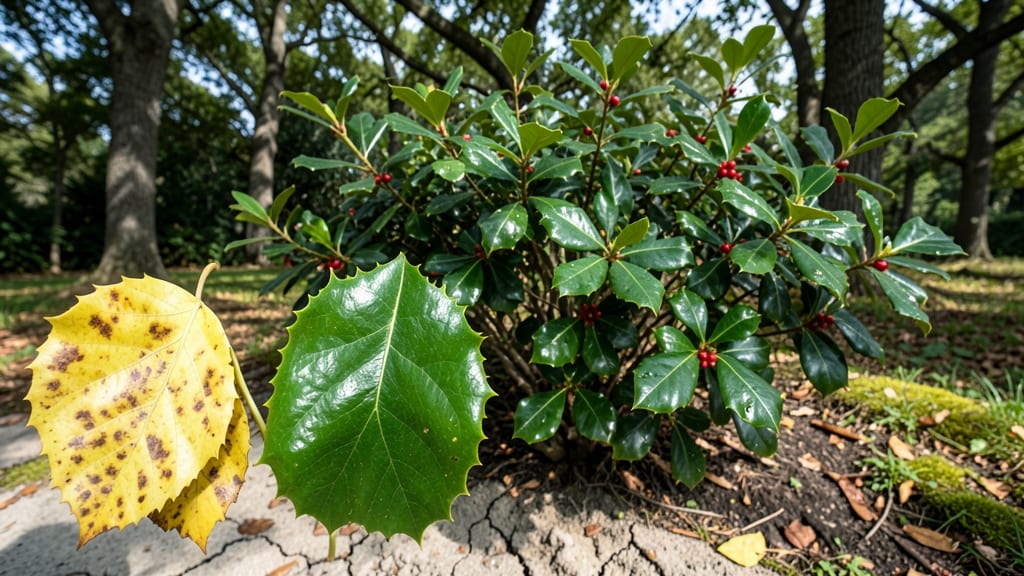
Your holly bush turning yellow isn’t a death sentence—it’s a call for action. 🌿 I’ve nursed back more than a few yellowing hollies, and the fix almost always comes down to three targeted adjustments that restore rich green foliage within weeks.
The most common culprit is iron chlorosis, where yellow leaves between green veins signal a soil pH problem. Overwatering or compacted soil can’t be ignored either—those roots need room to breathe.
Start by checking the soil moisture and leaf patterns: uniform yellowing? Likely nutrient-related. Yellow with brown edges? Probably water stress.
Within 10-14 days of correcting the issue, you’ll see new growth pushing through with proper color. The key is acting fast—once the bush loses too many leaves, it struggles to bounce back.
We’ll walk through the exact steps to diagnose and fix it, so your holly regains its glossy, deep green glory.
This works for both English and American holly varieties, whether your bush is in full sun or partial shade. The same principles apply to container-grown hollies too—just adjust the soil volume. Let’s get those leaves back to vibrant.
Root Causes Behind Yellow Holly
When your holly bush starts turning yellow, it’s rarely a sign of good health—it’s usually a distress signal from the plant. Understanding the underlying causes helps you take precise action to revive your shrub.
Below, we break down the most common reasons why holly leaves yellow, from environmental stressors to hidden nutrient deficiencies.
Holly bushes are heavy feeders, and when soil lacks essential nutrients, yellowing leaves (a condition called chlorosis) are often the first sign. Here’s what to watch for:
- 💡 Iron Deficiency (Most Common)
Iron is critical for chlorophyll production. When holly can’t access enough iron—especially in alkaline soils (pH > 7.0)—leaves turn pale yellow between the veins while veins stay green. Action: Test soil pH and amend with chelated iron or sulfur to lower pH gradually.
- 🌿 Nitrogen Starvation
Yellowing starts on older leaves (unlike iron deficiency, which hits new growth first). Nitrogen fuels leaf growth, so a shortage leads to weak, pale foliage. Action: Apply a balanced fertilizer (10-10-10) or compost in early spring.
- 🍃 Magnesium or Manganese Shortage
Yellowing between veins (like iron deficiency) but often with crinkled or distorted leaves. Magnesium is mobile in plants, so symptoms appear on older leaves first. Action: Use Epsom salt (magnesium sulfate) or a manganese-rich fertilizer.
Holly bushes thrive in consistently moist but well-drained soil. Deviate from this, and yellowing leaves follow:
- 🌊 Overwatering (Root Suffocation)
Yellowing leaves paired with drooping or mushy stems signal root rot. Holly hates soggy soil. Action: Improve drainage with organic matter (compost or pine bark) and water only when the top 2 inches of soil are dry.
- 🏜️ Drought Stress
Leaves curl, turn yellow, and may crisp at the edges. Holly is drought-tolerant but not drought-proof. Action: Deep-water 1–2 times per week during dry spells (check soil moisture with your finger).
Holly bushes are adaptable, but extreme conditions can trigger yellowing:
- 🌞 Too Much Sun (Sunburn)
Yellow patches or brown scorch marks on leaves exposed to harsh afternoon sun (especially in hot climates). Action: Provide afternoon shade or mulch heavily to cool roots.
- 🌬️ Windburn or Salt Spray
Leaves near coastlines or in windy areas may yellow and develop brown tips from salt damage. Action: Use a windbreak (bamboo fence or shrubs) or rinse leaves with fresh water after storms.
Not all yellowing is nutrient-related—pests and pathogens can also wreak havoc:
- 🐜 Spider Mites or Aphids
Tiny pests suck sap, causing yellow stippling or curling. Check undersides of leaves for webbing or bugs. Action: Spray with neem oil or insecticidal soap.
- 🍄 Fungal Infections (e.g., Root Rot or Leaf Spot)
Yellowing paired with black spots, wilting, or moldy growth suggests fungal issues. Action: Prune infected branches, improve airflow, and treat with copper fungicide.
Pro Tip: 🔍 Inspect leaves closely—yellowing patterns (edges vs. between veins) and accompanying symptoms (spots, wilting, etc.) narrow down the cause. Act fast: holly recovers best when issues are caught early!
Revive Your Holly Bush Naturally
Yellowing holly leaves don’t have to mean goodbye to your prized plant! With the right care, you can restore its vibrant green and prevent future discoloration. Below are targeted solutions based on the most common causes—plus pro tips to keep your holly thriving.
Yellow holly leaves often signal a lack of essential nutrients. Here’s how to diagnose and treat them:
🔥 Iron Deficiency (Chlorosis)
Symptoms: Yellowing between leaf veins (especially on new growth). Fix:
- Apply iron sulfate or chelated iron (follow package instructions for dosage).
- Use a soil acidifier (like aluminum sulfate) to lower pH—holly thrives in acidic soil (pH 4.5–6.0).
- Avoid over-fertilizing with lime (raises pH, worsening the issue).
🍳 Nitrogen Shortage (Pale or Yellowing Older Leaves)
Symptoms: Uniform yellowing starting with older leaves. Fix:
- Fertilize with a balanced, slow-release fertilizer (10-10-10 or 12-6-6) in early spring.
- Add compost or well-rotted manure to enrich soil naturally.
- Water deeply after fertilizing to help nutrients absorb.
👨🍳 Magnesium or Potassium Deficiency (Yellow Edges or Spots)
Symptoms: Yellowing along leaf edges or between veins (often with brown spots). Fix:
- For magnesium: Sprinkle Epsom salt (magnesium sulfate) around the base (1 tbsp per gallon of water, applied monthly).
- For potassium: Use a banana peel tea (steep peels in water for a week, then water the plant) or a potassium-rich fertilizer like 5-10-15.
Yellow leaves can also stem from poor water management. Here’s how to fix it:
🥘 Overwatering (Root Rot Risk)
Symptoms: Yellowing + mushy stems or wilting despite damp soil. Fix:
- Let the top 2–3 inches of soil dry out before watering again.
- Improve drainage by amending soil with perlite or sand.
- Avoid soggy spots—ensure the planting area has good airflow.
⏰ Underwatering (Drought Stress)
Symptoms: Crispy yellow edges or leaves dropping suddenly. Fix:
- Water deeply 1–2 times per week (adjust for climate—holly prefers consistent moisture).
- Mulch around the base (2–3 inches of bark or pine straw) to retain moisture.
- Check soil moisture by sticking your finger 2 inches deep—if dry, water thoroughly.
Sometimes, the issue isn’t nutrients but external factors. Try these tweaks:
☀️ Sunburn or Heat Stress
Symptoms: Sudden yellowing on south-facing sides of leaves. Fix:
- Provide afternoon shade (especially in hot climates).
- Water in the morning to reduce evaporation.
- Avoid pruning during peak summer—stress weakens recovery.
🌬️ Wind or Salt Burn (Coastal Areas)
Symptoms: Yellowing on exposed sides with brown tips. Fix:
- Use a windbreak (like a fence or taller plants) to shield the holly.
- Flush soil with fresh water if salt buildup is suspected (common near roads or oceans).
- Apply a light foliar spray with seaweed extract to protect leaves.
Once your holly is back in shape, keep it happy with these habits: - Test soil pH annually (aim for 4.5–6.0)—use a home test kit or send a sample to a lab. - Fertilize in early spring (avoid fall feeding—it encourages late growth that may frost). - Prune in late winter/early spring to remove dead or yellowed branches (sterilize tools with rubbing alcohol). - Monitor for pests (like spider mites or scale)—yellowing can be a secondary symptom of infestation.
Treat with neem oil if needed.
Pro Tip: 💡 If yellowing persists after 4–6 weeks, consider replanting in fresh, acidic soil—sometimes the roots are struggling in compacted or alkaline ground. A galvanized container (for potted hollies) can also help control soil conditions!
Frequently asked questions
Why do holly leaves turn yellow between the veins first?
This classic symptom signals iron chlorosis, where your holly can't access enough iron—common in alkaline soils (pH > 7.0). The green veins stay healthy because iron is mobile in plants, but the leaf tissue between veins lacks chlorophyll. Test your soil pH and apply chelated iron or sulfur to acidify the soil gradually.
Can I save my holly if half the leaves are already yellow?
Yes, but act fast! Prune the most affected branches immediately to redirect energy to healthy growth. Apply Epsom salt (for magnesium) or iron sulfate (for chlorosis) and adjust watering—either soggy soil or drought stress worsens yellowing. With proper care, new growth should return within 4-6 weeks.
Is yellowing normal in spring?
Not typically. While holly may flush new growth in spring, persistent yellowing isn't normal. Check for old leaves dropping naturally (normal) vs. new leaves staying yellow (problem). If it's the latter, test soil pH and fertilize with a balanced formula (10-10-10)—holly needs nutrients to support fresh foliage.
How do I tell if my holly has root rot?
Look for yellowing leaves paired with mushy stems or a foul smell at the base. Gently dig around the roots—healthy roots are firm and white, while rotten roots are brown, slimy, and crumble easily. Improve drainage immediately by amending soil with perlite and water only when the top 2 inches of soil are dry.
Will pruning help my yellow holly?
Yes, but do it strategically! Remove only dead, diseased, or severely yellowed branches in late winter/early spring. Never prune more than 25% of the bush at once—this stresses the plant. Sterilize your tools with rubbing alcohol to prevent spreading disease, and avoid pruning during heatwaves.