
Pruning
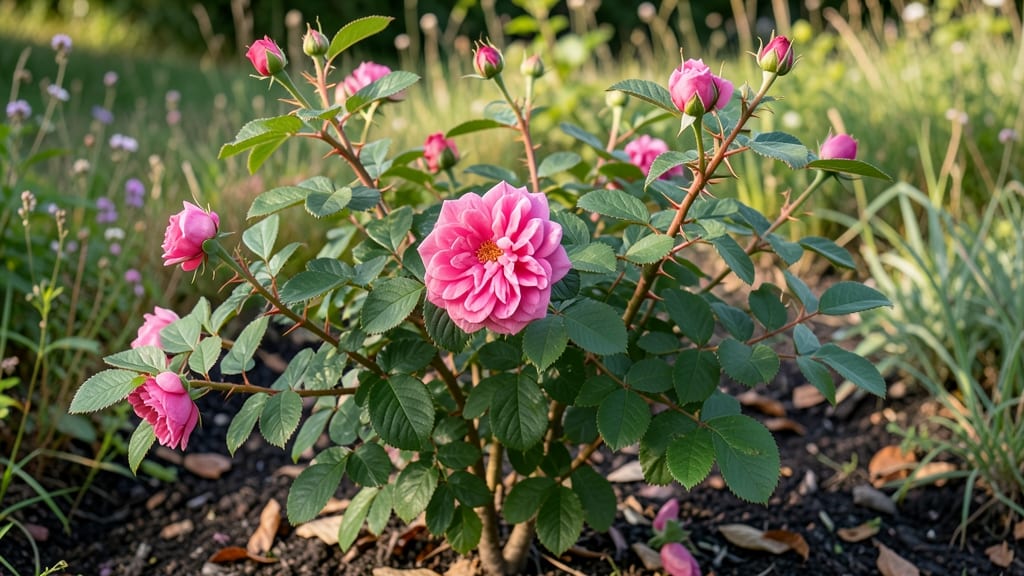
Transforming your Gypsy Rose bush into a year-round floral fountain starts with just three simple cuts—no fancy tools or horticultural degree required. 🌿 I’ve pruned mine for five seasons, and the secret isn’t in the technique but in the timing: late winter, early summer, and right after blooms fade.
The result? A bush that stays lush, blooms like crazy, and never looks like it’s fighting for its life.
This hardy rose thrives on neglect but rewards precision—6 hours of sun daily, well-draining soil, and occasional watering (think deep soaks, not daily sprinkles). It’s the kind of plant that forgives mistakes: I’ve left it unpruned for years, and it still blooms, though not as dramatically.
The key is shaping it in those three cuts to encourage dense growth and continuous flowers from spring through frost.
By summer’s end, you’ll have a bush so packed with blooms it looks like a cloud of pink and white. The fragrance? Intoxicating—sweet, floral, and strong enough to perfume your entire yard.
And here’s the best part: no deadheading required if you prune correctly. The bush stays tidy, the flowers keep coming, and you’ll spend less time fussing and more time admiring.
Works for hedges, borders, or standalone drama—just give it space to grow (up to 10 feet wide if unchecked). The same rules apply whether you’re a first-timer or a seasoned gardener. Let’s get those shears out and turn your Gypsy Rose into the showstopper of your garden.
📚 In This Guide
- What you need
- Instructions
- Tips and common mistakes
- Wrapping up and next steps
What you need
- ● Pruning shears – Sharp, bypass-style shears (avoid anvil types to prevent crushing stems). Size: 6–8 inches.
- ● Hand pruners – For smaller branches (3/8–1 inch thick). Quantity: 1 pair.
- ○ Loppers – For thicker stems (up to 2 inches). Quantity: 1 pair (optional but helpful for mature bushes).
- ● Disinfectant – 70% isopropyl alcohol or a gardening-specific cleaner to sterilize tools between cuts.
- ● Garden gloves – Heavy-duty, cut-resistant gloves (e.g., Mechanix or Felco brand).
- ● Sharpie or pruning marker – For labeling cuts (if layering or training the bush).
- ● 5-gallon bucket – To collect pruned branches for compost or disposal.
- ● Hose with nozzle – For rinsing tools and cleaning sap off blades.
- ● Rubbing alcohol wipes – Quick tool disinfection on the go.
- ● Plant tie or twine – To secure branches during shaping (if needed).
- ● Pruning sealant – Not required for Gypsy Rose Bush, but useful if sealing large cuts (e.g., Tanglefoot Tree Wound Pruning Seal).
- ● Camera or sketchpad – To document your bush’s shape before/after pruning!
Instructions: the 3 simple cuts for year-long Gypsy Rose bloom
Here's the straightforward system I use to keep my Gypsy Rose bush flowering continuously—no complicated schedules, just three targeted cuts.
✂️ Step 1: Late Winter Cleanup Cut (February)
When your Gypsy Rose bush goes dormant in late winter, it's time for the first cut. Wait until after the last frost but before new growth appears—usually mid-February in most climates. Grab your pruners and remove any dead, damaged, or crossing branches at the base. You're not shaping yet, just clearing out what won't regrow.
This is the moment that matters: cut back to just above a healthy bud or outward-facing branch. I like to make my cuts at a 45-degree angle about ¼ inch above the bud—this prevents water from pooling and rotting the cut. You'll see fresh green tissue inside the branch when you make the right cut. This cleanup jumpstarts spring growth and opens up the center for airflow.
☀️ Step 2: Post-Bloom Renewal Cut (June)
After your first big flush of blooms fades (usually around June), it's time for the second cut. Wait until after 50% of flowers have dropped—this tells you the plant has finished its current bloom cycle. Using clean, sharp pruners, cut back each flowering stem to just above the first set of strong leaves below the faded blooms.
This is where it gets fun—watch how the bush responds within 2-3 weeks with fresh new growth from those lower buds. I never cut more than ⅓ of the plant's total growth at once. If you see any leggy stems that aren't producing flowers, cut those completely back to encourage bushier growth. You'll notice the center opens up dramatically, letting more light reach the interior stems for next season's blooms.
🌿 Step 3: Light Summer Trimming (August)
In late summer (around August), do a final light trim to maintain shape and encourage one last flush of fall blooms. This time, focus on shaping rather than cutting back growth. Remove only the tips of stems that are growing too long or looking leggy. Cut just above a leaf node or bud that faces outward.
Here's the thing—this final trim should be minimal. You're not trying to force new growth at this point, just maintaining the shape you've created. I like to step back and look at the bush from all sides, cutting only what's obstructing the view or growing in an awkward direction. You'll see new flower buds forming along these trimmed stems within 3-4 weeks, giving you that coveted late-season color.
Tips & tricks for perfect Gypsy Rose bush pruning
Here's what nobody tells you about keeping your Gypsy Rose bush blooming all year—these small details make all the difference.
Tool Prep: Always sanitize your pruners with rubbing alcohol before each cutting session. I keep a small bottle in my gardening toolkit—this prevents spreading disease between cuts. Sharp tools also make cleaner cuts that heal faster, so take 2 minutes to hone your blades if they feel dull. You'll notice the difference in how smoothly the cuts go, especially during the February cleanup when branches can be thick.
Visual Cues for Step 1: In late winter, look for branches that have lost their bark or show brown, dried-out tips—these are dead and need removal. For live branches, the bark should be smooth and green underneath. When making your 45-degree cuts, aim for the spot where you see a slight swelling just above the bud—this is where new growth will emerge. I like to make a mental note of where the sun hits the bush most to prioritize opening up those areas.
Timing Secret: The 2-3 week window after your June cut is critical for observing your bush's response. If you don't see new growth within 3 weeks, you might have cut too aggressively. Remember, you're only supposed to remove up to ⅓ of the plant's total growth at once. During this time, I keep a small notebook by my gardening tools to jot down which branches responded best to cutting—this helps me plan next year's cuts more precisely.
August Trimming Hack: When doing your light summer trim, focus on creating an open center by removing stems that grow inward. Think of it like sculpting—you want to create a vase shape that allows light to reach all parts of the bush. I like to step back every few cuts and imagine looking at the bush from the street. If you can't see through the center from 10 feet away, you're probably not cutting enough.
Pro Tips for Gypsy Rose Bush
- Here's what nobody tells you about keeping your Gypsy Rose bush blooming all year—these small details make all the difference.
- Tool Prep: Always sanitize your pruners with rubbing alcohol before each cutting session.
- Visual Cues for Step 1: In late winter, look for branches that have lost their bark or show brown, dried-out tips—these are dead and need removal.
Frequently asked questions
When is the best time to prune for continuous blooms?
Prune your Gypsy Rose Bush three times a year: late winter (to shape and remove dead wood), after the first spring flush (to encourage summer blooms), and again in early fall (to promote winter flowers). This "3-cut method" keeps it lush and flowering year-round!
How much should I cut back in each pruning session?
Aim for 25–30% of the plant’s height per session. For example, if your bush is 6 feet tall, trim back 1.5–2 feet in late winter, then repeat in summer and fall. Avoid over-pruning—this can stress the plant and reduce blooms. Pro tip: Always cut just above a leaf node or outward-facing bud.
What if my Gypsy Rose Bush isn’t blooming after pruning?
Check these first:
- Light: Ensure it gets 6+ hours of full sun daily—shady spots = fewer blooms.
- Water: Keep soil consistently moist but not soggy (drought stress = dropped buds).
- Fertilizer: Use a balanced rose fertilizer (10-10-10) every 6–8 weeks.
- Deadheading: Remove spent blooms weekly to redirect energy to new flowers.
Can I prune my Gypsy Rose Bush too much?
Yes! Over-pruning (cutting back more than 30% at once) can weaken the plant, reduce blooms, and even kill it. Signs of over-pruning: bare stems, yellowing leaves, or no new growth. If this happens, stop pruning for 6 months and focus on water, fertilizer, and sunlight while it recovers.
Are there alternatives to the 3-cut method for busy gardeners?
Try the "once-and-done" approach:
- Prune once in late winter, cutting back 1/3 of the oldest stems (these are the thickest, woody branches).
- Focus on deadheading spent blooms weekly to encourage reblooming.
- Fertilize monthly with a bloom booster.
Wrapping up and next steps
Transforming your Gypsy Rose Bush into a stunning year-round floral fountain is simpler than you think! With just three strategic cuts—spring, summer, and fall—you can encourage lush blooms, maintain its iconic shape, and keep pests at bay.
Remember, consistency is key: a little attention now means vibrant flowers and healthier growth later.
Ready to give your bush the care it deserves? Grab your pruners, follow the steps, and watch your garden bloom with confidence! 🌸 For extra tips, check out our FAQ section or share your progress with fellow gardeners—happy pruning! 🌿