
Pruning
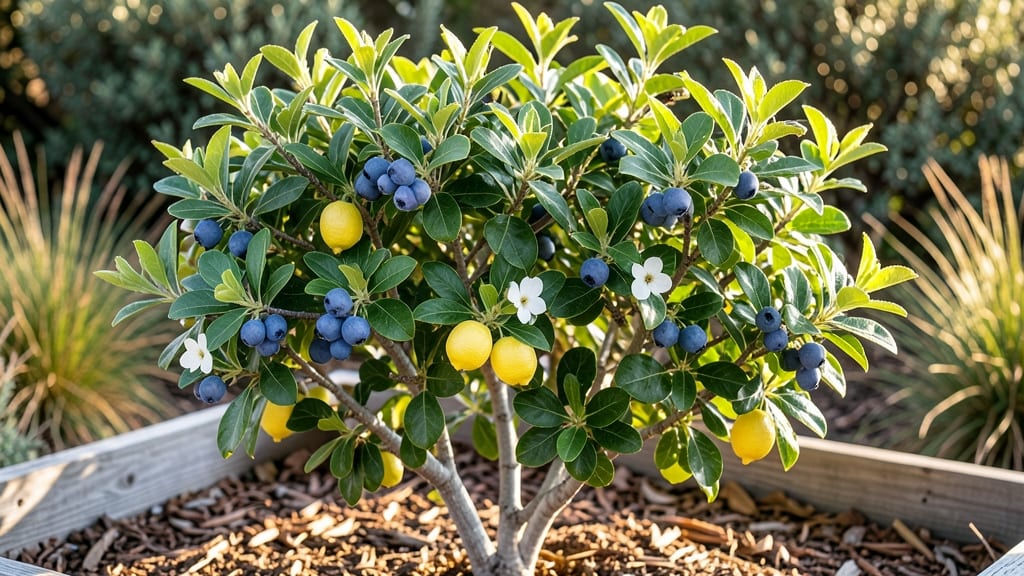
Your lemon blueberry bush could produce fruit year-round with the right pruning. ✨ I learned this after my first harvest stretched from late spring to early fall—just by trimming at the right times.
This isn’t your average blueberry bush; it’s a hybrid that combines tangy lemon flavor with classic blueberry texture, and pruning unlocks its full potential.
The key is timing: prune lightly in late winter to shape the plant, then do a second cut after harvest to encourage new growth. You’ll need sharp pruners, a clean workspace, and about 30 minutes for each session.
The goal isn’t to hack away branches—it’s to open up the center for sunlight and air flow, which keeps fruit sweet and reduces disease.
By summer, you’ll see lush green canes loaded with fruit, and the flavor? A bright, zesty twist on classic blueberries. The bushes stay compact (about 4-5 feet tall) but pack a punch—each pruning session sets you up for 2-3 harvests per year instead of just one.
Works best in zones 5-9 with well-draining soil and full sun. If you’re in a hotter climate, prune earlier to avoid summer stress. The thorns are real, so wear gloves—but trust me, the fruit is worth it.
📚 In This Guide
- What you need
- Instructions
- Tips and common mistakes
- Wrapping up and next steps
What you need
- ● Pruning shears: Bypass pruners (sharp, clean, and sterilized with rubbing alcohol to prevent disease). Pro tip: Invest in high-quality shears (e.g., Felco or Fiskars) for precision cuts.
- ● Loppers: For thicker branches (½ inch or larger). Look for ratcheting loppers for ease.
- ● Hand pruners: For delicate trimming (e.g., Felco Classic or Corona brand).
- ● Garden gloves: Heavy-duty, cut-resistant (e.g., Wet & Forget or Fellex)
- ● Disinfectant: 70% isopropyl alcohol or a 10% bleach solution (1 part bleach to 9 parts water).
- ○ Pruning sealant: Optional but helpful for large cuts (e.g., Tanglefoot Tree Wound Pruning Seal).
- ● Bucket or bag: For collecting pruned branches (line with a trash bag for easy disposal).
- ● Knowledge of your bush’s variety: Check if it’s a hybrid lemon blueberry (e.g., ‘Sunshine Blue’ or ‘Rhapsody’) or a traditional type—pruning needs vary!
- ● Weather check: Prune on a dry, cloudy day to reduce stress on the plant.
- ● Sunlight access: Ensure you’re pruning in a well-lit area (or bring a clip-on work light for early/late pruning).
- ○ Optional: Extension pole (for tall bushes, 3–6 feet).
- ● Sharpie marker (to label pruning cuts if training the bush).
- ● Compost bin (to recycle pruned branches as mulch).
- ● Plant food (e.g., Espoma Garden-Tone) for post-pruning nourishment.
Step-by-Step guide to pruning your lemon blueberry bush for maximum fruit
Here’s how to keep your lemon blueberry bush thriving year-round with simple, effective trimming techniques.
✂️ Step 1: Prune in Late Winter for New Growth
Start your pruning 2-3 weeks before your last frost date when the bush is still dormant. This is the best time to shape the plant and encourage strong new growth. Use clean, sharp pruning shears to make cuts at a 45-degree angle just above a bud or branch junction. Remove any dead, diseased, or crossing branches first—they’ll only compete with fruit production.
Focus on thinning out overcrowded stems while leaving the strongest, most vigorous branches. Aim to keep the center of the bush open to sunlight and air circulation. You’ll see new, bright green shoots emerge within 3-4 weeks—that’s your signal the pruning worked. If you’re unsure which branches to cut, remember: thinner branches = more fruit, not more leaves.
☀️ Step 2: Light Summer Pruning After Harvest
After your first harvest, give your bush a light trim to maintain shape and encourage a second flush of berries. Prune only the tips of branches that have already fruited—this redirects energy to new growth rather than seed production. Cut back by about 1/3 of the new growth from the current season, making sure to leave 3-4 leaves on each stem.
Watch for water sprouts (thin, vertical shoots with no leaves) and remove them immediately—they drain energy from fruiting branches. If your bush looks leggy, it’s time to thin out the longest stems to encourage bushier, more productive growth. You’ll notice new side branches forming within 2-3 weeks of this light pruning.
✂️ Step 3: Fall Cleanup for Winter Resilience
In late fall, after the first frost, do a final cleanup to prepare your lemon blueberry bush for winter. Remove any remaining dead wood, diseased branches, or berries that might harbor pests or diseases. Trim back overly vigorous growth by 1/4 to 1/3 to prevent winter damage from heavy snow or ice.
This is also the time to thin out any suckers (shoots growing from the base of the plant) unless you’re propagating new plants. Keep the bush open and airy—this prevents mold and rot during wet winter months. By spring, you’ll see fresh, healthy buds forming along the remaining branches, ready for another productive season.
⏰ Step 4: Post-Harvest Maintenance for Year-Round Fruit
After each harvest, lightly prune any branches that have already produced fruit to stimulate a second or even third crop. Cut back just above a leaf node where new growth can emerge. Avoid heavy pruning now—you want to keep the plant energized for continuous fruiting. Water deeply after pruning to help the bush recover.
If your bush looks overloaded with fruit, thin out some clusters to prevent branches from breaking under the weight. You’ll know you’ve done well when you see new flower buds forming within 4-6 weeks—this means your pruning is paying off with sustained production. Keep an eye out for yellowing leaves, which could signal over-pruning or nutrient deficiency, and adjust accordingly.
Tips & tricks for perfect lemon blueberry bush pruning
Strategic pruning transforms a lemon blueberry bush from a struggling plant into a year-round fruit powerhouse. Here's what I've learned from years of trial and error in my own garden.
Timing is Everything: That 2-3 week window before your last frost date is critical for Step 1. I've learned to check local frost dates online and mark my calendar—pruning too early can stimulate growth that gets damaged by late frosts, while waiting too long means you're cutting into next year's buds. For zones with unpredictable weather, err on the earlier side of that window. If you're unsure about your last frost date, local nurseries or cooperative extension offices can provide precise information for your area.
The 45-Degree Angle Secret: When making cuts in Step 1, that 45-degree angle isn't just for looks—it creates a natural water runoff path that prevents moisture from pooling at the cut site. I use a small protractor tool attached to my pruning shears to ensure consistent angles. For thicker branches, make the cut just above a bud that faces outward from the center of the bush. This encourages outward growth, keeping your bush open and airy for better fruit production.
Visual Pruning Cues: In Step 2, when you're looking for water sprouts, think of them as "weeds" growing vertically from your branches. They're easy to spot—they're thin, have no leaves, and grow straight up like tiny trees. Remove them immediately as they appear, not just during pruning sessions. I've found that regular checks every 2-3 weeks during growing season prevents these energy vampires from taking over. For the 1/3 pruning in Step 2, hold your pruning shears at a 90-degree angle to the branch and cut back to where you see leaf nodes forming—this ensures you leave enough foliage for photosynthesis while still encouraging new growth.
Pro Tips for Lemon Blueberry Bush
- Strategic pruning transforms a lemon blueberry bush from a struggling plant into a year-round fruit powerhouse.
- Timing is Everything: That 2-3 week window before your last frost date is critical for Step 1.
- The 45-Degree Angle Secret: When making cuts in Step 1, that 45-degree angle isn't just for looks—it creates a natural water runoff path that prevents moisture from pooling at the cut site.
Frequently asked questions
Got questions about keeping your lemon blueberry bush thriving with the right pruning? Here are some common ones—and their answers!
When is the best time to prune my lemon blueberry bush?
Prune your lemon blueberry bush in late winter or early spring (before new growth starts) to shape it and remove dead wood. Light trimming can also happen in summer after harvest to encourage more fruit production. Avoid heavy pruning in fall—it can stress the plant before winter.
How much should I cut back my lemon blueberry bush each year?
Remove about 1/3 of the oldest canes (those thicker than a pencil) each year to promote new growth. Thin out crowded stems to improve airflow and sunlight penetration. Never cut back more than 20-30% of the plant in one season—this keeps it healthy and productive!
Will pruning affect my lemon blueberry harvest?
Done right, pruning boosts your harvest! Removing dead or weak canes redirects energy to fruiting wood. However, over-pruning (cutting too much at once) can reduce yields. Focus on selective trimming to balance shape and productivity.
What should I do if my lemon blueberry bush isn’t fruiting after pruning?
Check these first:
- Age: Lemon blueberry bushes take 2-3 years to mature and fruit.
- Sunlight: Ensure it gets 6+ hours of sun daily.
- Soil pH: Test for acidic soil (pH 4.5–5.5)—blueberries need it!
- Fertilizer: Use a blueberry-specific fertilizer in early spring.
Can I prune my lemon blueberry bush the same way as a regular blueberry bush?
Mostly, yes—but lemon blueberry bushes are slightly more forgiving due to their hybrid vigor. They tolerate slightly heavier pruning than traditional blueberries. However, always prioritize airflow and sunlight to prevent fungal issues. When in doubt, mimic the late-winter/early-spring timing!
Wrapping up and next steps
Growing a thriving lemon blueberry bush is all about balance—pruning at the right times, using the right tools, and giving your plant the love it deserves.
With these year-round harvest hacks, you’re well on your way to a bountiful, healthy bush that rewards you with sweet-tart flavors season after season. 🌱✨
Ready to take the next step? Start small: pick one pruning session to practice, then gradually build your confidence. Before you know it, your lemon blueberry bush will be the star of your garden—and your kitchen! Grab your shears and get trimming!