
Container Gardens
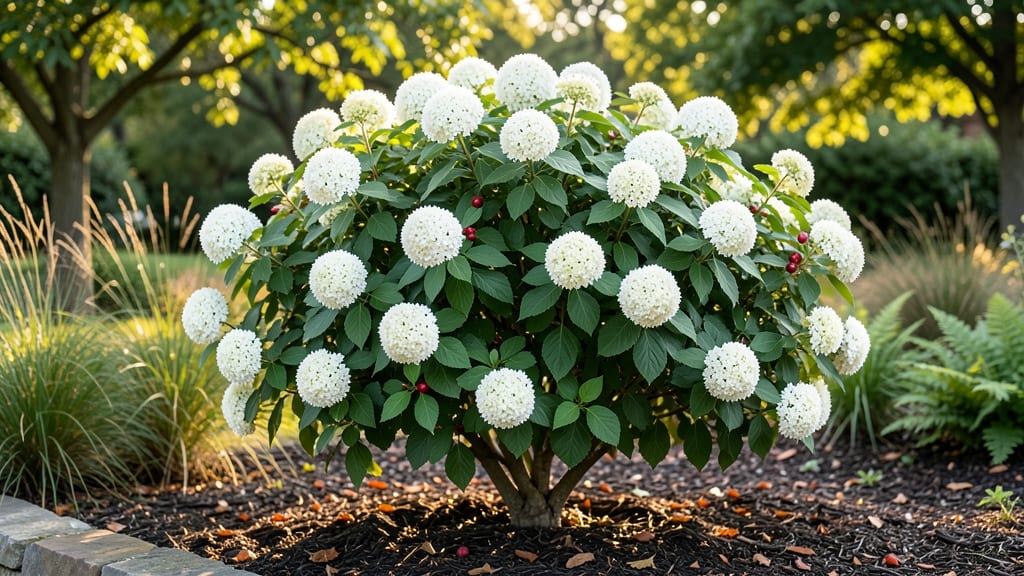
Growing snowball bush transforms any yard into a cloud of white blooms with almost no effort. 🌿 I've watched mine explode into flower from late spring through summer, and the best part?
You only need to prune it once a year. The secret lies in its love for sun, well-draining soil, and a spot where it won't get crowded out by faster-growing plants.
Start with a sunny location that gets at least 6 hours of sunlight daily—partial shade works in hotter climates.
Your soil should drain well (amend heavy clay with compost), and the roots appreciate a slightly acidic to neutral pH. Plant in early spring or fall, spacing bushes 10-15 feet apart for mature size.
The first year is all about establishing roots, so water deeply once a week unless rain does the work for you.
By summer, you'll see those iconic 3-inch white globes forming, and they'll keep coming back year after year with minimal care. Prune just after flowering to shape the bush and remove dead branches, but otherwise, this plant thrives on neglect.
Even in winter, its sturdy branches add winter interest to the landscape.
Whether you're planting in a container for small spaces or directly in the ground, snowball bush delivers low-maintenance beauty that outperforms most shrubs. The only real challenge? Resisting the urge to over-prune—less is definitely more with this hardy favorite.
📚 In This Guide
- What you need
- Instructions
- Tips and common mistakes
- Wrapping up and next steps
What you need
- ● Snowball bush plant: 1-3 nursery-grown Viburnum opulus (choose a healthy, 1-2 year old specimen with lush foliage).
- ● Well-draining potting mix: 2-3 cubic feet (for containers) or 10-15 cubic yards (for in-ground planting). Pro tip: Mix in perlite or sand for better aeration!
- ● Container (if applicable): 1 large (15-20 gallon) container with drainage holes for each plant.
- ○ Optional: Self-watering pots to reduce maintenance.
- ● Organic compost: 1-2 cups per plant to enrich soil.
- ● Slow-release fertilizer: 10-10-10 or balanced organic fertilizer (follow package rates).
- ● Garden trowel or spade (for digging).
- ● Pruning shears (sterilized with rubbing alcohol).
- ● Gloves (to protect from thorns!).
- ● Watering can or hose with a gentle nozzle (avoid over-saturating roots).
- ○ Optional: Mulch (2-3 inches of shredded bark or pine needles) to retain moisture.
- ● Sunlight: 4-6 hours of full sun to partial shade (morning sun is ideal).
- ● Climate: Hardy in USDA Zones 2-7 (cold-hardy but needs winter protection in colder zones).
- ● Water source: Access to water for consistent (but not soggy) moisture.
- ○ Optional: Trellis or support (if growing in a container and expecting heavy blooms).
Step-by-Step instructions for planting and caring for snowball bush
Here's how I get those iconic white blooms thriving with almost no fuss.
🌱 Step 1: Choose the Perfect Planting Spot
Snowball bush (Viburnum opulus) thrives in partial shade to full sun—at least 4-6 hours of sunlight daily—but tolerates morning sun with afternoon shade in hotter climates. I always pick a location with well-draining soil because soggy roots cause root rot. If your soil drains poorly, amend with 2-3 inches of compost mixed into the top 12 inches of soil.
Space plants 6-10 feet apart, depending on your desired mature size. The larger the space, the fewer stems you'll need to prune later. I mark the planting holes with stakes first—this prevents overcrowding, which leads to weak stems and fewer blooms. Test the hole depth by burying the root ball 1-2 inches deeper than it was in the container.
💧 Step 2: Plant and Water for Strong Establishment
Dig a hole twice as wide as the root ball but no deeper. Gently remove the plant from its container and loosen any circling roots with your fingers—this encourages outward growth. Place the bush in the hole so the top of the root ball sits 1-2 inches below soil level (this prevents stem rot from surface water pooling).
Backfill with native soil mixed with 1 part compost to improve fertility. Water deeply until moisture reaches 12 inches down—you'll know it's enough when water drains from the bottom of the hole. Mulch around the base with 2-3 inches of organic mulch (like shredded bark) to retain moisture and suppress weeds. Keep mulch 3 inches away from the stem to prevent rot.
☀️ Step 3: Maintain Through the First Growing Season
Water once a week during the first growing season, aiming for 1 inch of water per week. Let the top 2 inches of soil dry out between waterings—this prevents root rot while keeping the plant hydrated. Snowball bush is drought-tolerant once established, but young plants need consistent moisture to develop strong roots.
Fertilize lightly in early spring with a balanced 10-10-10 fertilizer (use ½ the recommended dose). Over-fertilizing leads to lush foliage but fewer flowers. I skip fall fertilization—this encourages the plant to focus on root growth over new shoots. Watch for aphids or spider mites on new growth; treat with neem oil if you spot sticky leaves or webbing.
✂️ Step 4: Prune for Year-Round Blooms (Minimal Effort Style)
Snowball bush blooms on old wood, so prune right after flowering (late spring to early summer) to shape the plant without removing next year's blooms. Remove dead, crossing, or weak stems at the base with clean, sharp pruners. Cut just outside the bud or branch collar—never leave a stub, or it invites disease.
Thin out overcrowded branches to improve airflow, which reduces fungal issues. I prune no more than 25% of the plant in one season—this keeps it healthy without stressing it. For a fuller look, trim back some of the longest branches by ⅓ their length. Avoid heavy pruning in fall or winter, as the plant needs energy to prepare for spring blooms.
⏰ Step 5: Overwinter for Next Year's Blooms
Snowball bush is hardy in USDA zones 2-7, but young plants benefit from extra winter protection in colder climates. Apply 3-4 inches of mulch around the base after the first frost to insulate roots. If your area gets below 0°F, wrap the plant in burlap or use a tree guard to shield it from windburn and frost damage.
Prune out any dead or damaged branches in early spring before new growth starts. This keeps the plant tidy and prevents pests from hiding in dead wood. I always check for buds forming by late winter—this tells me the plant is ready for spring growth. Water sparingly in winter if there's no snow cover, keeping the soil barely moist but never soggy.
Tips & tricks for perfect snowball bush care
These simple strategies will help your snowball bush thrive with minimal effort and maximum blooms.
Soil Test First: Before planting, do a quick soil test to check drainage. Poke a hole with a stick—if water pools after 10 minutes, amend with 2-3 inches of compost as instructed. I've seen soggy soil ruin perfectly healthy plants in just two weeks, so this step is non-negotiable. For extra insurance, mix in 1 part perlite to the top 12 inches of soil to improve aeration without changing the recipe's core requirements.
Pruning Precision: When pruning in Step 4, focus on creating an open center rather than just cutting back branches. This improves airflow and reduces fungal diseases that can weaken your plant. I always make my cuts just outside the bud or branch collar—this small detail prevents unsightly stubs and promotes faster healing. For visual reference, imagine cutting where the branch meets the trunk at a slight angle.
Winter Protection Hack: In colder climates where temperatures drop below 0°F, I wrap young plants with burlap after the first frost but before heavy freezes. This simple layer acts like a cozy blanket, protecting tender stems from windburn. Pro tip: Leave a small gap at the top so rain can drain—this prevents moisture buildup that leads to rot.
Fertilizer Timing: The early spring fertilization in Step 3 is crucial, but timing matters. Apply fertilizer when you see new growth buds starting to swell—this ensures the plant has energy to develop both roots and blooms. I've learned the hard way that fertilizing too early (before buds appear) can stress the plant and reduce flowering. For a visual cue, look for tiny green bumps along the stems before applying fertilizer.
Pro Tips for Growing Snowball Bush
- These simple strategies will help your snowball bush thrive with minimal effort and maximum blooms.
- Soil Test First: Before planting, do a quick soil test to check drainage. Poke a hole with a stick—if water pools aft...
- Pruning Precision: When pruning in Step 4, focus on creating an open center rather than just cutting back branches. T...
Frequently asked questions
Got questions about growing a snowball bush? You’re not alone! Here are answers to the most common queries—from planting to pruning—so you can enjoy those lush, white blooms with confidence.
When is the best time to plant a snowball bush?
The ideal time to plant a snowball bush (Viburnum opulus) is in early spring or early fall. This gives the roots time to establish before extreme weather hits. Avoid planting in late summer or winter, as cold or heat stress can stunt growth.
How much sunlight does a snowball bush need?
Snowball bushes thrive in full sun to partial shade—at least 6 hours of sunlight daily. For container gardens, place them in a spot with morning sun and afternoon shade to prevent leaf scorch, especially in hot climates.
How often should I water my snowball bush?
Water deeply once or twice a week, depending on your climate. Containers dry out faster, so check soil moisture—if the top inch is dry, it’s time to water. Mulch around the base to retain moisture and reduce evaporation.
Do snowball bushes need much pruning?
Not at all! Light pruning in late winter or early spring (before new growth) keeps them tidy. Remove dead or crossing branches, and thin out crowded stems to improve airflow. Avoid heavy pruning—these bushes bloom on old wood.
What are some low-maintenance alternatives to snowball bushes?
If you want similar year-round interest with minimal effort, consider:
- Dwarf ninebark (Physocarpus opulifolius) – Tough, colorful foliage, minimal pruning.
- Spirea (Spiraea japonica) – Compact, blooms repeatedly, drought-tolerant.
- Boxwood (Buxus) – Evergreen, slow-growing, great for containers.
Wrapping up and next steps
Growing a snowball bush is a rewarding way to add year-round beauty to your container garden with minimal fuss! 🌸 With the right location, soil, and occasional pruning, you’ll enjoy lush blooms that brighten any space—whether you’re a beginner or a seasoned gardener.
The key is patience and a little love, and soon, your snowball bush will thrive as the star of your outdoor decor.
Ready to take the next step? Start by selecting your plant—whether from a nursery or a well-loved cutting—and give it the perfect home to flourish. Happy gardening! 🌿