
Pruning
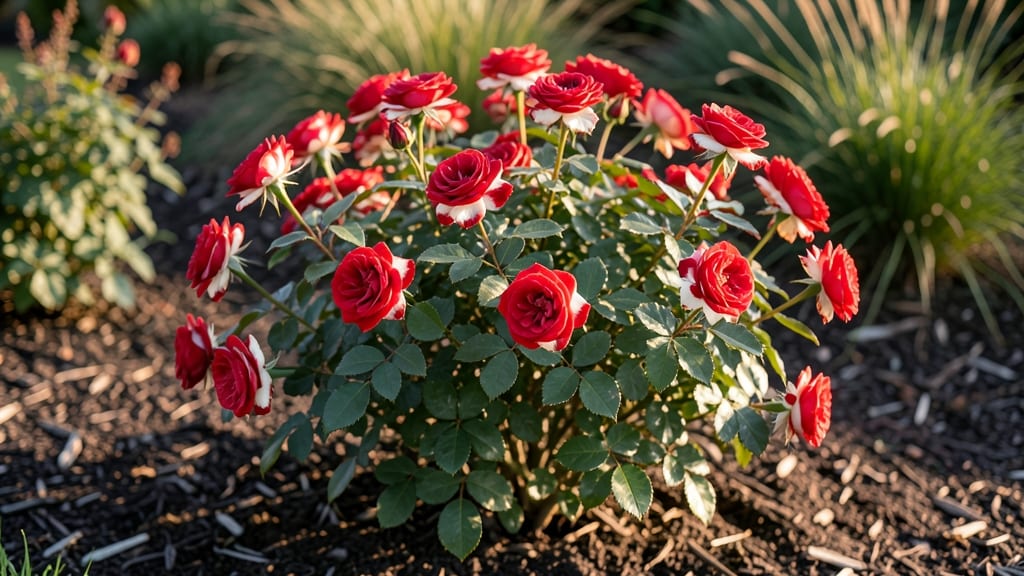
Growing the 'Fire and Ice' rose bush means bold color from spring until frost—deep red blooms with crisp white edges that catch every eye in the garden. 🌹 I planted mine last spring, and by midsummer, it was the showstopper of my backyard, drawing neighbors to admire its striking contrast.
The secret isn't just the flowers, though—its glossy foliage stays vibrant all season, even when other roses fade. This rose thrives with 6+ hours of sunlight daily and well-draining soil, but it’s surprisingly forgiving.
My first year, I overwatered and nearly lost it—until I learned its roots prefer to dry slightly between waterings. Once you get the balance right, it rewards you with nonstop blooms and minimal fuss. Even in hot summers, it stays lush, proving it’s tougher than it looks.
The real magic happens when you prune correctly: cut back by 1/3 each spring and deadhead spent blooms to encourage more flowers. I’ve seen mine produce hundreds of blooms in a single season, and the fragrance lingers long after the petals fall.
The contrast of red and white makes it perfect for borders, containers, or as a focal point near patios. For beginners, start with a well-amended planting hole and regular feeding—it’s not a low-maintenance rose, but the payoff is worth it.
Advanced gardeners can experiment with seasonal pruning to extend blooms into fall. Either way, this rose delivers drama with minimal effort once you know the tricks.
📚 In This Guide
- What you need
- Instructions
- Tips and common mistakes
- Wrapping up and next steps
What you need
- ● Fire and Ice rose bush (bare-root or potted, Rosa ‘Fire and Ice’): 1 plant (for standard garden beds)
- ● 3+ plants (for hedges or borders)
- ● Well-draining soil mix: 50% native soil
- ● 30% compost or aged manure
- ● 20% perlite or coarse sand (for drainage)
- ● Organic mulch (2–3 inches): Wood chips, straw, or shredded bark
- ● Fertilizer (balanced 10-10-10 or rose-specific): 1–2 tablespoons per plant (spring and summer)
- ● Pruning shears (sharp, bypass-style for clean cuts)
- ● Gloves (thick leather or rose-resistant fabric)
- ● Trowel or spade (for planting/transplanting)
- ● Watering can or hose with nozzle (gentle spray setting)
- ○ Stakes or trellis (optional, for climbing varieties or support)
- ● Sunlight: 6+ hours of full sun daily (partial shade tolerates but reduces blooms).
- ● Spacing: 3–4 feet apart for shrubs
- ● 5+ feet for climbing types
- ● Watering schedule: Deep watering 1–2 times per week (more in extreme heat).
- ● Pruning timing: Late winter/early spring (for shaping)
- ● After flowering (to encourage new growth)
Step-by-Step instructions for planting and caring for a Fire and Ice rose bush
This stunning rose thrives with the right placement and consistent care—here's how to set it up for vibrant, long-lasting blooms.
🪴 Step 1: Select the Perfect Planting Location
The Fire and Ice rose demands full sun—at least 6-8 hours of direct sunlight daily—to maintain its bold red-and-white contrast. I always choose a spot with morning sun and afternoon shade in hot climates to prevent leaf scorch, which dulls the striking foliage. Avoid low-lying areas where cold air settles, as this variety is only hardy to USDA Zone 5 and needs winter protection.
Test your site by observing how sunlight moves across the area throughout the day. The ideal location will have well-draining soil—this rose hates soggy roots. If your soil feels compact when squeezed, amend it with 2-3 inches of compost mixed into the top 12 inches of soil before planting. The roots need room to spread without sitting in water.
🌱 Step 2: Plant at the Right Depth and Stake for Support
Dig a hole twice as wide as the root ball but only as deep—the top of the rose’s graft union (visible as a slight bump on the stem) should sit 2-3 inches above soil level. This prevents the graft from being buried, which can cause the bush to revert to weaker, suckering growth. Gently loosen the roots if they’re circling tightly in the pot before placing the plant in the hole.
Fill the hole with native soil, pressing lightly to remove air pockets but avoiding compaction. Water deeply to settle the soil, then install a sturdy 6-foot stake at a 45-degree angle about 3 inches from the main stem. Secure the rose to the stake with soft plant ties—never wire, which can cut into the bark as the stem thickens. This variety grows 4-5 feet tall, so early support prevents flopping stems.
☀️ Step 3: Water Deeply and Mulch to Retain Moisture
After planting, water deeply once a week (or more in extreme heat) until the top 6 inches of soil feel moist—not soggy. The Fire and Ice rose’s dramatic blooms signal when it’s thirsty: wilting leaves or drooping canes mean it’s time to water. Early morning is the best time to water, as it gives foliage time to dry before evening, reducing fungal risks.
Apply 3 inches of mulch (like shredded bark or pine straw) around the base, keeping it 2 inches away from the stem to prevent rot. Mulch conserves moisture, regulates soil temperature, and suppresses weeds—critical for roses, which compete poorly with invasive ground covers. Replenish mulch annually as it decomposes, but never let it pile against the stem.
✂️ Step 4: Prune for Shape and Blooms Twice a Year
Prune once in late winter (just before new growth starts) and again after the first flush of blooms in early summer. Remove dead, crossing, or inward-growing canes first—these compete for energy and reduce airflow. Cut back last year’s blooms to an outward-facing bud (about ¼ inch above a 5-leaf cluster) to encourage bushier growth and more flowers.
Never prune more than ⅓ of the bush at a time, or you’ll shock the plant into producing weak, leggy growth. Sterilize your pruners with rubbing alcohol between cuts to prevent spreading disease. The Fire and Ice rose responds well to pruning, often rebounding with denser foliage and larger clusters of blooms within weeks.
⏰ Step 5: Fertilize and Protect for Season-Long Color
Feed every 4-6 weeks during the growing season with a balanced rose fertilizer (look for 10-10-10 or 20-20-20 ratio). I use ½ the recommended dose to avoid burning the roots—roses are heavy feeders but sensitive to over-fertilization. Water the soil thoroughly before applying fertilizer, and always keep it 2 inches away from the stem to prevent salt buildup.
Watch for aphids or black spot fungus—common pests for roses. Spray leaves weekly with neem oil during humid months to prevent fungal issues. In Zone 5, mound 6-8 inches of mulch around the base in late fall and wrap the bush in burlap for winter. Uncover in early spring when daytime temperatures consistently stay above 50°F to avoid shocking the plant.
Tips & tricks for perfect Fire and Ice rose care
Between us, these small details make all the difference between a rose that thrives and one that struggles to show its signature red-and-white drama.
Sunlight Strategy: The 6-8 hours of daily sunlight requirement is non-negotiable for that bold color contrast, but here's what nobody tells you—if you're in a hot climate, morning sun with afternoon shade is your best bet. I've seen roses in full afternoon sun develop leaf scorch that ruins the dramatic foliage. Test your spot by observing sunlight patterns for a few days before planting.
Planting Depth Secret: That 2-3 inch graft union clearance above soil level isn't just a technicality—it's what prevents your Fire and Ice from reverting to weaker, suckering growth. I learned this the hard way after burying one too deep. Use a small stake to mark the graft union before planting as your reference point.
Watering Wisdom: The once-weekly deep watering works perfectly when your top 6 inches of soil are dry, but here's the trick: water in the morning and let the foliage dry completely before evening. This simple habit drastically reduces fungal risks that can plague roses. I've seen black spot fungus appear within days when this rule is ignored.
Pruning Precision: When you cut back to that outward-facing bud in Step 4, make sure it's about ¼ inch above a 5-leaf cluster—not the first set of leaves you see. This small detail ensures stronger new growth and more abundant blooms. I use a magnifying glass to verify the exact cut point when I'm pruning my own Fire and Ice bushes.
Pro Tips for Fire And Ice Rose Bush
- Between us, these small details make all the difference between a rose that thrives and one that struggles to show it...
- Sunlight Strategy: The 6-8 hours of daily sunlight requirement is non-negotiable for that bold color contrast, but he...
- Planting Depth Secret: That 2-3 inch graft union clearance above soil level isn't just a technicality—it's what preve...
Frequently asked questions
Got questions about growing and maintaining your Fire and Ice rose bush? You’re not alone!
Here are answers to the most common queries to help you keep this stunning variety thriving with its bold red-and-white blooms.
What’s the best time to prune my Fire and Ice rose bush for maximum blooms?
The ideal time to prune is late winter or early spring—just before new growth starts. For a Fire and Ice rose, aim for 20-30% of the old wood removal to encourage vibrant blooms. Avoid heavy pruning in fall, as it can stimulate tender growth vulnerable to frost. Pro tip: Use sharp, sterilized shears to prevent disease!
How do I prevent my Fire and Ice rose from getting black spot or other diseases?
Black spot is a common issue, but prevention is easy! Space plants 3-4 feet apart for airflow, and water at the base (not overhead). Remove fallen leaves and debris regularly. Apply a copper fungicide or neem oil spray preventatively in early spring. Pro tip: Choose disease-resistant varieties like Fire and Ice—it’s bred to handle humidity better than many roses!
Can Fire and Ice roses survive harsh winters, or do I need to protect them?
This hardy rose (zones 4-9) tolerates cold, but mulch heavily (4-6 inches) with straw or shredded leaves after the ground freezes. For extra protection, wrap the canes loosely with burlap or rose cones. Prune lightly in late winter to remove dead wood. Pro tip: Avoid heavy mulching in fall—wait until temps drop below freezing!
What’s the best fertilizer for Fire and Ice roses to keep them blooming all season?
Use a balanced, slow-release rose fertilizer (like 10-10-10 or 5-10-5) in early spring, then switch to a high-phosphorus formula (e.g., 7-9-5) when buds form. Feed every 4-6 weeks during growing season. Pro tip: Avoid high-nitrogen fertilizers—they promote leaves over blooms!
What are some alternatives to Fire and Ice if I want similar red-and-white roses?
If you love the Fire and Ice look, try these stunning varieties:
- ‘Double Delight’ – Classic red-and-white stripes, highly fragrant.
- ‘The Fairy’ – Compact, with deep red centers and creamy edges.
- ‘Bonica’ – Disease-resistant with bold red blooms (pair with white climbers for contrast!).
Wrapping up and next steps
The Fire and Ice rose bush is a stunning addition to any garden, offering bold red-and-white blooms that thrive year-round with the right care. By mastering pruning techniques, you’ll encourage vibrant growth, prevent disease, and keep your roses looking their best—season after season. 🌹✨
Now that you’re equipped with the knowledge, roll up your sleeves and get pruning! Start with a fresh cut, sharpen your tools, and watch your Fire and Ice roses flourish. Happy gardening!