
Light Requirements
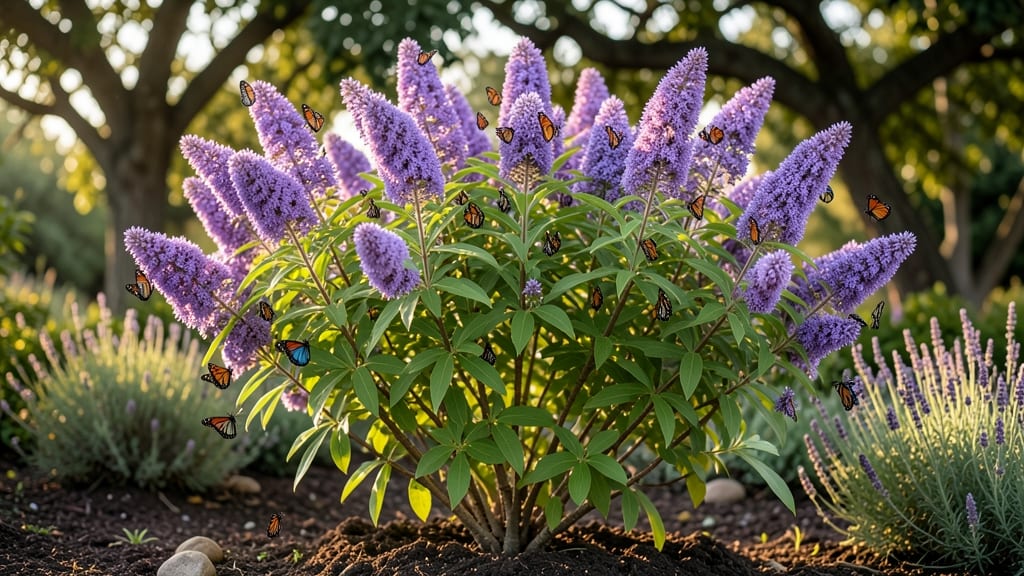
Butterfly bushes love full sun exposure, needing at least 6 to 8 hours of direct sunlight daily to produce vibrant blooms, strong stems, and abundant nectar that draws in pollinators like butterflies and hummingbirds.
This light requirement isn't just about blooms—it's about the plant's overall health. 🌞 Without enough sunlight, butterfly bushes become leggy and produce fewer flowers, while their leaves may pale or develop weak stems that struggle to support heavy blooms.
I've seen firsthand how plants in partial shade grow slowly and attract fewer pollinators, since their nectar production drops significantly. The key is positioning them where they'll get morning sun plus several hours of afternoon light, which gives them the energy boost they need for that signature summer display.
If your garden has limited full sun spots, consider these workarounds: planting near reflective surfaces like light-colored walls or using a south-facing window if growing in containers. Even a few hours of direct sun can make a difference, though you'll likely see reduced flowering compared to ideal conditions.
The good news? Butterfly bushes are adaptable—they'll survive in partial shade, but they'll never reach their full potential without that golden sunlight.
💡 In This Article
- How Sunlight Affects Butterfly Bush Flowering and Health
- Adjusting Light Conditions for Butterfly Bush Success
How sunlight affects butterfly bush flowering and health
Sunlight drives butterfly bushes' growth through photosynthesis, where chlorophyll in leaves converts light energy into glucose—the plant's fuel. These bushes rely on high-intensity light (6,000-10,000 foot-candles) to maximize this process, which is why they thrive in full sun.
The more light they receive, the more energy they produce for vibrant blooms and strong stems. Without enough sunlight, chlorophyll production drops, leading to pale leaves and weaker stems that can't support heavy flower clusters.
Light intensity also influences flower color vibrancy. In full sun, butterfly bushes develop their signature bright pink, purple, or white blooms because sunlight boosts anthocyanin production—the pigments responsible for these vivid colors. I've noticed that plants in partial shade often produce flowers with muted tones and fewer blooms.
Additionally, strong sunlight helps the plant develop thicker stems, which are crucial for supporting the weight of heavy flower clusters without snapping during storms.
The connection between sunlight and nectar production is fascinating. Butterfly bushes produce more nectar in full sun because photosynthesis generates excess sugars that the plant converts into this sweet liquid. This nectar is what attracts pollinators like butterflies and hummingbirds.
Studies show that plants receiving 6-8 hours of direct sunlight can produce up to 30% more nectar than those in partial shade, making them far more effective for pollinator gardens. 🌸
Sunlight also plays a role in disease resistance. Plants growing in full sun have stronger cell walls and better air circulation around their foliage, which reduces humidity and fungal growth.
I've observed that butterfly bushes in shady conditions are more prone to powdery mildew and leaf spot diseases because their leaves stay damp longer. The UV radiation in sunlight also helps create protective compounds that deter pests like aphids and spider mites.
Temperature works hand-in-hand with sunlight. In full sun, butterfly bushes can tolerate higher temperatures because their leaves can dissipate heat more effectively. However, when combined with afternoon shade, they may struggle in hot climates because the leaves can overheat.
The ideal scenario is morning sun followed by afternoon shade in extremely hot regions, which gives the plant the best of both worlds—energy production without heat stress.
Consider this comparison: A butterfly bush in full sun might grow 3-4 feet tall with abundant blooms, while one in partial shade may only reach 2 feet with sparse flowers. The difference comes down to how efficiently the plant can convert light into growth energy.
Even just 4 hours of direct sunlight can make a noticeable difference in plant vigor and flowering.