
Diseases
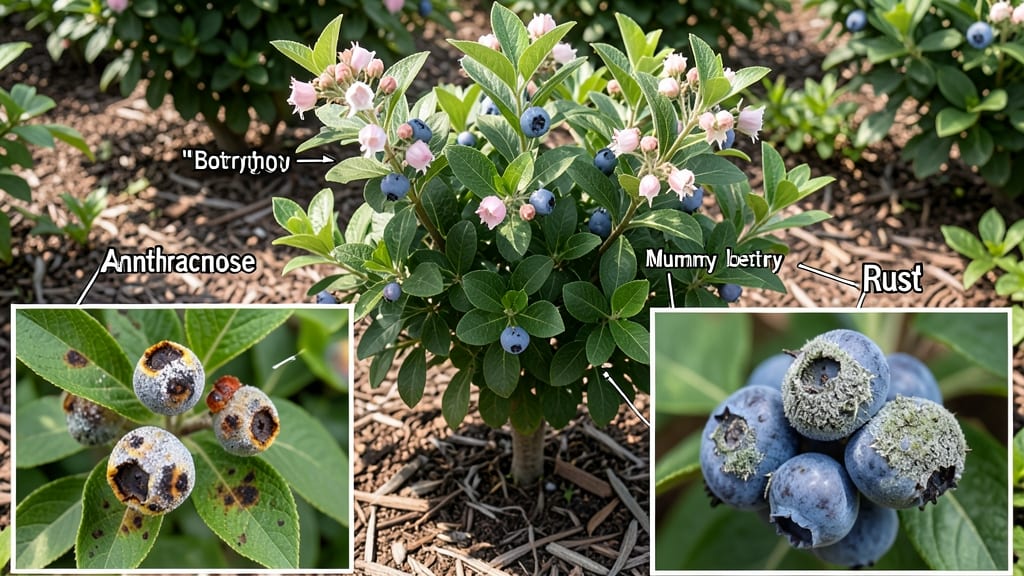
Blueberry bushes can turn from productive powerhouses to sad, disease-ridden shadows overnight—mummy berry, leaf spot, and botrytis blight are the usual culprits. 🌿 I’ve watched my own bushes go from lush and fruitful to struggling within a single season, and the key to saving them lies in catching symptoms early and acting fast.
The worst part? Many diseases start with tiny, almost invisible signs—yellowing leaves, powdery spots, or shriveled berries—that gardeners often miss until it’s too late. But once you know what to look for, you can stop these problems before they ruin your harvest.
I’ll show you exactly how to spot them and what to do next. With the right treatments—organic sprays, pruning techniques, and soil care—you’ll protect your bushes and keep them thriving for years. The first step is recognizing the warning signs before they spread. Let’s get your blueberries back on track.
Most diseases thrive in damp, crowded conditions, so proper spacing, airflow, and watering habits make all the difference. I learned the hard way that skipping pruning or ignoring leaf spots leads to bigger problems later.
The good news? Cultural fixes like mulching, proper watering, and removing infected debris often work better than chemicals. For stubborn infections, targeted sprays (like copper fungicide or neem oil) can save your bushes—but timing matters.
Apply them at the first sign of trouble, and repeat as needed. The goal isn’t just to treat the problem but to break the cycle so your bushes stay healthy next season too.
Seasonal prevention is your best defense. Start in early spring with a thorough cleanup of fallen leaves and fruit, then monitor your bushes weekly for new symptoms. A little vigilance now means a full harvest later—no more wasted effort or disappointed expectations.
Root Causes Behind Blueberry Ailments
Blueberry bushes, like any plant, are vulnerable to a range of diseases—but understanding why these issues arise is the first step to prevention. The health of your blueberry plants hinges on a delicate balance of environmental conditions, biological interactions, and cultural practices.
Below, we break down the key factors that trigger these common diseases, so you can address them with precision.
Blueberries thrive in specific conditions, and when these aren’t met, stress opens the door to pathogens. Here’s how environmental factors set the stage for disease:
- Excess Moisture: Blueberries hate soggy roots. Overwatering or poor drainage creates ideal conditions for fungal diseases like Botrytis blight and Phytophthora root rot. Fungal spores splash onto leaves and fruit in wet conditions, germinating and infecting the plant. Pro tip: Ensure your soil has a sandy loam texture with a pH of 4.5–5.5 and avoid overhead watering.
- High Humidity: Stagnant air traps moisture on foliage, promoting anthracnose and mummy berry (a devastating fungal disease). Blueberries need good airflow—crowded bushes or dense canopies trap humidity, creating a breeding ground for pathogens.
- Temperature Swings: Sudden shifts, especially late frosts or heatwaves, weaken plants. Cold stress can crack bark, inviting bacterial infections like bacterial leaf scorch. Heat stress reduces the plant’s natural defenses, making it more susceptible to pests and diseases.
Diseases don’t just appear—they’re spread by living organisms that exploit weak points in your blueberry bushes. Here’s how pathogens take hold:
- Fungal Spores in Soil or Air: Many blueberry diseases, like powdery mildew or Botrytis, are caused by fungi that overwinter in soil, mulch, or old plant debris. When conditions are right (warm, wet, and humid), spores germinate and infect new growth. Pro tip: Remove fallen leaves and fruit after harvest to starve out fungal reservoirs.
- Bacterial Hitchhikers: Bacteria like Xanthomonas campestris (cause of bacterial leaf spot) spread via water splashes, tools, or infected plant material. Once inside the plant, they clog vascular tissues, disrupting nutrient flow and causing wilting or leaf spots.
- Nematode Infestations: Microscopic root-knot nematodes feed on blueberry roots, creating entry points for secondary infections. Weakened roots struggle to absorb water and nutrients, making the plant more vulnerable to fungal and bacterial diseases.
Even the most resilient blueberry bushes can fall prey to diseases if we make the wrong calls in their care. Here’s how common gardening practices backfire:
- Over-Fertilizing with Nitrogen: Too much nitrogen promotes lush, soft growth—a magnet for pests and diseases. While blueberries need nutrients, an imbalance (especially high nitrogen) weakens the plant’s cuticle, making it easier for pathogens to penetrate.
- Ignoring Pruning Hygiene: Pruning with dull or contaminated tools can spread diseases from cut to cut. Open wounds left unprotected are invitation-only for bacteria and fungi. Always sterilize tools with rubbing alcohol and prune during dry conditions.
- Planting in Contaminated Soil: If your soil harbors old fungal spores or nematodes from previous crops, new blueberry bushes are at risk from day one. Test your soil and solarize or amend it with compost to reduce pathogen loads before planting.
Pests don’t just eat your blueberries—they damage plant tissues, creating wounds that pathogens exploit. Here’s how insect activity paves the way for disease:
- Japanese Beetles & Spider Mites: These pests skeletonize leaves, reducing the plant’s ability to photosynthesize. Weakened foliage becomes more susceptible to fungal infections like powdery mildew.
- Blueberry Maggot Flies: Their larvae burrow into fruit, creating entry points for Botrytis and other rots. Infested fruit often mummifies, becoming a spore factory for next year’s infections.
- Scale Insects & Aphids: Their honeydew secretions create a sticky film on leaves, fostering sooty mold (a black fungal growth). While sooty mold itself doesn’t kill the plant, it blocks sunlight, further stressing the bush.
Key Takeaway: Most blueberry diseases are opportunistic—they strike when the plant is already stressed. By addressing environmental conditions, pathogen sources, cultural practices, and pest pressure, you can break the cycle before diseases take hold.
Fixing Blueberry Bush Diseases
Now that you’ve identified the issue plaguing your blueberry bushes, it’s time to take action! Early intervention is key to saving your harvest and keeping your plants thriving. Below are practical, step-by-step solutions tailored to the most common diseases, along with prevention tips to stop future outbreaks.
1.
Botrytis Blight (Gray Mold) 🍓💀 Fix It: - Prune infected areas immediately 🔪 with sterilized shears (clean with rubbing alcohol between cuts). - Remove and destroy fallen berries and debris—don’t compost them! - Improve airflow by thinning dense canes or spacing bushes 4–6 feet apart. - Apply fungicide (copper-based or sulfur) preventively in early spring and after rain.
Prevent It: ✅ Water at the base (avoid overhead sprinkling). ✅ Harvest promptly—don’t let berries overripe on the bush. ✅ Space mulch 6+ inches from stems to reduce humidity.
2.
Powdery Mildew (White Fuzz) ❄️🍄 Fix It: - Spray with neem oil or baking soda mix (1 tsp baking soda + 1 quart water + a drop of dish soap) every 7–10 days until symptoms vanish. - Remove heavily infected leaves (but not entire canes). - Increase sunlight exposure—thin nearby trees or shrubs if shading is excessive.
Prevent It: 💡 Choose resistant varieties like ‘Duke’ or ‘Jersey’ if mildew is recurrent. 💡 Water early in the day so foliage dries quickly.
3.
Root & Stem Rot (Phytophthora) 🌧️💦 Fix It: - Stop watering immediately—let the soil dry out completely. - Dig out severely infected plants (don’t replant in the same spot for 2+ years). - Amend soil with compost + perlite to improve drainage. - Apply hydrogen peroxide (3%) to soil as a disinfectant (1 oz per gallon of water).
Prevent It: 🌡️ Test soil drainage—blueberries hate soggy roots! 🌡️ Raise beds or install drainage pipes if your yard floods.
4. Bacterial Leaf Spot (Black/Silver Spots) 🌿🔴
Fix It:
- Prune infected leaves (sterilize tools between cuts!).
- Apply copper fungicide (follow label rates) at first signs.
- Remove all plant debris from the area—burn or bag it.
Prevent It: ✨ Avoid overhead irrigation—use drip systems instead. ✨ Rotate crops if growing berries in the same spot yearly.
5. Bacterial Canker (Sunken, Oozing Wounds) 🔥🚨
Fix It:
- Cut out cankers with a sterilized knife, then seal with pruning paint.
- Disinfect tools after each cut (bleach solution: 1 part bleach to 9 parts water).
- Remove and destroy heavily infected canes.
Prevent It: 🔥 Prune during dry weather to avoid spreading bacteria. 🔥 Space bushes properly to reduce humidity and splashing water.
6. Anthracnose (Dark Spots from Fungal + Pest Stress) 🍇😬
Fix It:
- Remove all infected fruit and leaves—don’t leave them on the ground!
- Spray with a fungicide (e.g., chlorothalonil) before bud break in spring.
- Encourage beneficial insects (ladybugs, lacewings) to control sap-sucking pests.
Prevent It: 🎯 Keep bushes healthy—stressed plants are more susceptible. 🎯 Avoid nitrogen-heavy fertilizers (they promote soft, disease-prone growth).
- Strengthen plants naturally: Use compost tea or fish emulsion for organic nutrients.
- Monitor regularly: Check bushes weekly for new symptoms.
- Rotate treatments: Avoid relying on one fungicide—rotate between copper, sulfur, and neem oil.
Pro Tip: 💡 Healthy soil = healthy bushes! Test your soil pH (blueberries love 4.5–5.5) and amend with peat moss or sulfur if needed.
By acting fast and staying vigilant, you can save your blueberry bushes and enjoy a bountiful harvest. 🍇💚 Which disease is affecting your bushes? Drop a comment below—we’re happy to help!
Frequently asked questions
Why do my blueberry leaves turn yellow even when the soil looks moist?
Yellowing leaves often signal nutrient deficiencies (like iron or nitrogen) or root stress from poor drainage, even with wet soil. Blueberries need acidic soil (pH 4.5–5.5)—test yours! If roots are waterlogged, fungal diseases like Phytophthora may be attacking. Try amending soil with compost and improving drainage immediately.
Can I still harvest berries from bushes showing signs of disease?
Only if the disease is mild and localized (like early powdery mildew). For fungal infections (e.g., Botrytis or mummy berry), remove and destroy all infected fruit—don’t eat them! Bacterial spots (Xanthomonas) can contaminate healthy berries, so discard any near infected areas. When in doubt, wash and inspect berries thoroughly before consuming.
How often should I spray fungicides on my blueberry bushes?
Preventive sprays (like copper fungicide or neem oil) work best when applied every 2–4 weeks during growing season, starting at bud break. For active infections, spray weekly until symptoms disappear. Rotate treatments to avoid resistance—combine copper, sulfur, and organic options. Always spray in the early morning for maximum effectiveness.
Will pruning help prevent blueberry diseases?
Pruning 30% of old canes annually improves airflow, reducing humidity that fuels fungal diseases. Remove dead, diseased, or crossing branches first, then sterilize tools between cuts. Thin dense areas to let sunlight reach the center—this discourages powdery mildew and Botrytis. Prune during dry weather to minimize bacterial spread.
Are there disease-resistant blueberry varieties I should consider?
Yes! Varieties like ‘Duke’ (southern highbush) and ‘Jersey’ (northern highbush) show good resistance to powdery mildew and anthracnose. For mummy berry (a devastating fungal disease), choose ‘Bluecrop’ or ‘Earliblue’. Always check local nursery recommendations—resistance varies by climate and growing conditions. Healthy soil and proper spacing also boost natural resistance!