
Shrubs
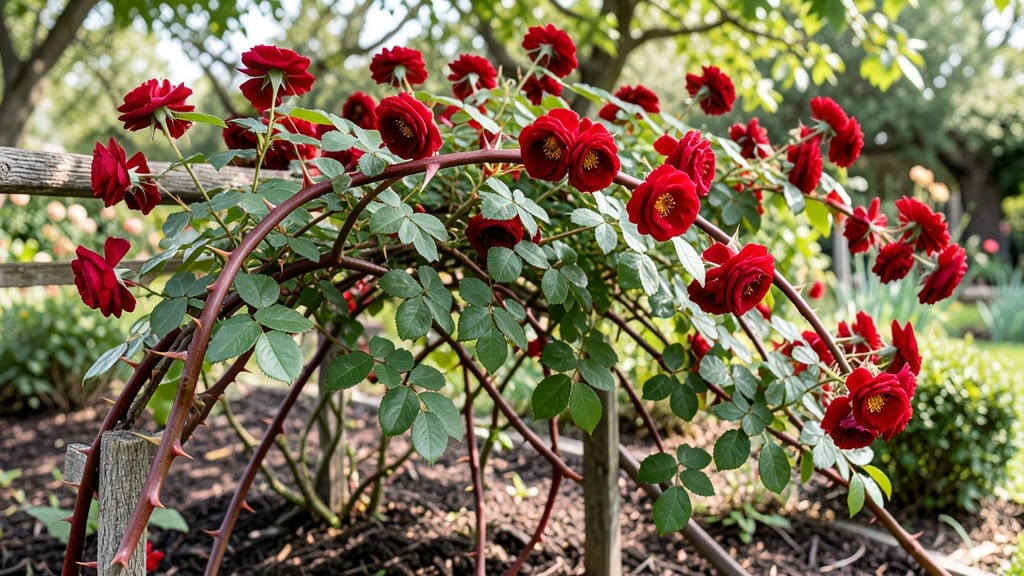
Planting a Climbing Maniac rose bush is like inviting a fragrant, never-ending showstopper into your garden. 🌹 The name says it all—this rose doesn’t just climb; it conquers, covering trellises with glossy foliage and blooms from spring until frost.
My first one took over a 12-foot arbor in just one season, proving that "maniac" isn’t just marketing. The secret starts with the right location: full sun (6+ hours daily) and a sturdy support structure—think heavy-duty trellis, arbor, or pergola—because these vines grow 6-10 feet per season.
Amend your soil with compost before planting, and water deeply 2-3 times per week (more in extreme heat) to encourage those vigorous roots and nonstop blooms. You’ll be rewarded with hundreds of blooms in shades of pink, red, and yellow, each one packed with that classic rose fragrance.
The key to keeping it in check? Prune aggressively in late winter—cut back one-third of the oldest canes to force fresh growth and prevent overcrowding. Deadhead spent blooms too, and you’ll trigger even more flowers all season long.
This rose thrives in USDA zones 5-9, but the real magic happens when you give it room to roam. Whether you’re dressing up a fence, creating a romantic archway, or just filling vertical space, this plant delivers dramatic results with minimal effort.
Just be ready for neighbors to ask where you got it!
📚 In This Guide
- What you need
- Instructions
- Tips and common mistakes
- Wrapping up and next steps
What you need
- ● Climbing Maniac Rose Bush: 1 healthy, disease-resistant plant (check for thorny varieties if preferred).
- ● Well-draining soil: 5+ gallons of a mix of 60% garden soil, 30% compost, and 10% perlite/sand.
- ● Support structure: 1 trellis, arbor, or fence (at least 6–8 feet tall for vigorous growth).
- ● Organic fertilizer: 1 bag of balanced rose food (10-10-10 or 5-10-5 NPK).
- ● Mulch: 2–3 inches of wood chips or straw to retain moisture.
- ● Watering can or hose: With a gentle spray nozzle for hydration.
- ● Pruning shears: Sharp, bypass-style for clean cuts.
- ● Gloves: Heavy-duty to protect from thorns.
- ● Stakes or ties: Soft jute twine to secure vines to support.
- ○ Pest control: Neem oil or insecticidal soap (optional but helpful).
- ● Drip irrigation kit: For automated watering (great for busy gardeners!).
- ● Full sun exposure (6+ hours daily).
- ● Space for the bush to spread (4–6 feet wide).
- ● Patience—these beauties take 1–2 years to fully establish!
Step-by-step guide to planting a Climbing Maniac rose bush
Here's how to get those fragrant, nonstop-blooming vines thriving in your garden.
🌱 Step 1: Choose the Perfect Planting Location
Select a spot with at least 6 hours of direct sun daily—these roses are sun worshippers. I always look for a south- or west-facing wall or trellis, where the afternoon sun will fuel those blooms. Avoid low spots where cold air settles, as roses hate winter dampness.
Check the soil drainage by digging a 12-inch deep hole and filling it with water. If it doesn't drain within 4 hours, amend the soil with organic matter like compost or aged manure. The roots need room to breathe, especially in heavy clay.
☀️ Step 2: Prepare the Soil and Planting Site
Loosen the soil in a 3-foot diameter area around the planting spot to encourage root spread. Work in 2-3 inches of compost or well-rotted manure to enrich the soil—roses love fertile ground. I like to mix in a handful of bone meal for extra phosphorus to support strong root development.
Dig a hole twice as wide as the root ball but only as deep as the container. The graft union (the bump where the rose was attached to its rootstock) should sit 2-3 inches above soil level. This prevents water from pooling around it and rotting the plant.
🪴 Step 3: Plant and Stake Your Rose Bush
Gently remove the rose from its container and loosen the roots if they're circling. Place the plant in the hole so the graft union is above soil level, then backfill with native soil mixed with compost. Press lightly to remove air pockets but don't compact the soil—roots need air to grow.
Install a 5-6 foot tall stake or trellis near the plant and tie the main stem loosely with soft plant ties. Don't cinch too tight—you want the stem to move slightly in the wind so it strengthens naturally. Water deeply right after planting to settle the soil around the roots.
💧 Step 4: Water and Mulch for Healthy Growth
Water your new rose deeply 2-3 times per week for the first month, keeping the soil 2-3 inches moist at all times. You'll know it's right when water runs out the drainage holes but doesn't pool on the surface. After that, water once a week unless it's extremely hot or dry.
Spread 2-3 inches of mulch around the base, keeping it 6 inches away from the stem to prevent rot. I use shredded bark or straw—it conserves moisture, regulates soil temperature, and keeps weeds down. Replenish mulch annually to maintain its benefits.
✂️ Step 5: Prune and Train for Maximum Blooms
Prune your rose in early spring before new growth begins. Remove any dead, diseased, or crossing branches first, then cut back remaining stems by one-third to encourage bushier growth. Make cuts just above an outward-facing bud to direct energy where you want it.
As the vines grow, gently weave them through the trellis or along the wall, securing them with soft ties every 12-18 inches. This encourages upward growth and stronger stems. Pinch back the tips of new shoots to promote branching—you'll get more blooms and a fuller vine.
Tips & tricks for climbing rose bush success
These simple tricks will help you avoid common pitfalls and get those fragrant vines thriving from day one.
Sunlight Strategy: That 6 hours of direct sun is non-negotiable—these roses are sun worshippers! If your spot gets afternoon shade, consider installing a reflective surface like a white wall or mirror to bounce extra sunlight onto the plant. I've seen roses in partial shade still bloom, but the flowers will be smaller and less fragrant. Trust me, the morning sun is your best friend for consistent blooms.
Drainage Test: The 4-hour drainage test is your secret weapon against root rot. If water pools after 4 hours, you're not dealing with a quick fix—you'll need to amend the soil with organic matter like compost or coarse sand. I've learned this the hard way after losing two roses to soggy soil. The roots need to breathe, especially in heavy clay soils where water can't escape fast enough.
Graft Union Placement: That 2-3 inches above soil level for the graft union isn't just a suggestion—it's crucial for preventing disease. If you bury it too deep, moisture will pool around it, creating the perfect conditions for rot. Mark the graft union with a pencil before planting so you can verify its position as you backfill. This small step makes all the difference in long-term plant health.
Pruning Timing: Early spring pruning before new growth begins is key for encouraging bushier, more productive vines. If you prune too late, you'll cut off potential blooms for that season. I like to do a quick inspection in late winter when the buds are just starting to swell—this helps me see exactly where to make my cuts. Remember, you're not just shaping the plant, you're directing its energy toward future blooms.
Pro Tips for Climbing Maniac Rose Bush
- These simple tricks will help you avoid common pitfalls and get those fragrant vines thriving from day one.
- Sunlight Strategy: That 6 hours of direct sun is non-negotiable—these roses are sun worshippers!
- Drainage Test: The 4-hour drainage test is your secret weapon against root rot.
Frequently asked questions
Got questions about the Climbing Maniac rose bush? You’re not alone! Here are some of the most common queries—plus straightforward answers to help you grow a thriving, fragrant vine without the headaches.
When is the best time to plant a Climbing Maniac rose bush?
The ideal time is early spring or fall, when temperatures are mild (50–70°F). Planting in spring gives vines more time to establish roots before winter, while fall allows them to settle before dormancy. Avoid extreme heat or frost—both can stress young plants. Pro tip: Soak the root ball before planting for 1–2 hours to reduce transplant shock!
How fast does the Climbing Maniac rose grow, and how much space does it need?
This rose is a fast grower—expect 3–5 feet per season with proper care! Allocate at least 6–8 feet of vertical space (trellises, arbors, or fences) and 3–4 feet of ground clearance for roots. Prune regularly to control spread and encourage bushier blooms. Warning: Without pruning, it can become aggressive!
How often should I water a Climbing Maniac rose, and what if it wilts?
Water deeply 2–3 times per week during the first year, then 1–2 times weekly once established (adjust for drought). Wilting often signals underwatering or root stress. Give it a good soak and mulch the base to retain moisture. If leaves turn crispy, it’s thirsty; if yellow, it may be overwatered. Morning watering prevents fungal issues!
What pests or diseases should I watch for, and how do I treat them?
Common culprits include aphids, spider mites, and black spot fungus. Prevent pests with neem oil sprays and prune for airflow to deter fungus. For aphids, blast them off with water or use insecticidal soap. Black spot? Remove infected leaves, apply fungicide, and avoid overhead watering. Healthy soil = fewer problems!
Can I grow a Climbing Maniac rose in a container, or does it need to be planted in the ground?
While possible, containers limit root growth and may restrict blooms. If you must pot it, use a large container (15+ gallons) with drainage, rich potting mix, and annual repotting. Ground planting is ideal for long-term health. Container roses need extra water and fertilizer—so be ready to pamper them!
Wrapping up and next steps
The Climbing Maniac Rose Bush is a stunning, low-maintenance star for any garden—packed with fragrant blooms and relentless vigor! Whether you’re a seasoned gardener or a beginner, its adaptability and beauty make it a must-have.
Ready to transform your space? Start by sketching your layout or browsing our tips—then grab your gloves and get growing! 🌸✨
- Next step: Pick your spot, prep the soil, and watch your Climbing Maniac take over (in the best way)!
- Pro tip: Share your progress with us—we’d love to see your blooming masterpiece! 📸